Mother Nature’s Son
Mother Nature’s Son was supposed to be the next project.
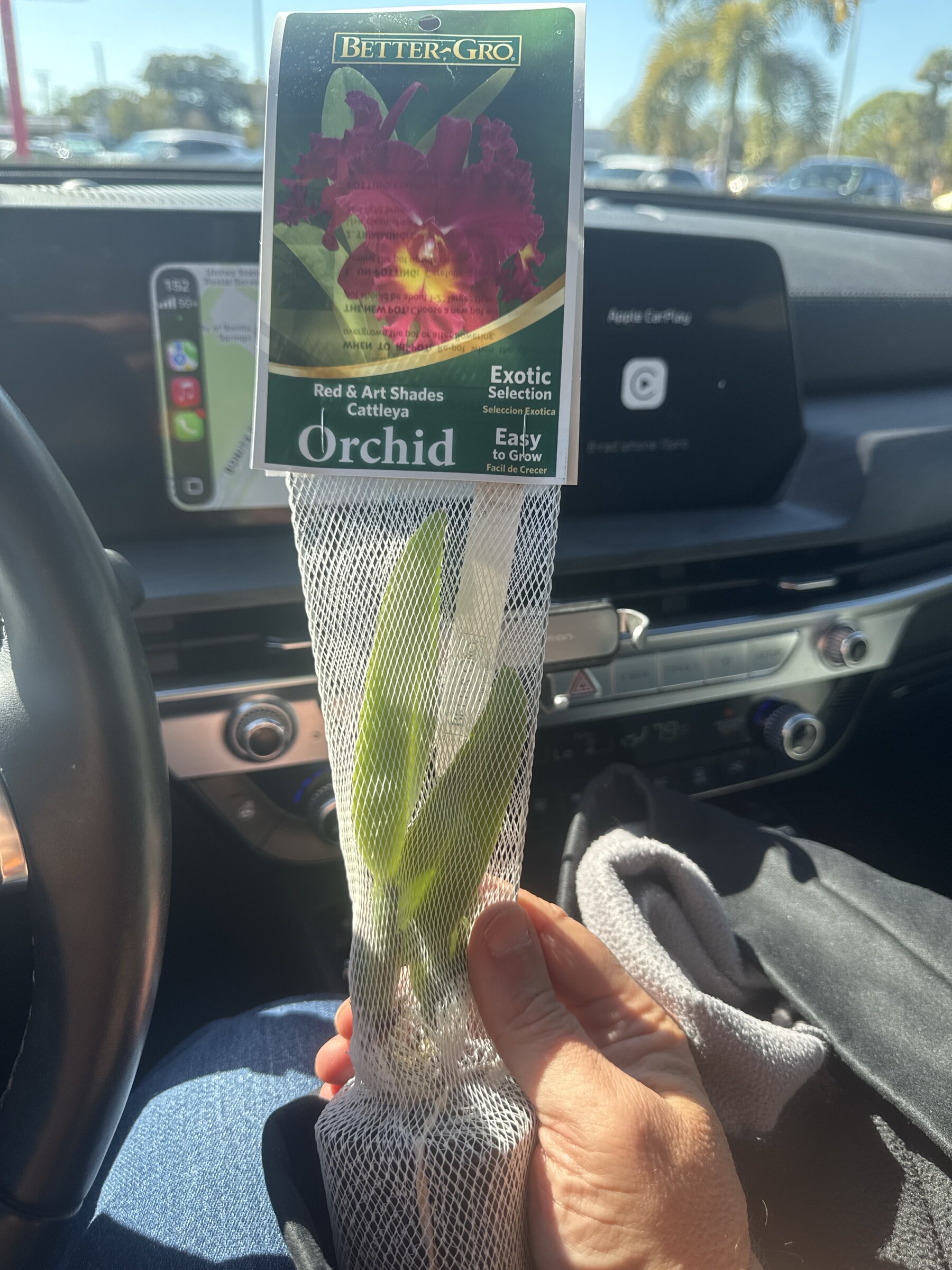
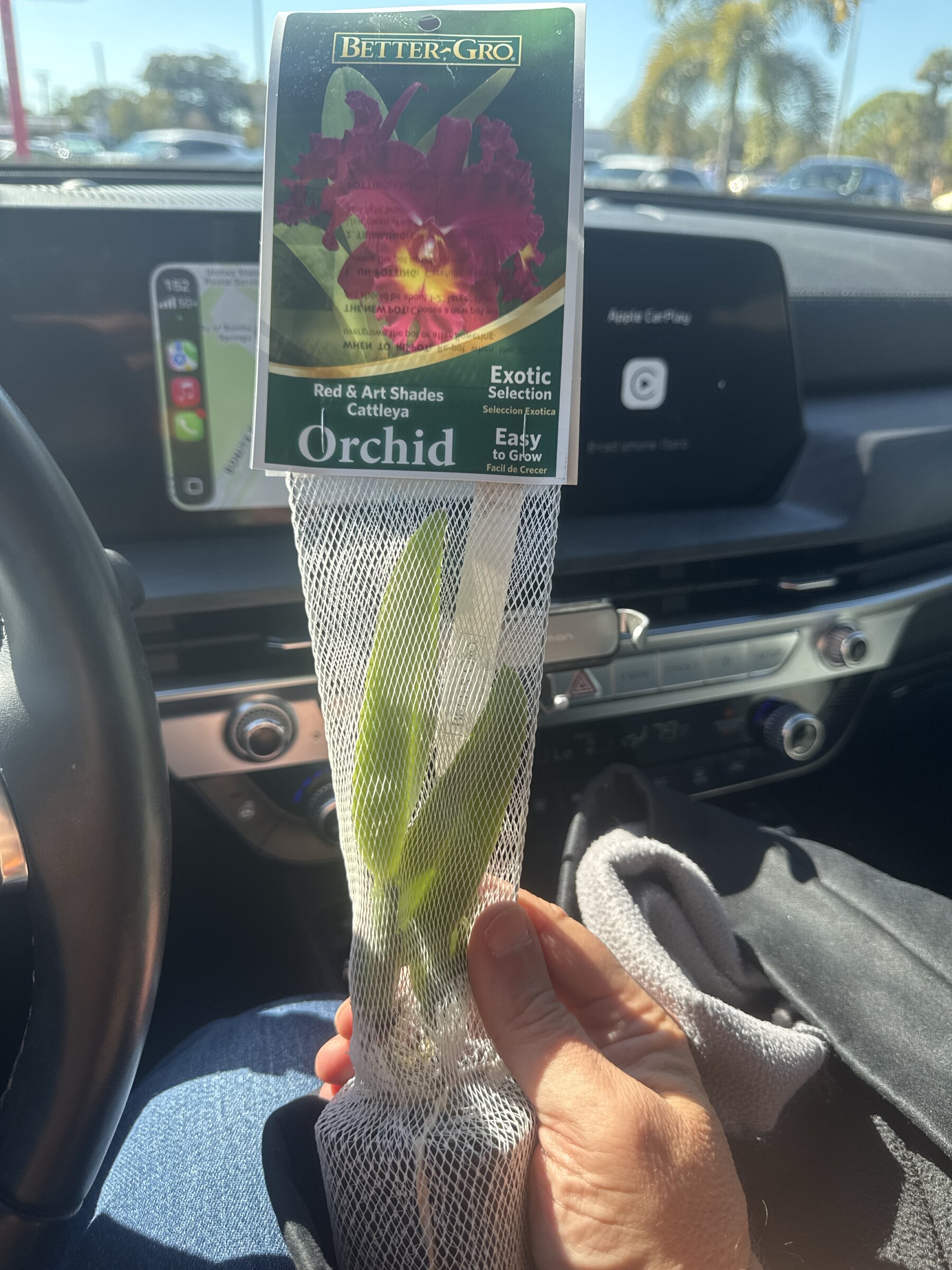
He arrived as a young Better-Gro Cattleya in a mesh sleeve, standing tall enough to be optimistic and planted loosely enough to fall over whenever he felt like it. Compared with the Phalaenopsis orchids, he wanted more light, more drying time, and considerably less fussing. The first assignment was simple: keep him upright and learn to leave him alone.
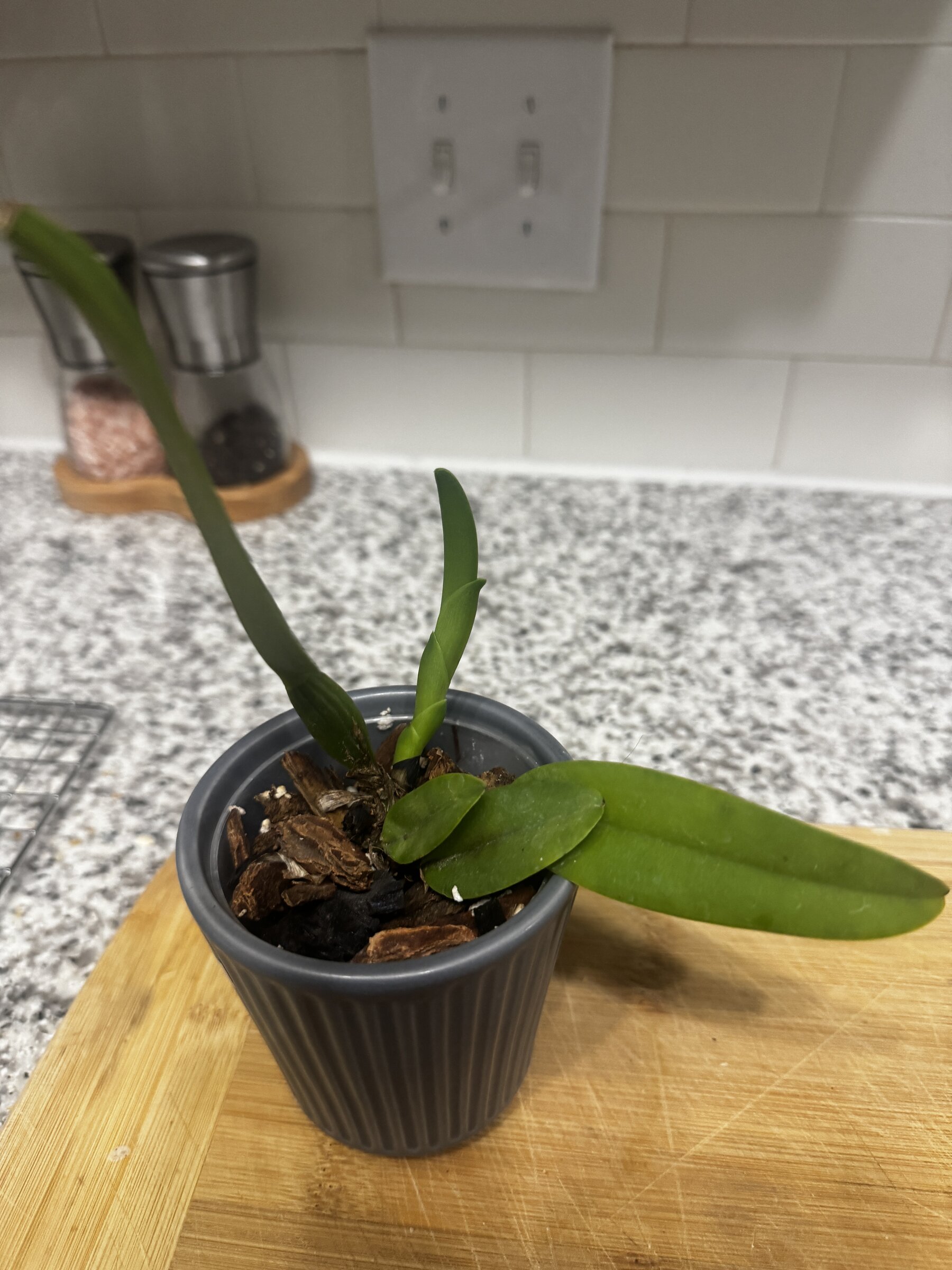
That became difficult in March, when the roots started looking worse even as a new green shoot appeared at the base. By April, the old root system had deteriorated enough to force the issue. I removed the dead roots, repotted him in fresh bark, charcoal, and perlite, and waited to find out whether the new growth had enough stored energy to continue.
It did, but not dramatically.
The new lead grew a little at a time. The leaves stayed firm. After the move from Florida to Texas, Mother Nature’s Son came indoors under grow lights because the new patio was regularly over 100 degrees. He accepted that change too and kept building the same lead.
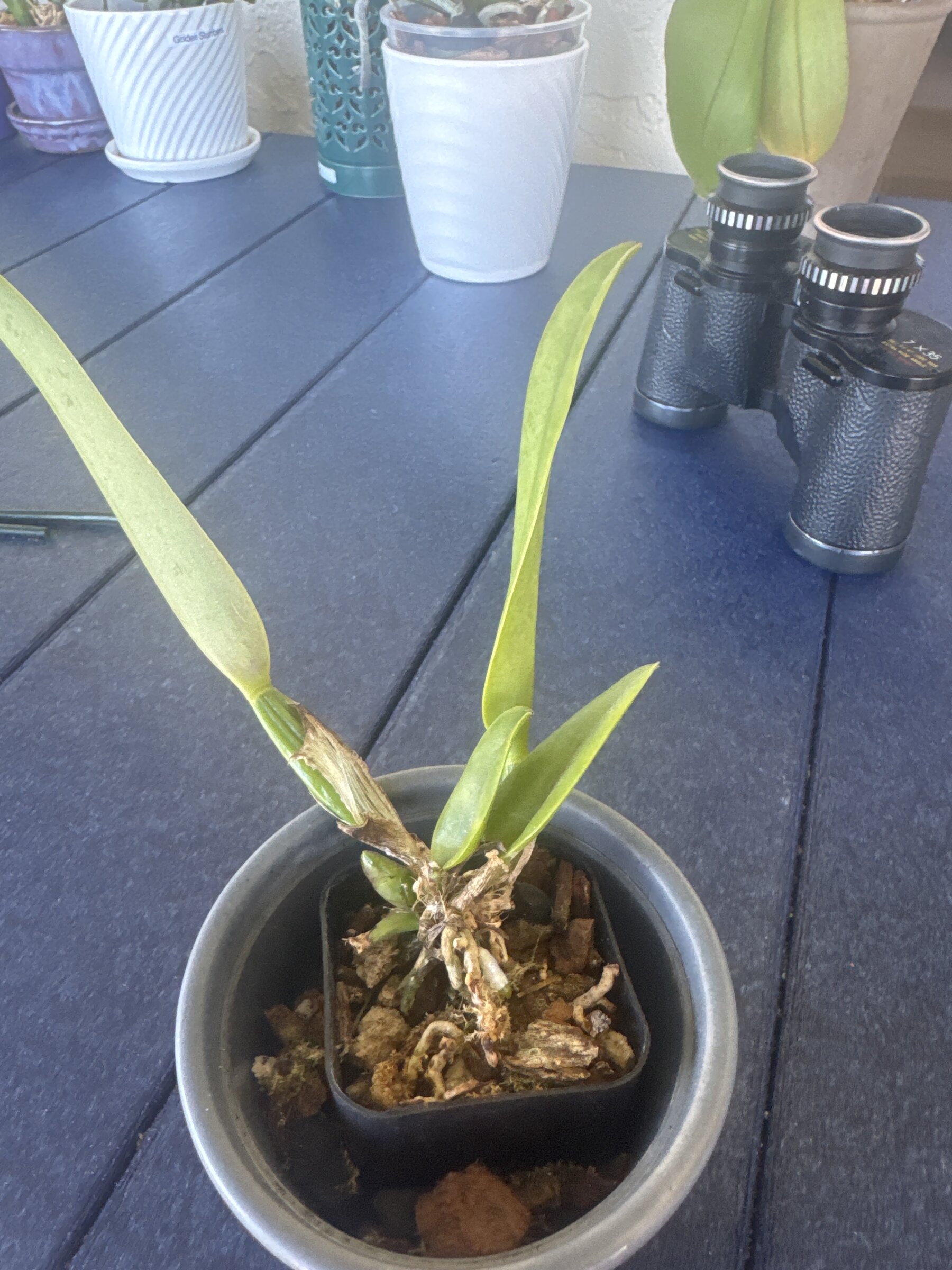
On July 12, it was clearly becoming the next pseudobulb. A week later it was taller. On July 26, a bright white root with a green tip appeared from its base.
That root was the whole story. The new growth was no longer surviving on what the older pseudobulbs had saved for it. It was building a root system of its own.
Mother Nature’s Son never staged a dramatic comeback. He spent six months quietly becoming a plant that no longer needed one.
Observations and updates
Newest first. Observations on the same date retain their original order.
2026-09-07 — Weekly Update
Photos
Observations
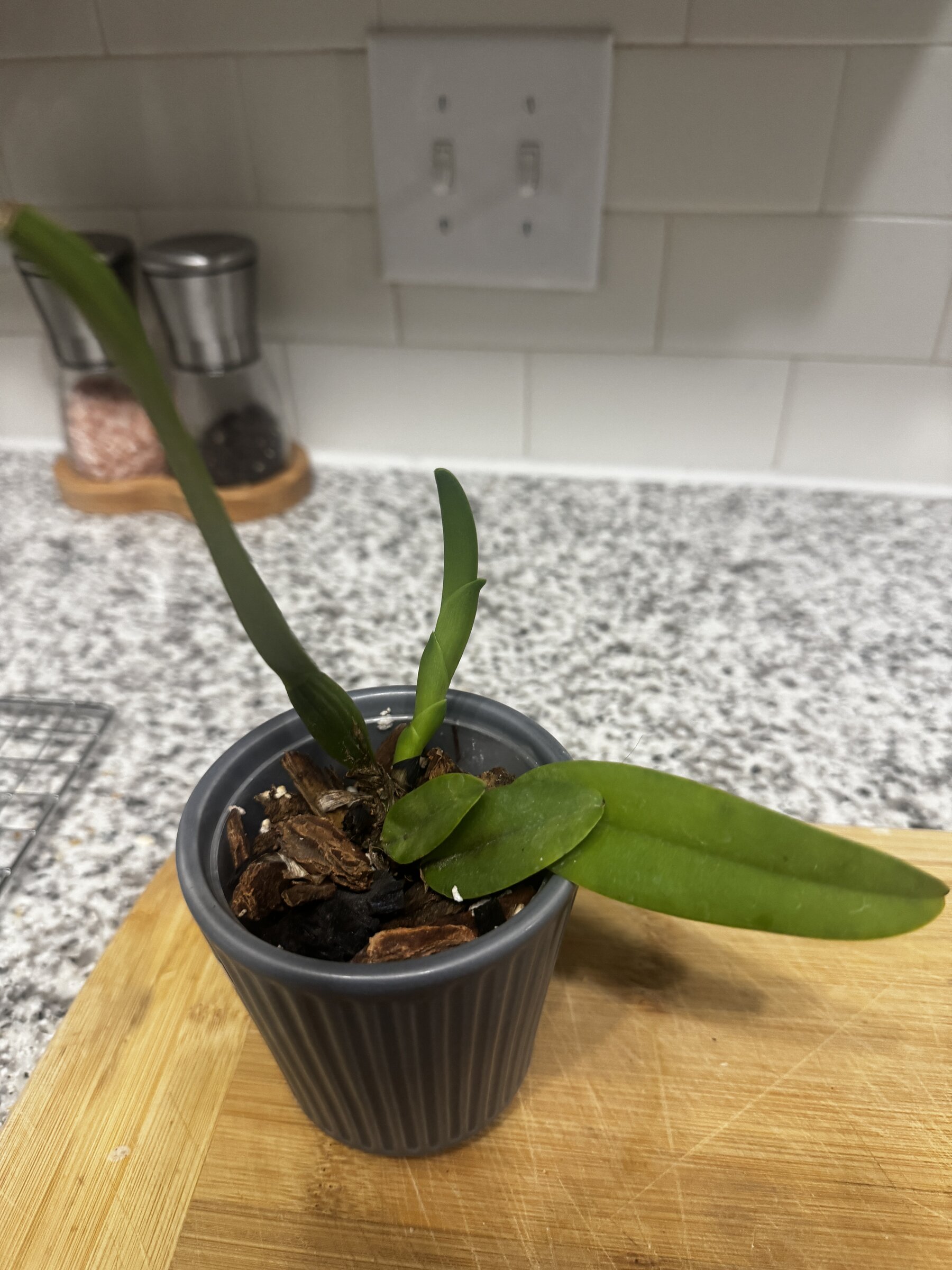
The newest growth continues to stretch upward and is looking noticeably more substantial than it did just a couple weeks ago, while the older leaves remain firm and healthy.
Care
Watered
2026-08-30 — Weekly Update
Photos
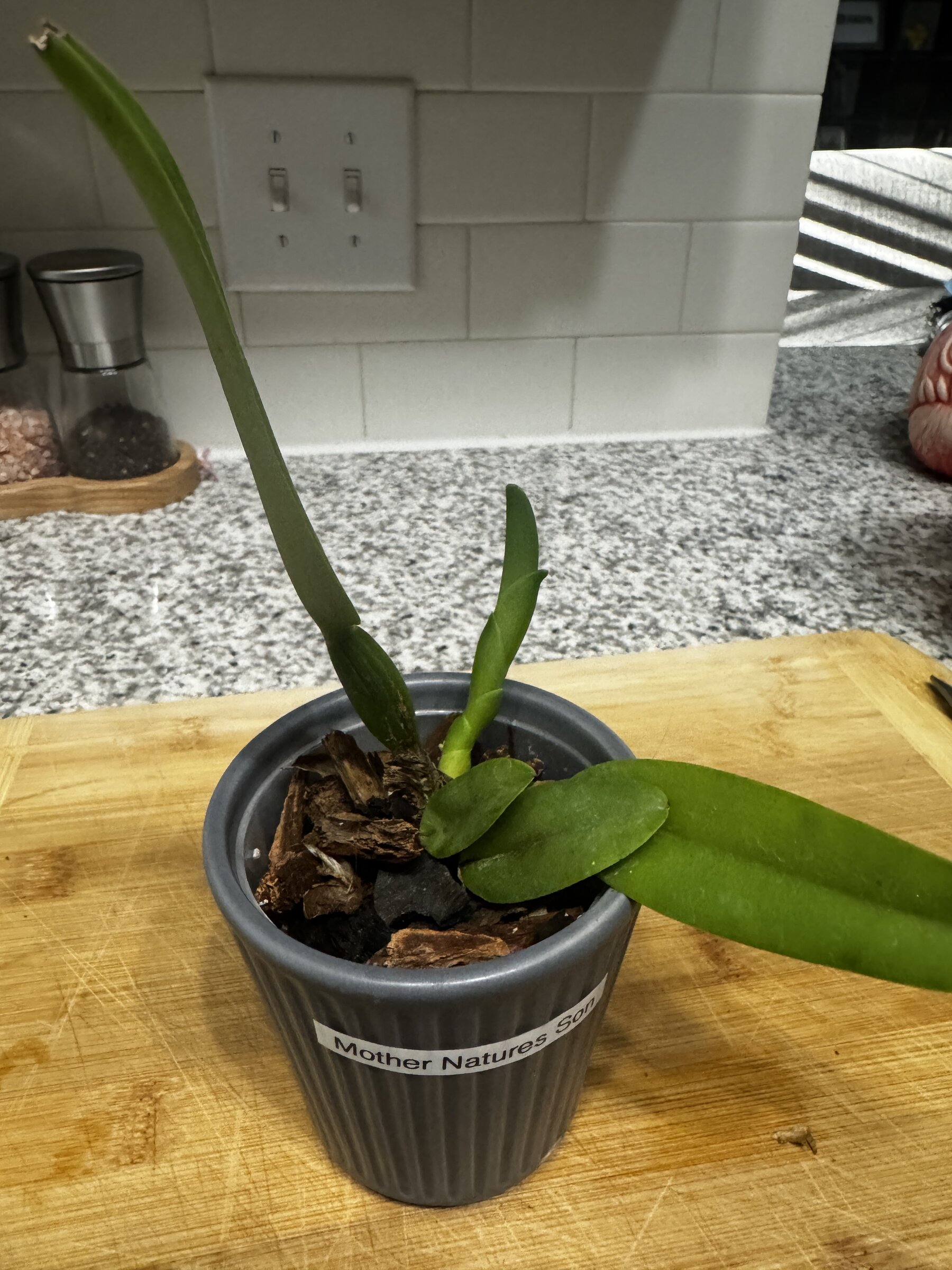
Observations
That newest upright growth has made very noticeable progress since the 8/23 photo—it’s elongating quickly and looks plump and healthy, while the established leaves remain firm.
Care
watered
2026-08-23 — Weekly Update
Photos
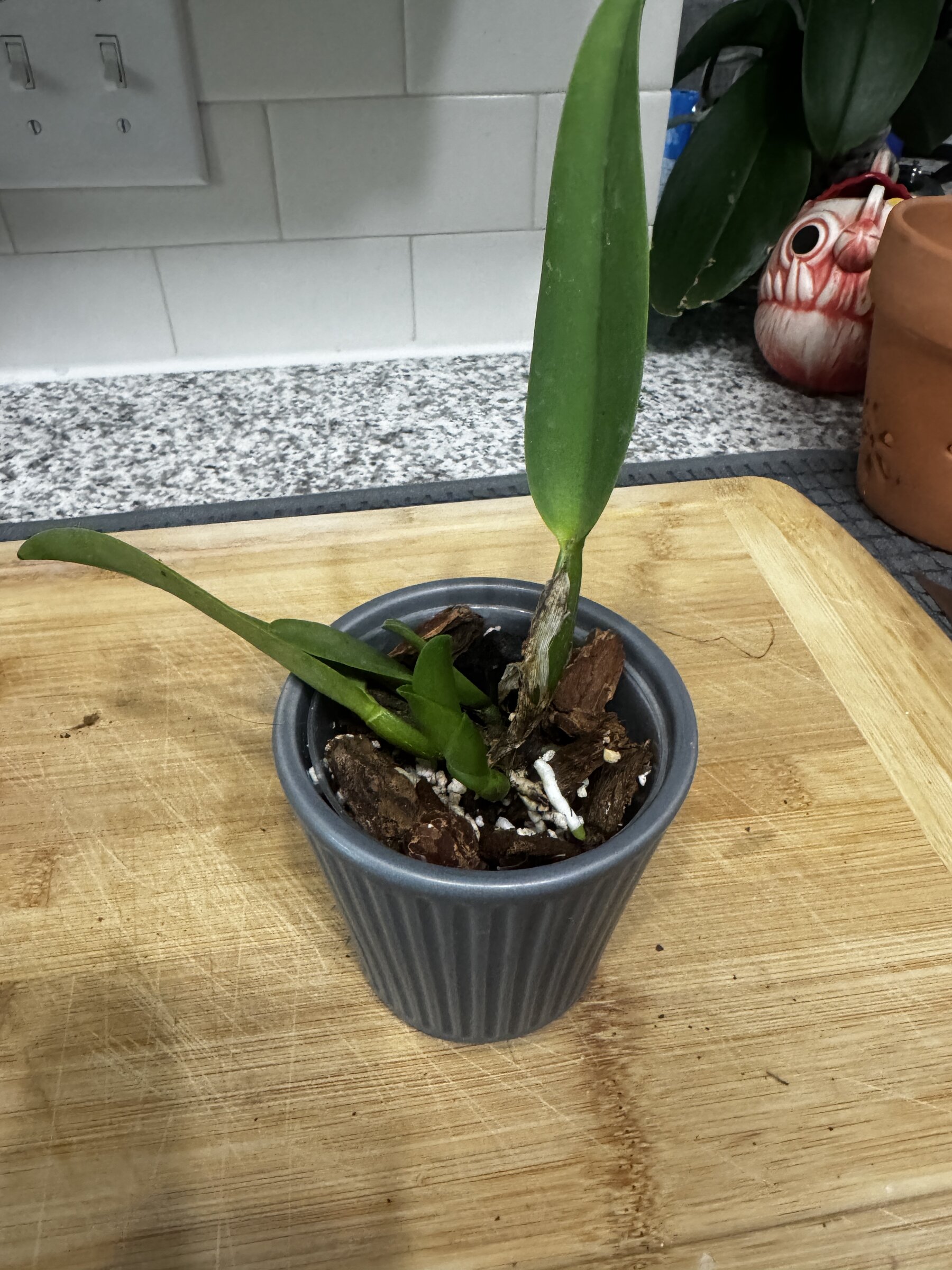
Observations
The newer growth remains firm and healthy, and that white root with the green tip is still actively extending—recovery continues to look very solid.
Care
Watered.
2026-08-18 — Weekly Update
Photos
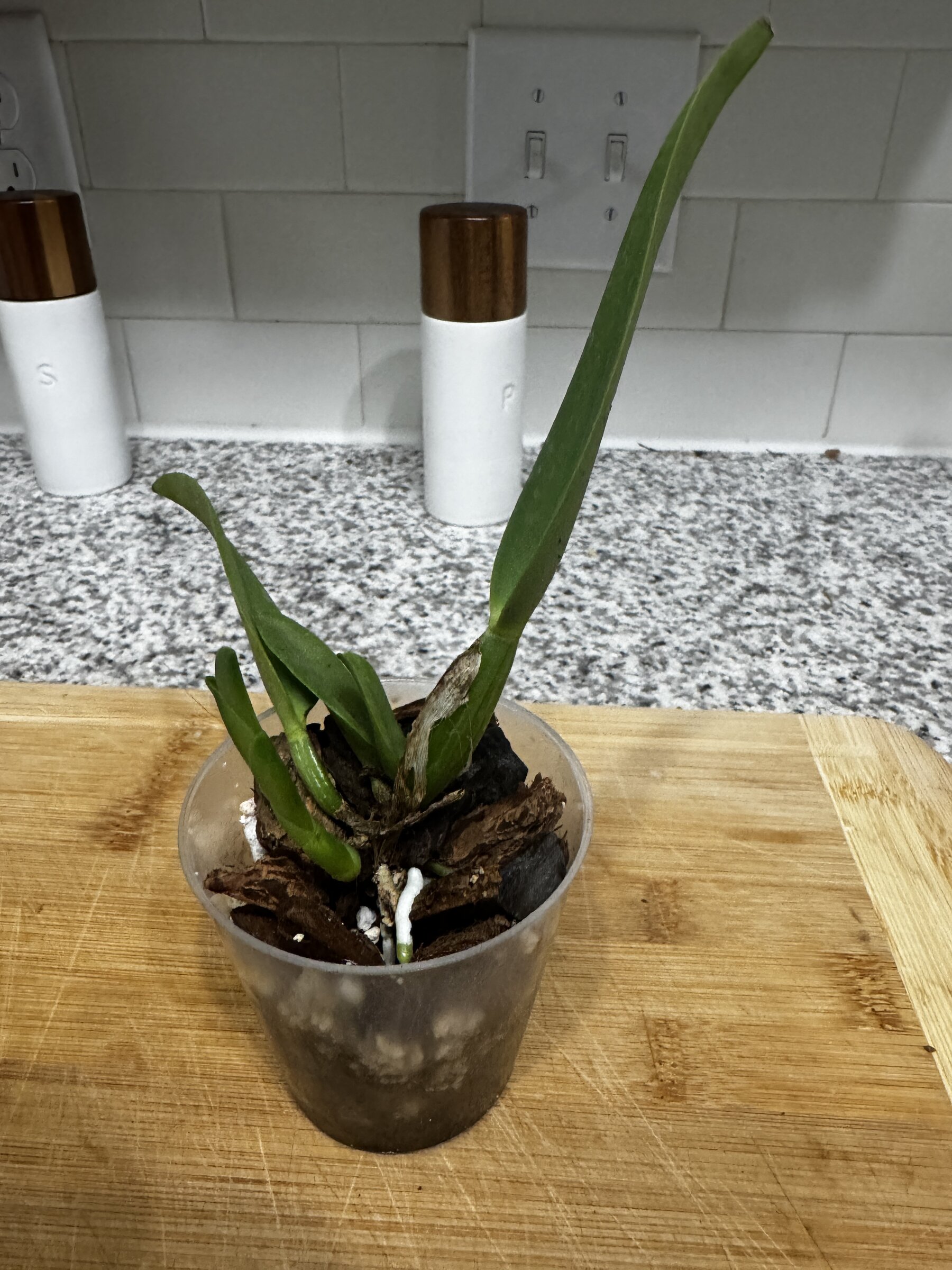
Observations
Mother Nature’s Son continues to recover well, with healthy new growth and an actively growing root extending into the bark. The plant is clearly establishing itself and gaining strength after its rough start.
Care
Watered
2026-08-09 — Weekly Update
Photos
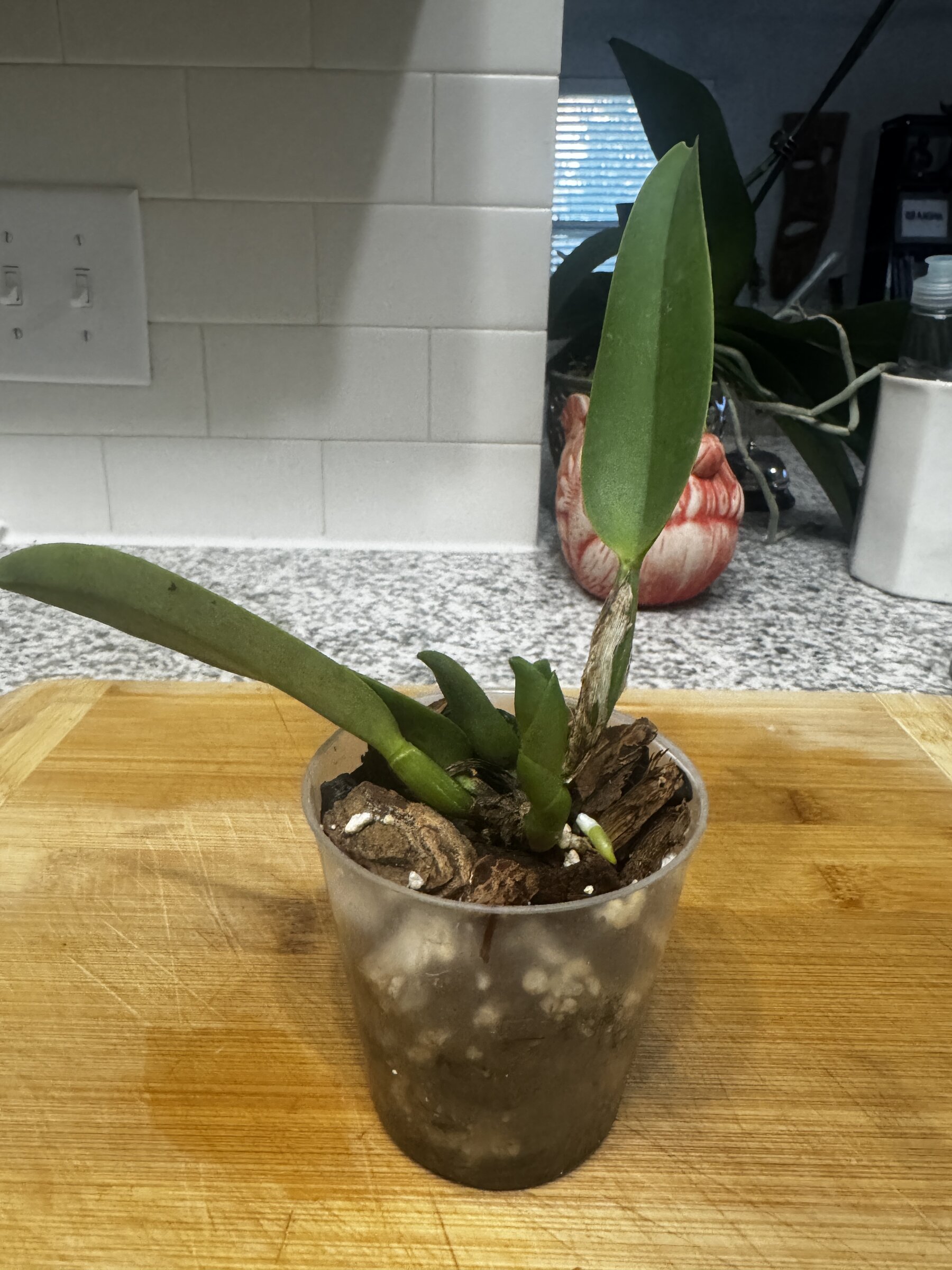
Observations
Mother Nature’s Son continues steady growth. The newest growth remains active, and a fresh root tip is visible near the edge of the pot.
Care
Fertilized.
2026-08-02 — Weekly Update
Photos

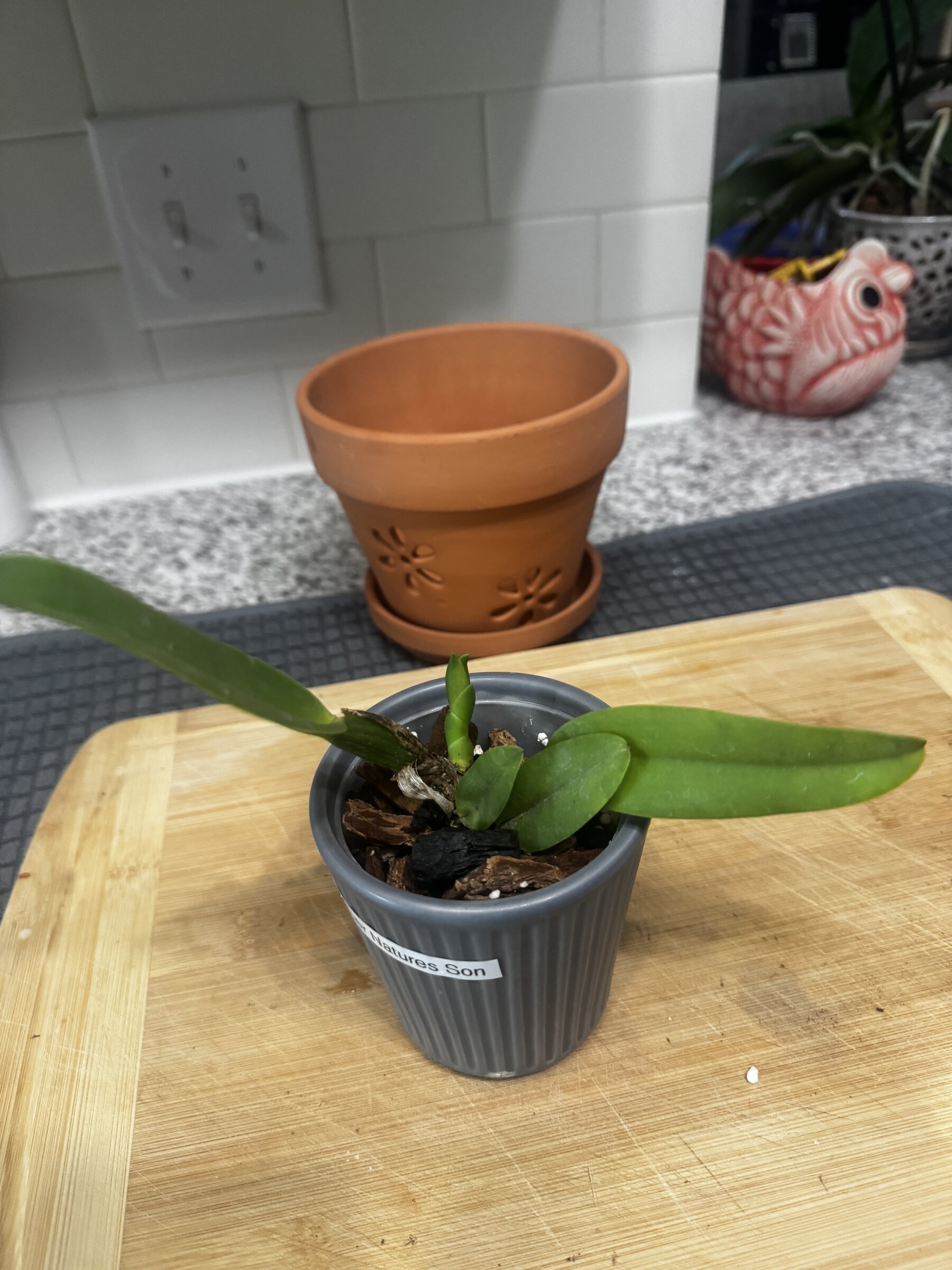
Observations
Quiet and steady recovery. The newest leaf continues to develop.
Care
Watered
2026-07-26 — New Root From the Active Lead
Photos
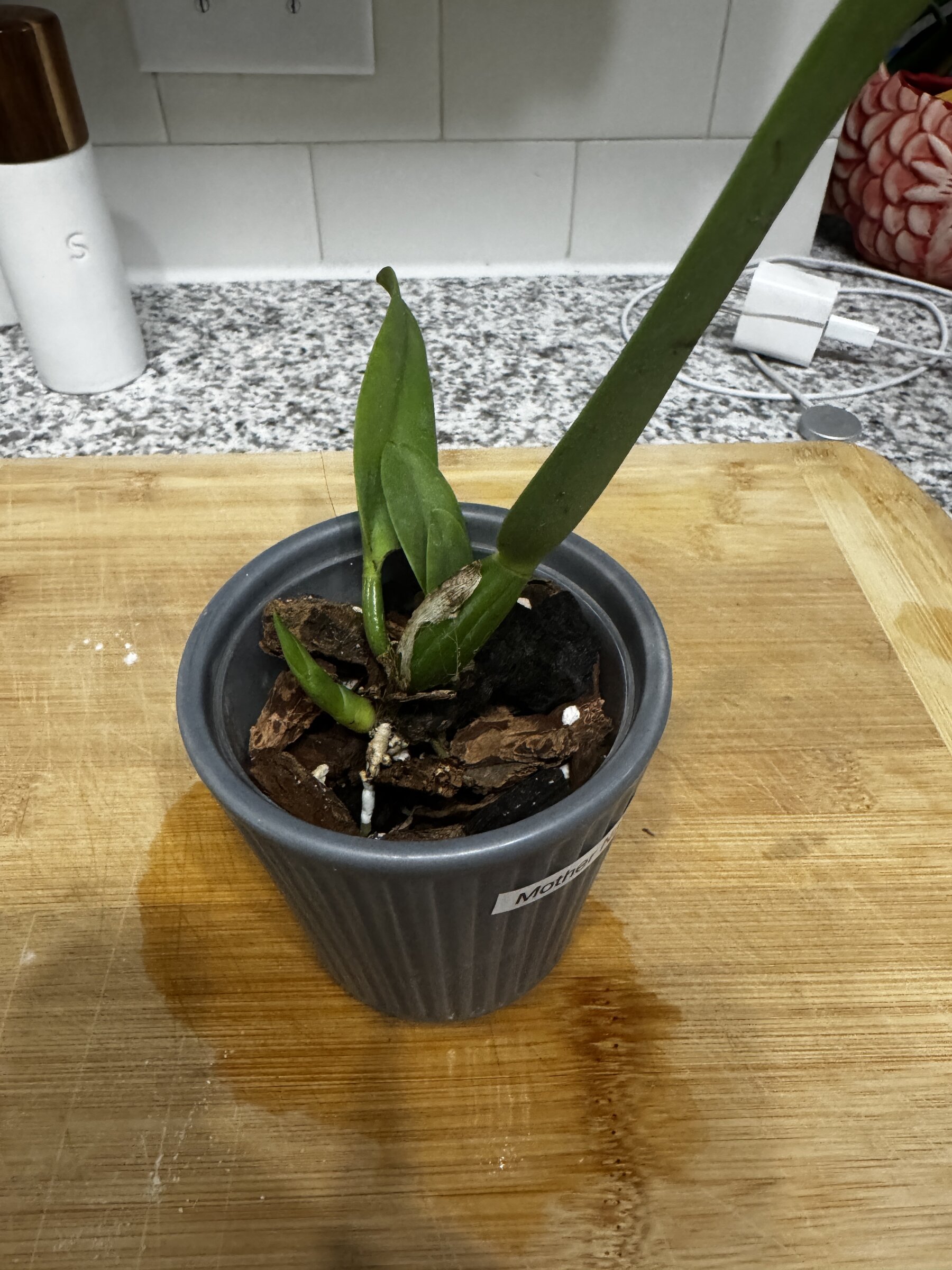
What Happened
A bright white root with a green growing tip emerged from the new lead.
Observations
- The new lead had elongated toward becoming a pseudobulb.
- The lead was beginning to establish its own root system.
- Mature growths remained green and functional.
- The bark remained open, with charcoal and perlite visible.
- The pot drained well after watering.
Lessons
The new root marked the transition from recovery supported by old pseudobulbs to self-sustaining new growth. Mother Nature’s Son had accepted the repot and was actively building the next part of the plant.
2026-07-19 — Lead Gains Height
Photos
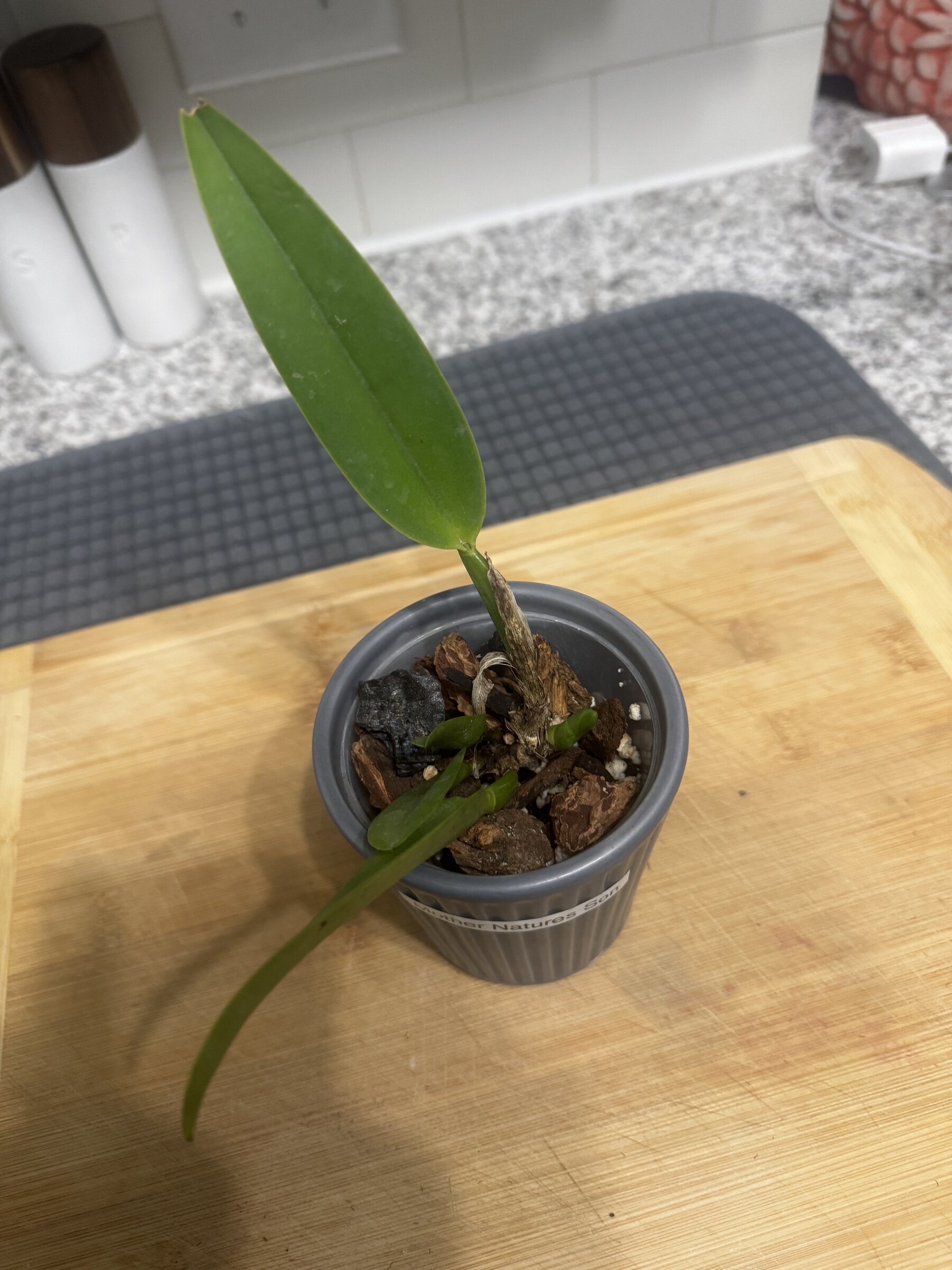
Observations
- The newest lead had gained height and definition.
- A second small growth eye appeared healthy, though activation was not yet certain.
- The newest mature pseudobulb and older supporting growth remained green.
- The stable leaf-tip notch remained cosmetic.
- The pot size and medium still appeared appropriate.
Notes
The next expected milestone was a new root from the active lead.
2026-07-12 — Fertilized During Active Growth
Photos
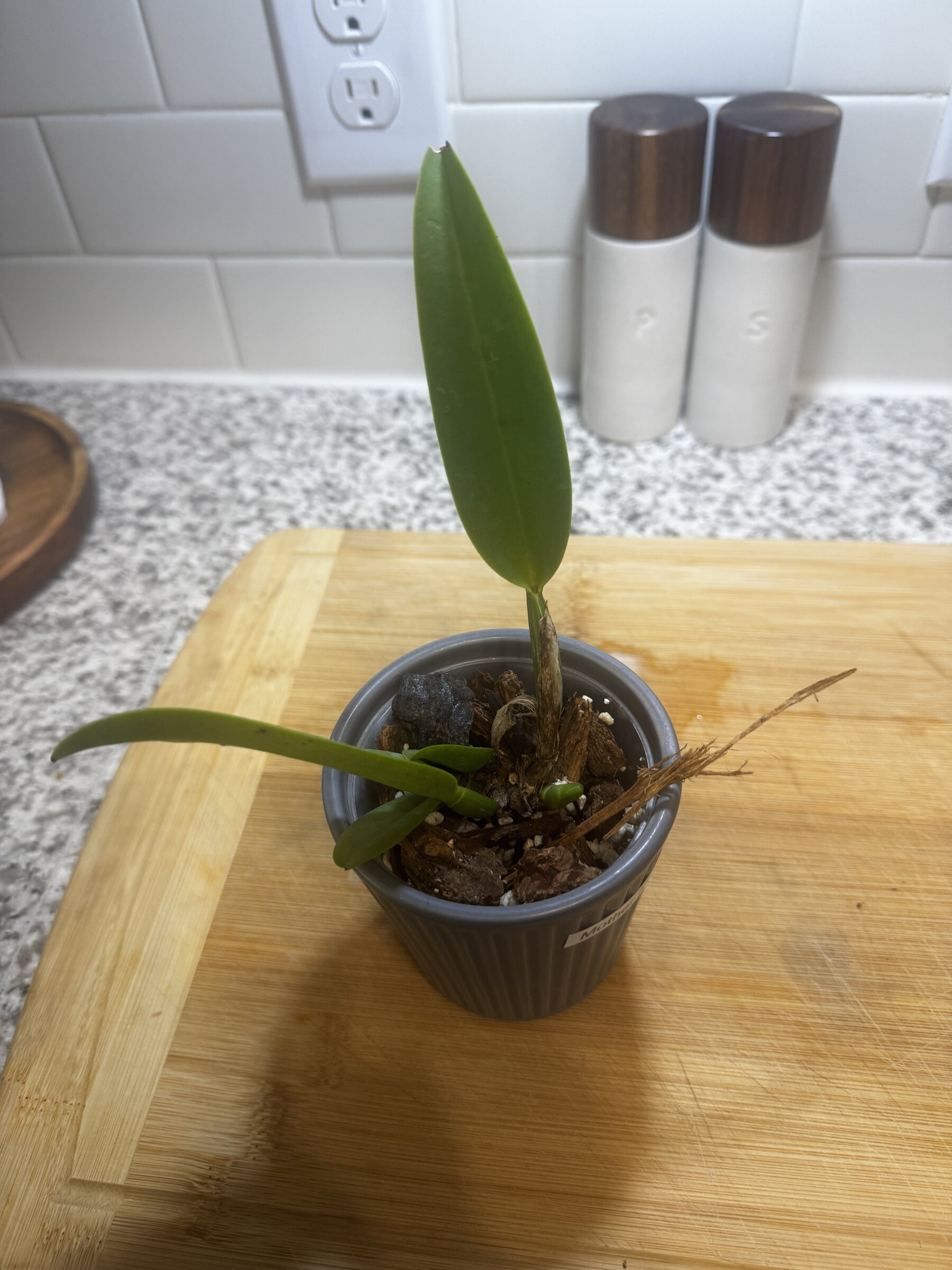
What Happened
Applied a light feeding while the new lead was actively growing.
Observations
- The lead had elongated and was clearly developing toward a new pseudobulb.
- Leaves were firm, medium green, and free of concerning yellowing or spotting.
- A small nick at one leaf tip remained stable cosmetic damage.
- Bark, charcoal, and perlite remained open and showed no sign of staying excessively wet.
2026-07-05 — Active Lead
Photos
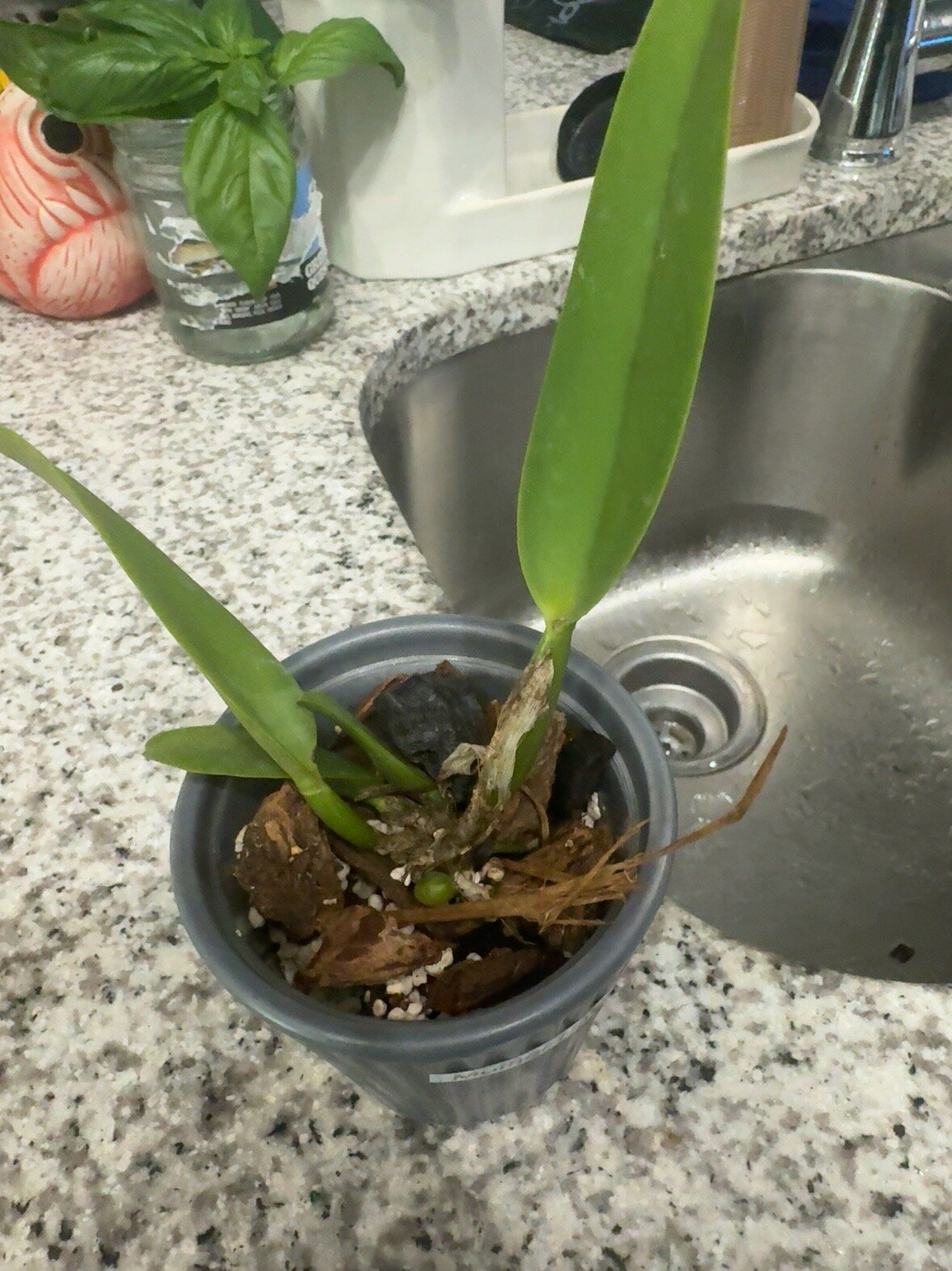
Observations
- The basal lead remained active.
- Leaves retained good firmness and color.
2026-06-28 — Steady Recovery
Photos

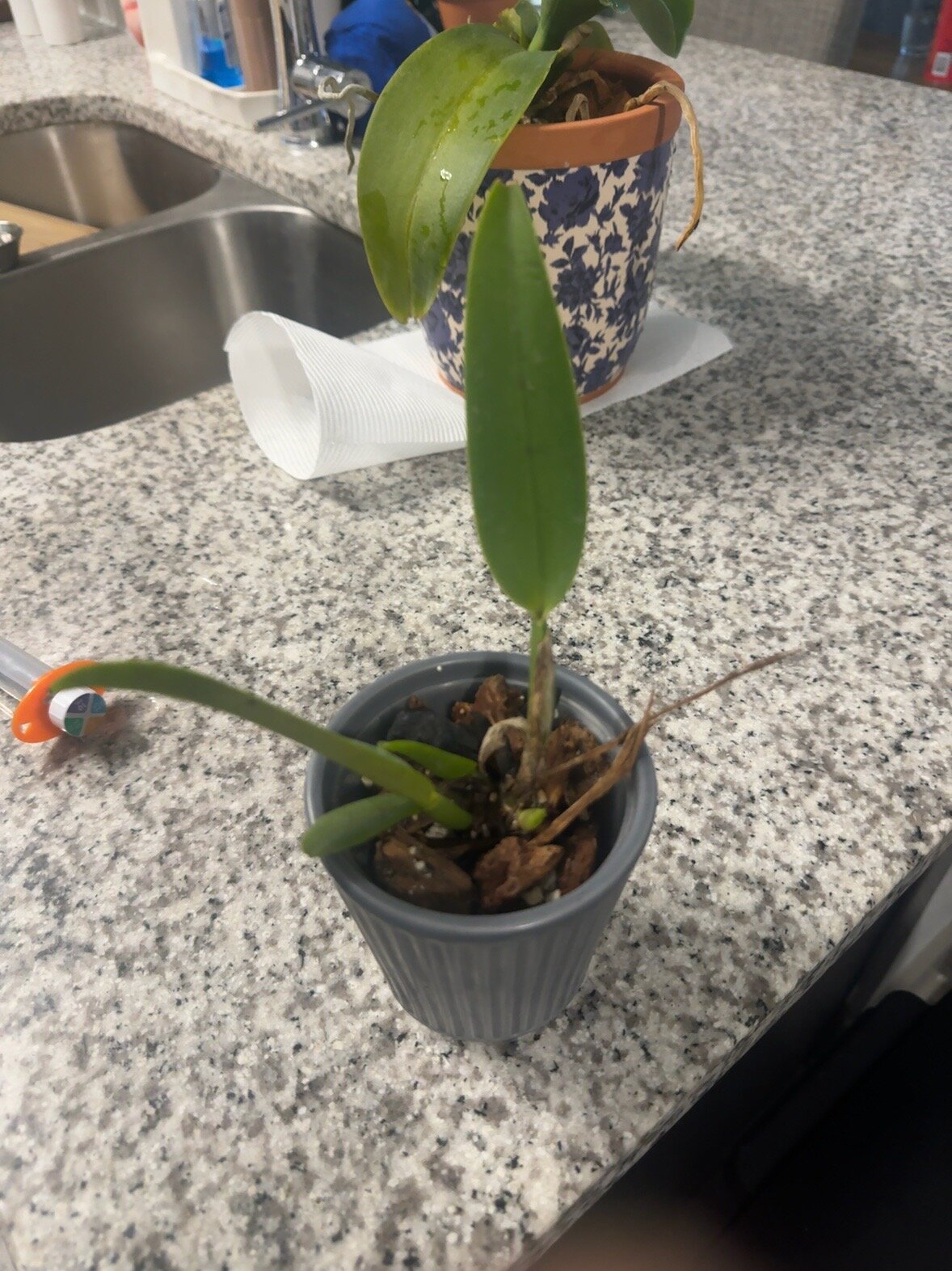
Observations
- The active lead remained green.
- The mature pseudobulbs continued supporting the plant.
- The medium remained open and well drained.
2026-06-21 — Indoor Growth Continues
Photos

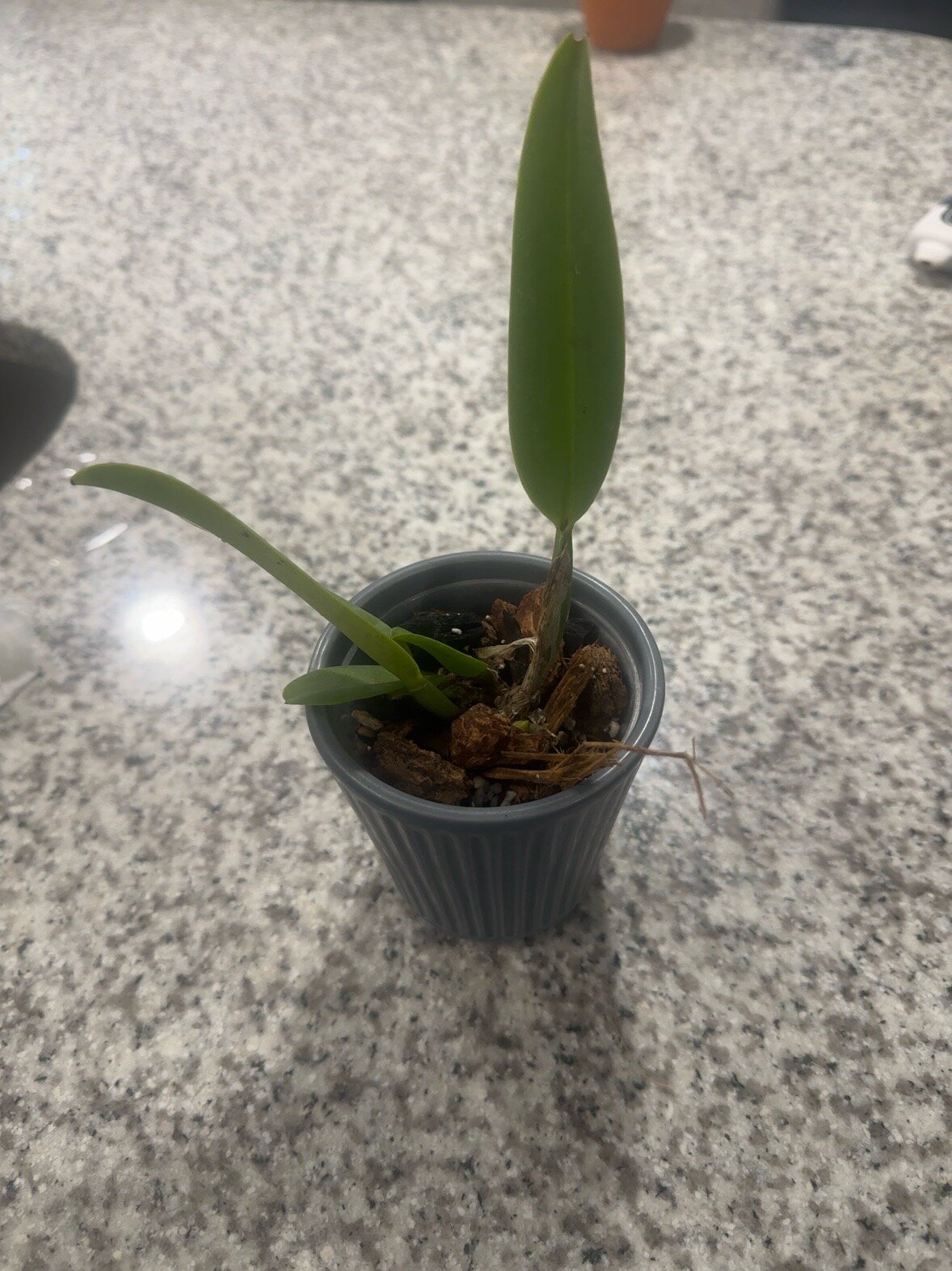
Observations
- The plant remained established in the April medium.
- Leaves remained firm.
- Basal growth continued without a documented setback.
2026-06-13 — Settled After the Move
Photos
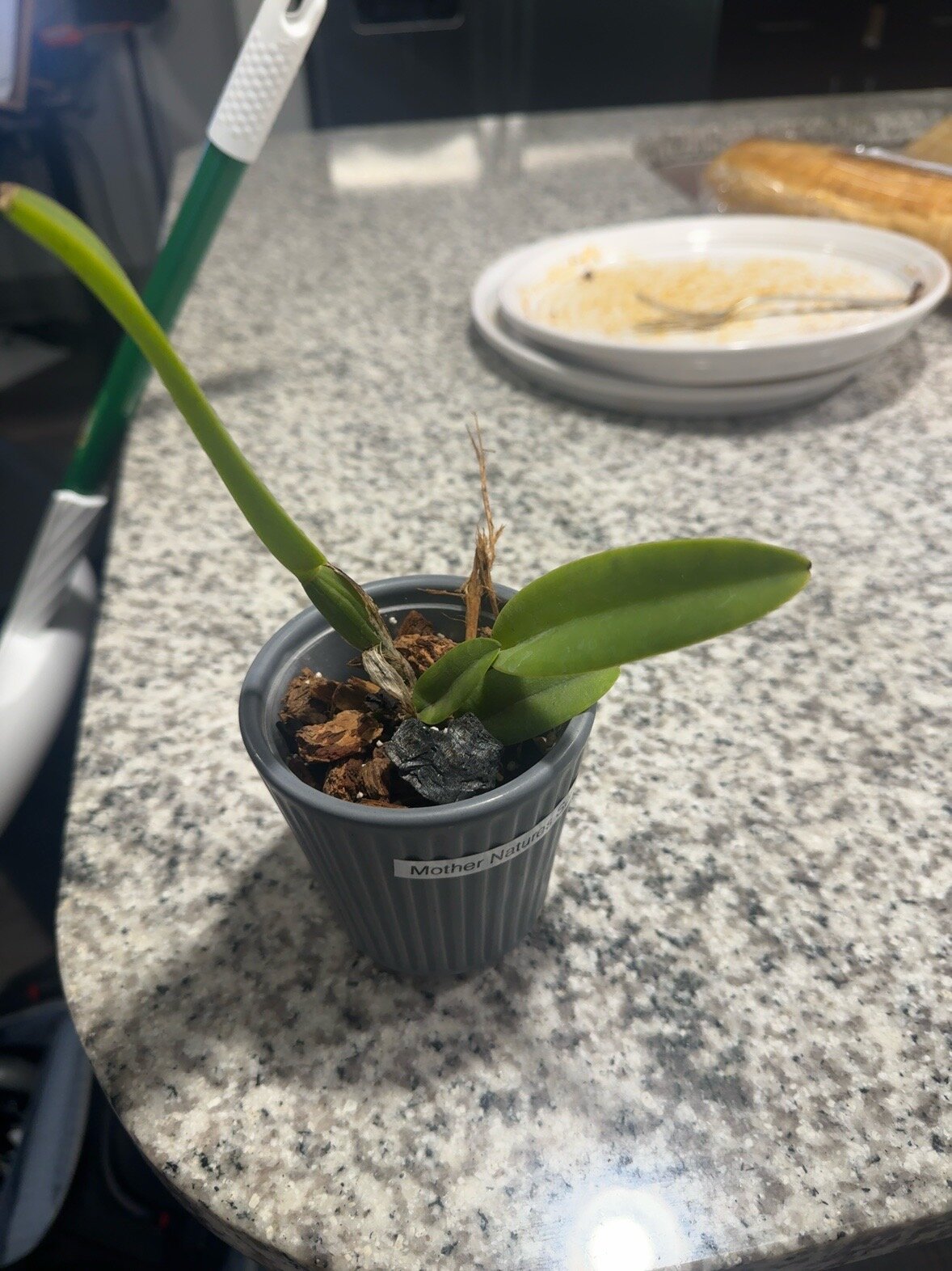
What Happened
Resumed documentation after the collection moved from Florida to Texas.
Notes
The orchids were kept indoors under grow lights because outdoor temperatures at the new home exceeded 100 degrees.
2026-04-18 — Early Repot Recovery
Photos
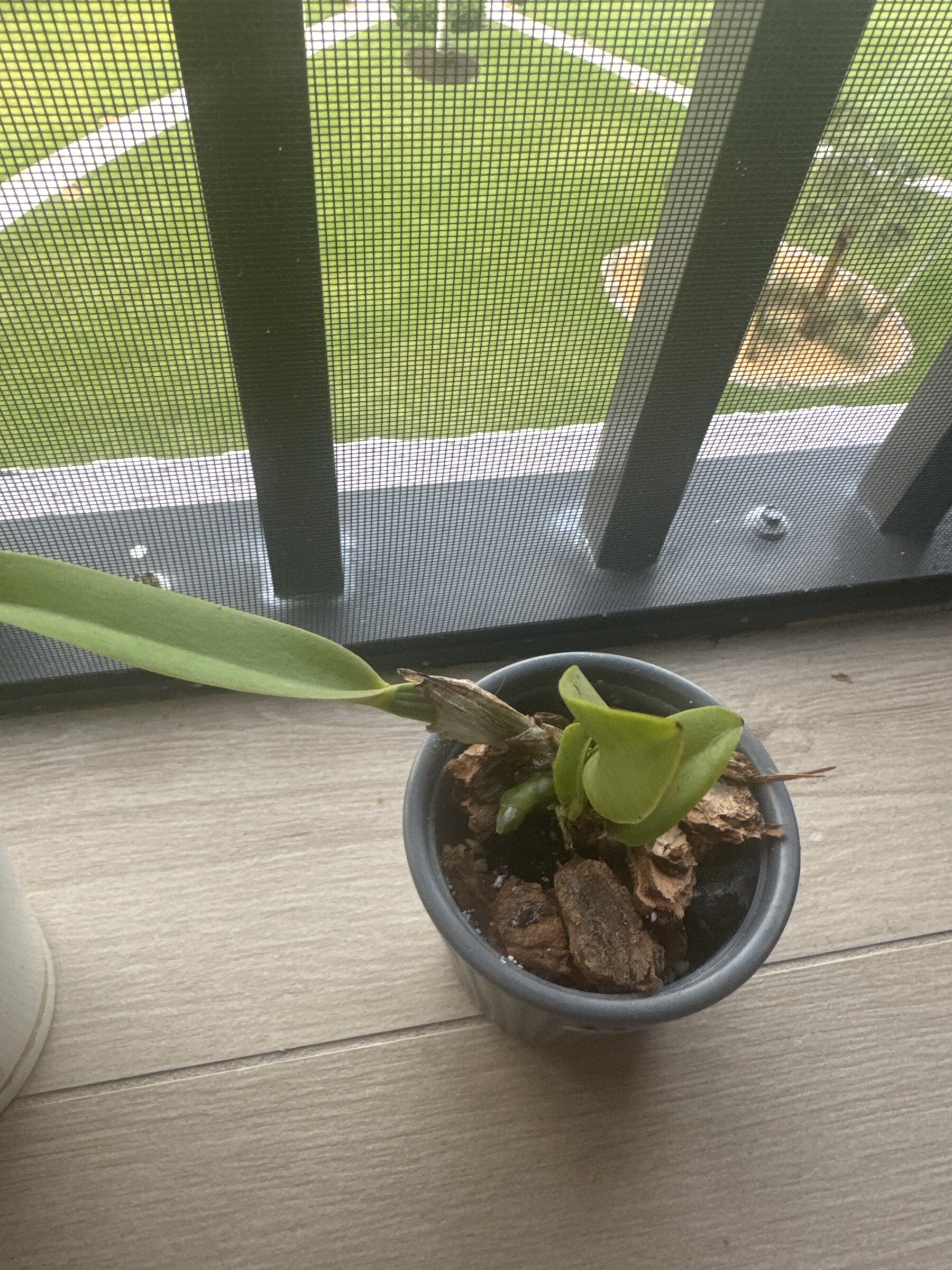
Observations
- Foliage remained green.
- The new medium remained open.
- The plant continued settling into the new pot.
2026-04-15 — Post-Repot Check
Photos
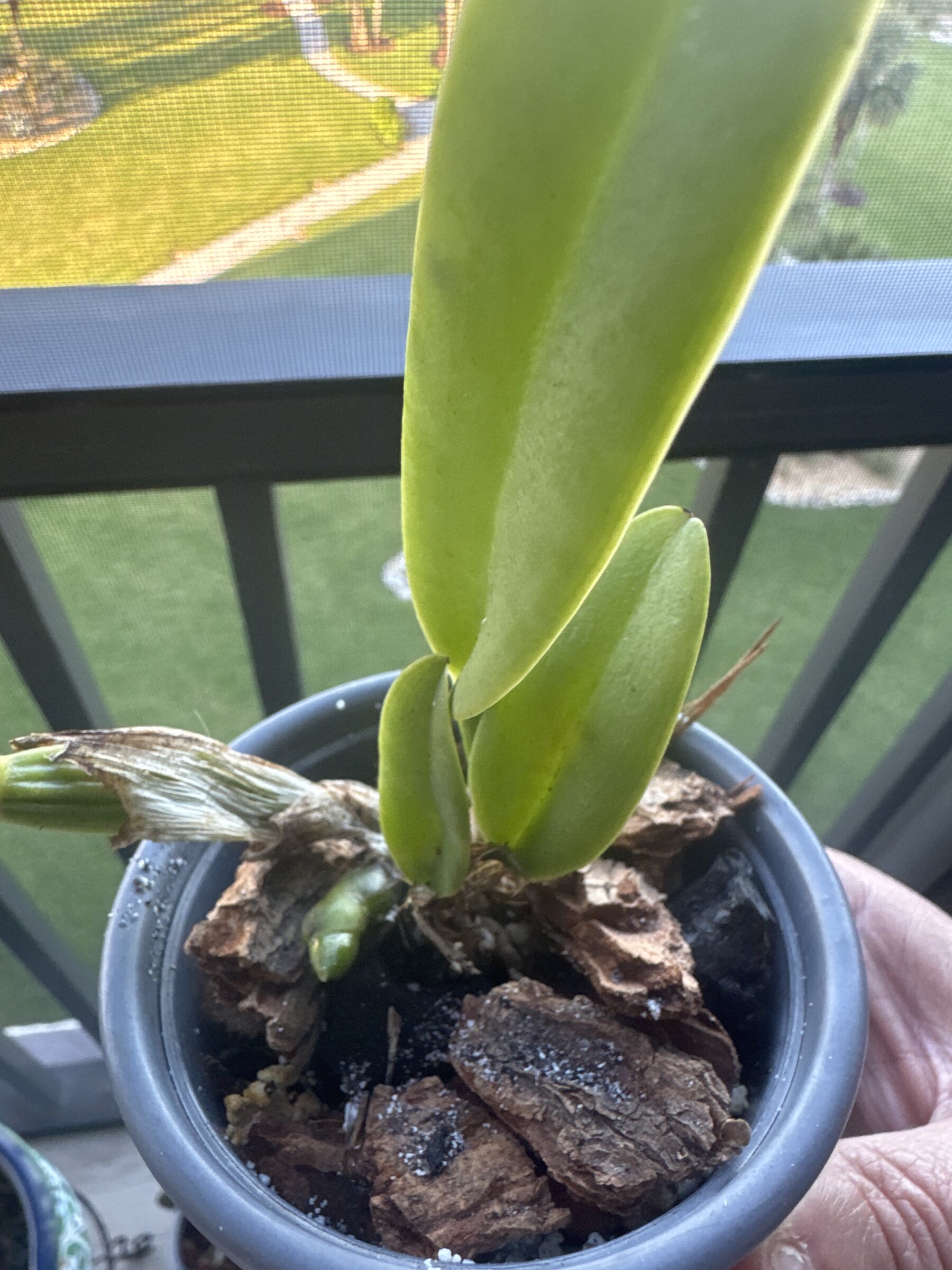
Observations
- The plant remained upright.
- No immediate collapse followed the root cleanup.
2026-04-12 — Root Cleanup and Repot
Photos


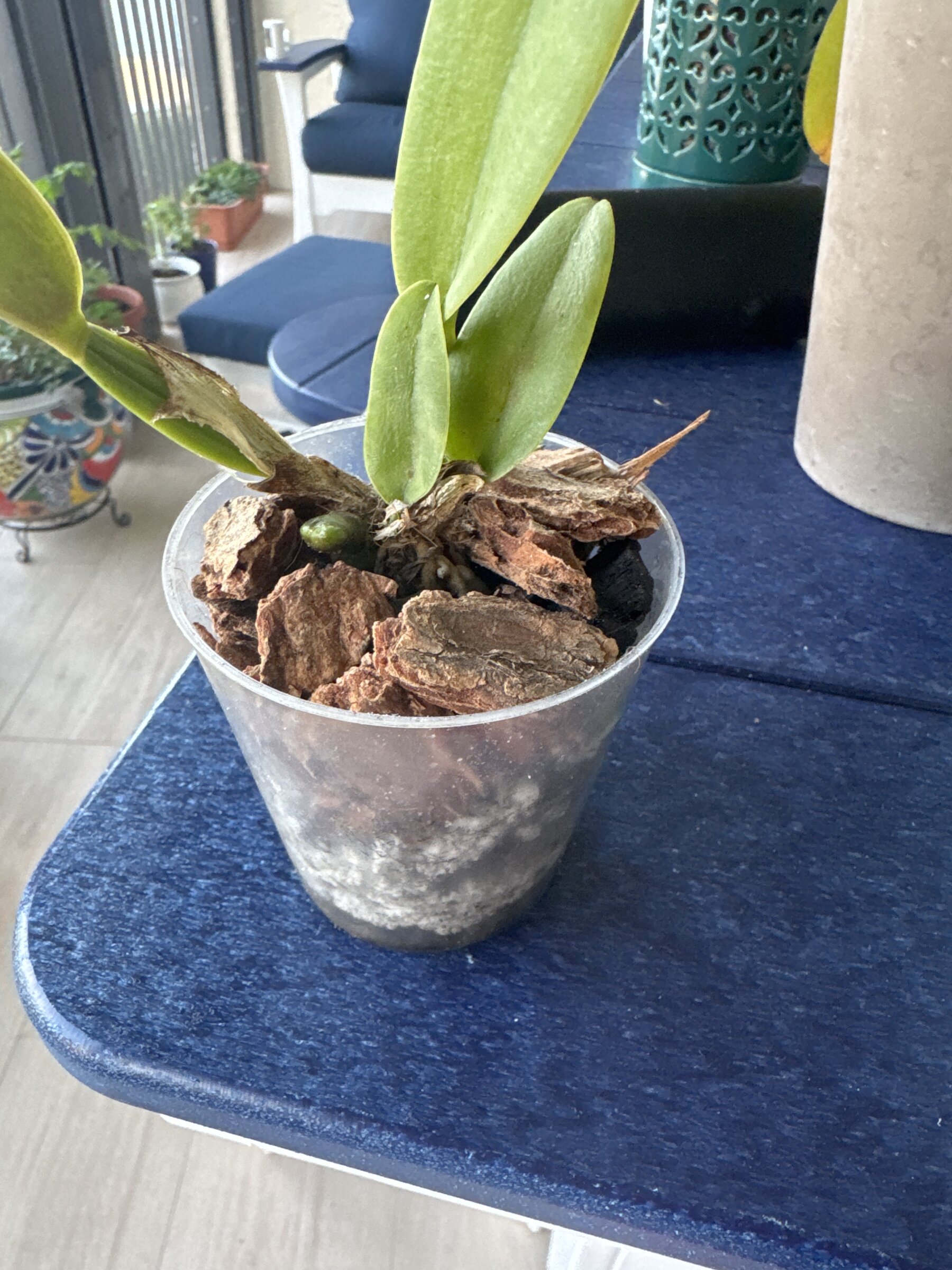
What Happened
Removed the plant from its old setup, inspected the root system, removed dead brown roots, and repotted it into fresh open medium.
Observations
- The old root system was compromised.
- Brown, dead roots required cleanup.
- The new pot contained coarse bark, charcoal, and perlite.
- The active basal growth remained intact through the repot.
Lessons
The plant needed a clean, airy setup, but the living growths and viable roots had to be preserved rather than stripped indiscriminately.
2026-04-05 — Growth Check
Photos

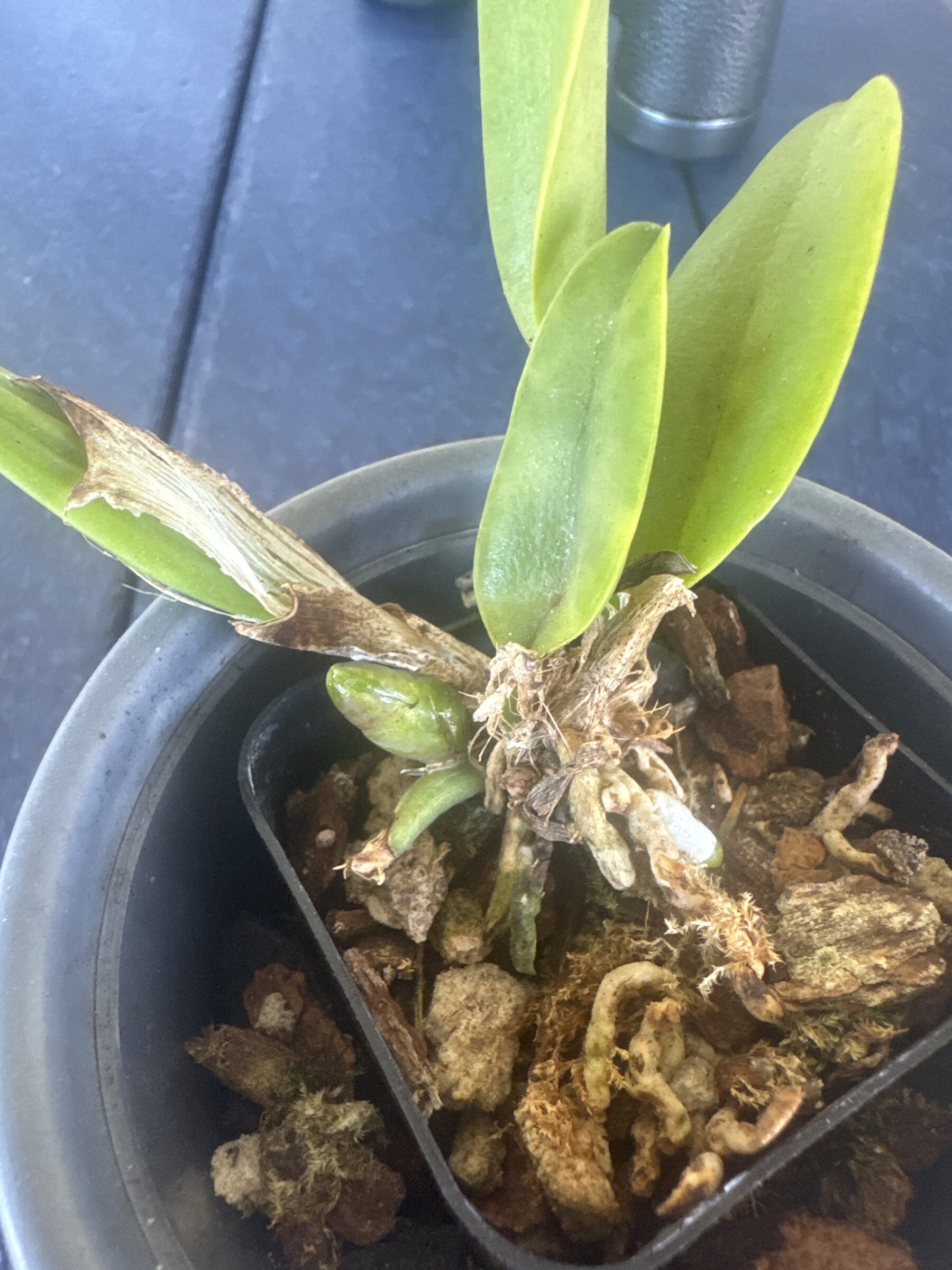
Observations
- The new growth remained active.
- Mature leaves remained green.
2026-04-03 — Basal Shoot Enlarges
Photos
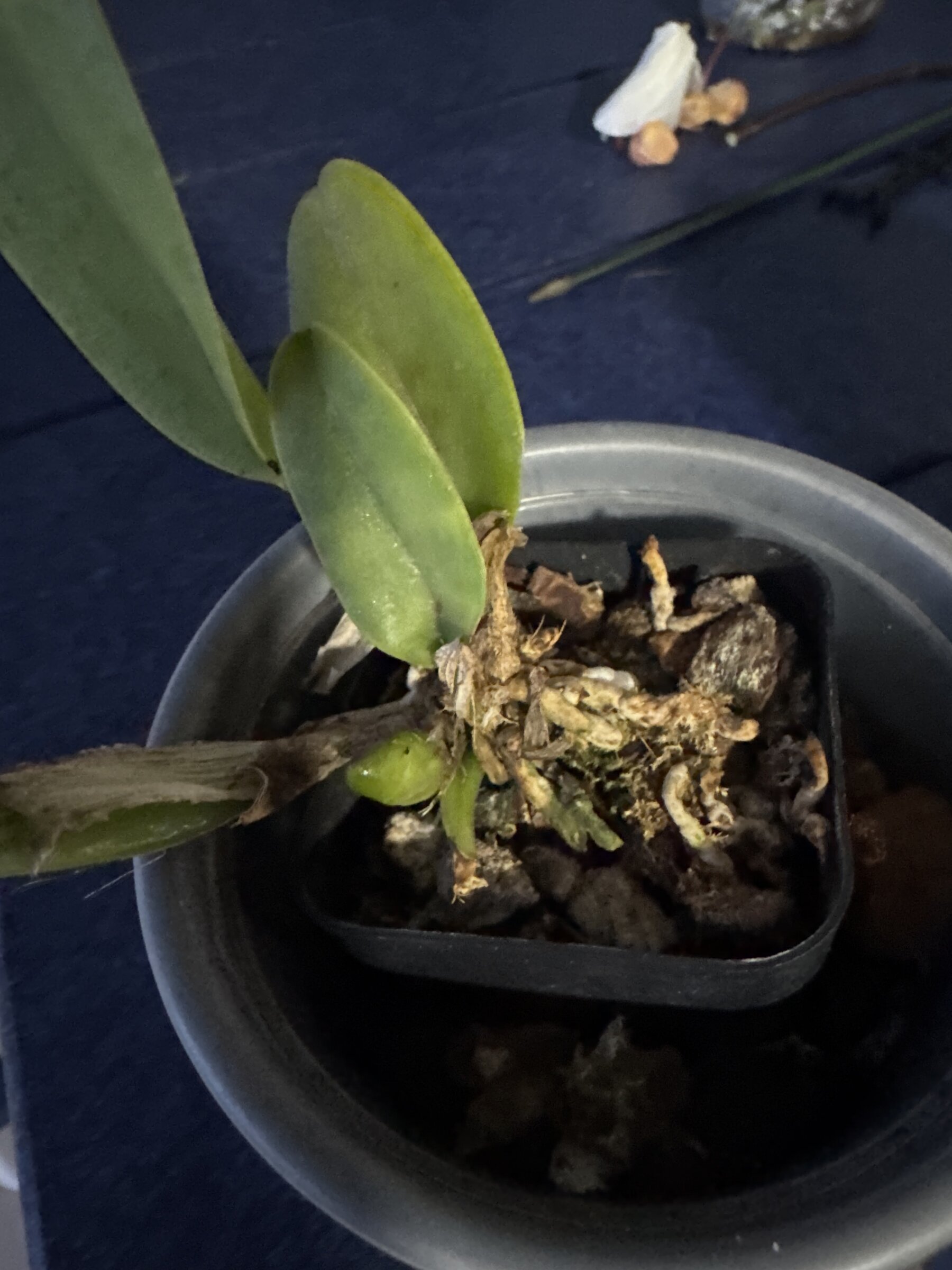
What Happened
The new basal growth had visibly enlarged.
2026-03-29 — New Growth Continues
Photos
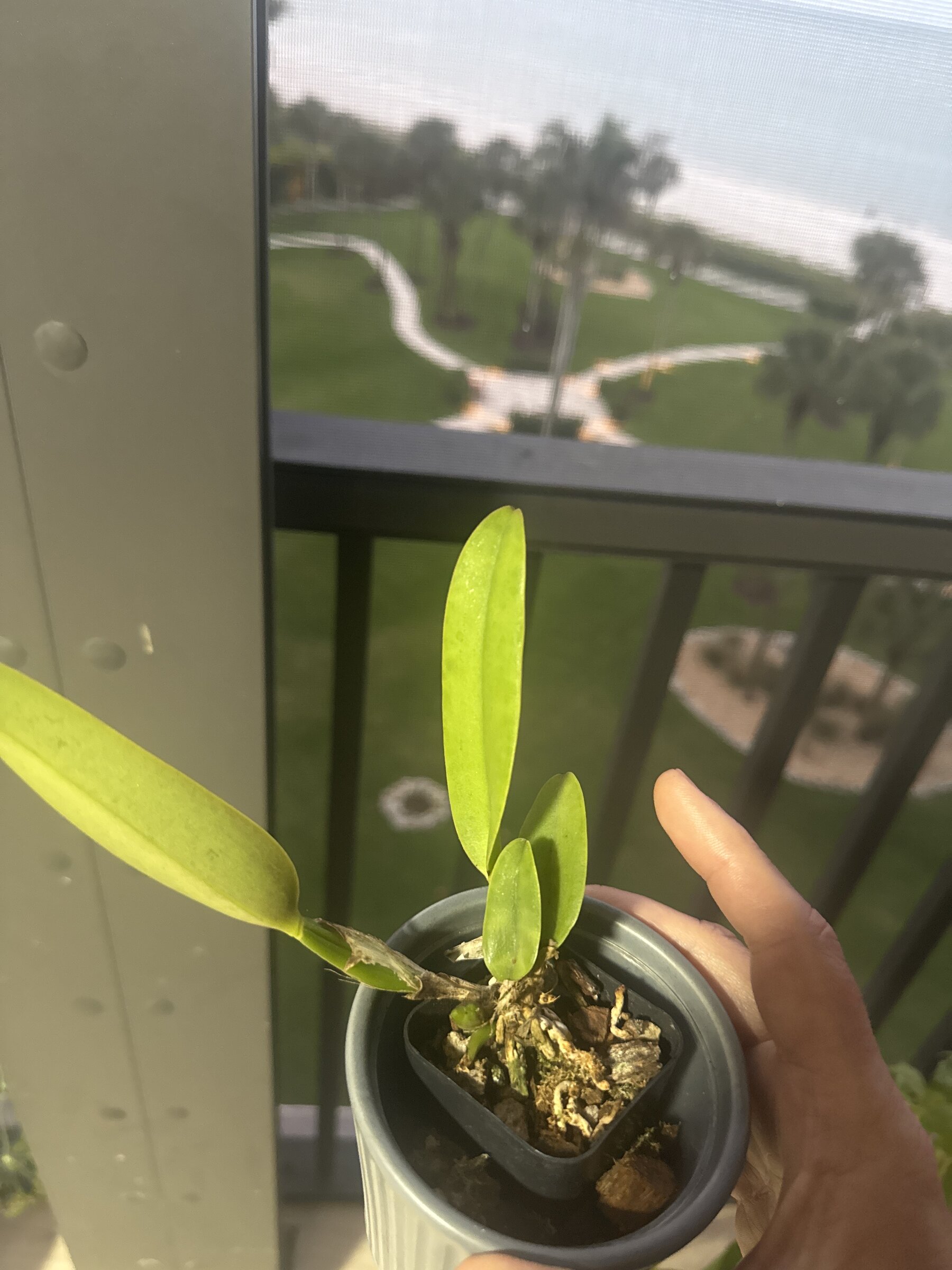
Observations
- The basal shoot remained visible.
- The foliage stayed green while the root system was still being monitored.
2026-03-23 — New Basal Growth Identified
Photos

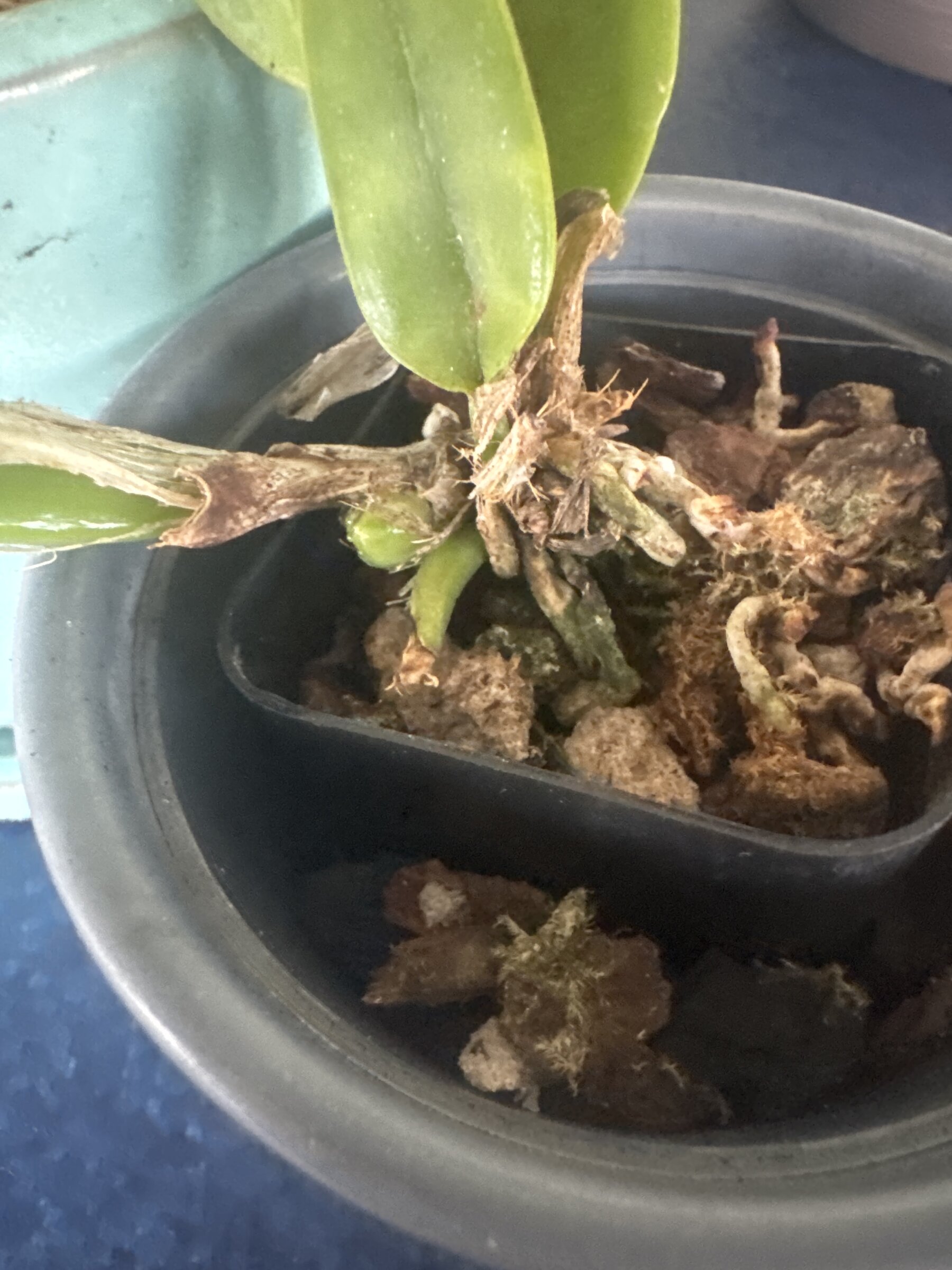
What Happened
Identified a green shoot in the middle of the plant as likely new growth. A second growth to its right had been present since acquisition.
2026-03-16 — One Week Later
Photos
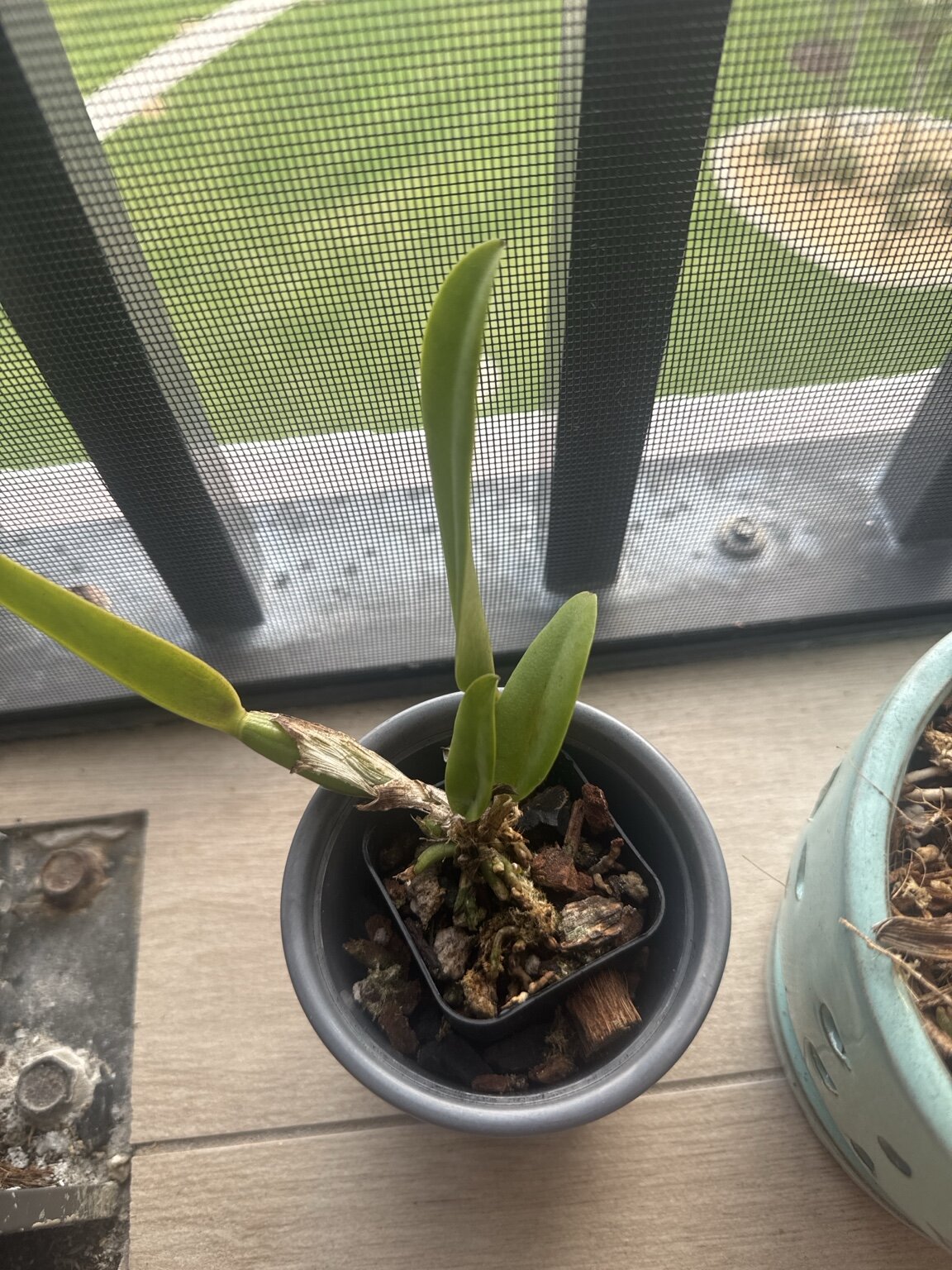
Observations
- The older growths remained intact.
- No major foliage loss was documented.
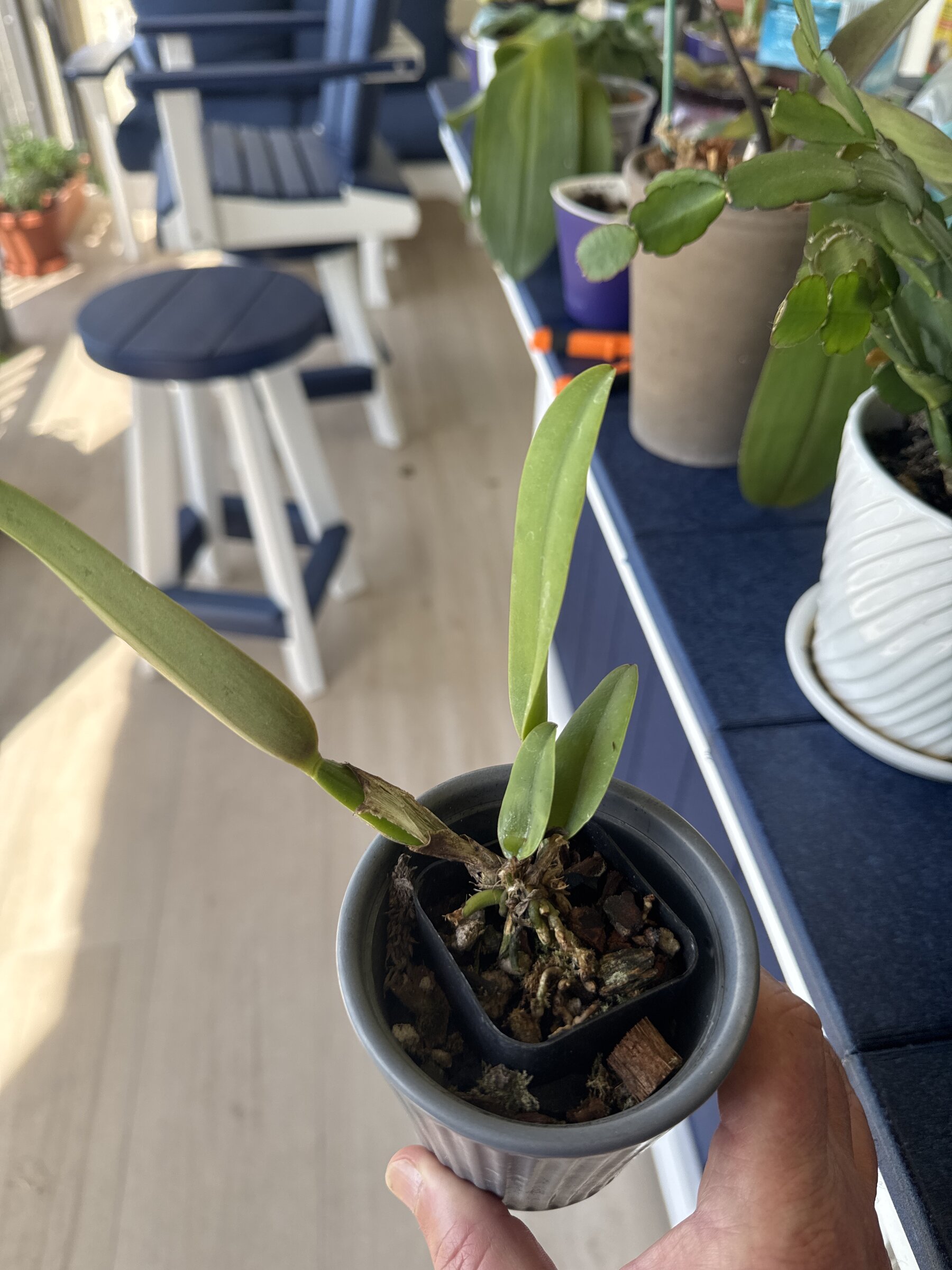
2026-03-07 — Weekly Check
Photos
Observations
- Leaves remained firm and green.
- The plant remained stable in the supported setup.
2026-02-28 — Stabilized With Charcoal
Photos

What Happened
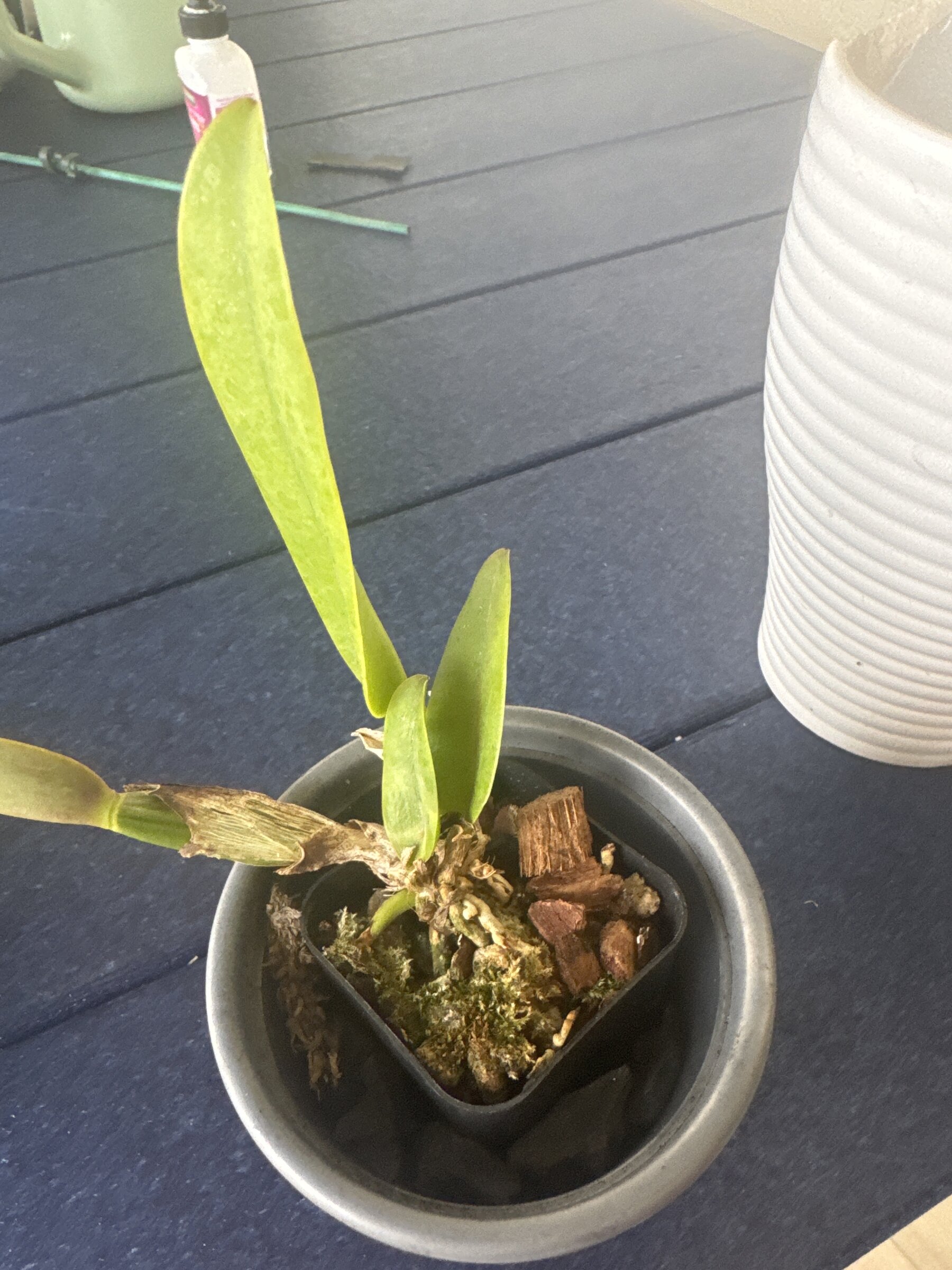
Placed the nursery pot inside another pot and added charcoal chips to reduce wobbling.
Notes
This was a stabilization step, not the full April repot.
2026-02-22 — Continued Monitoring
Photos
Observations
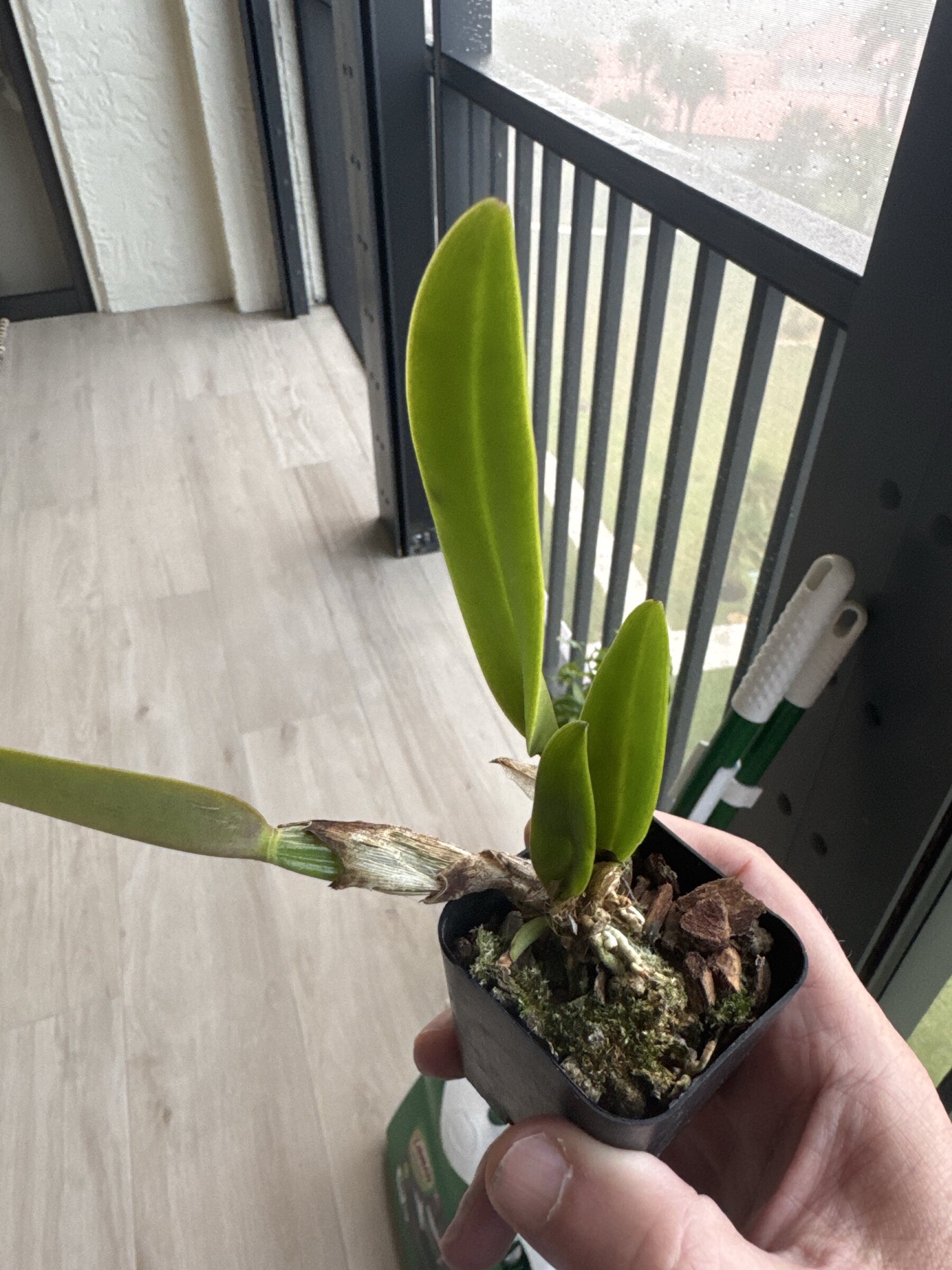
- The plant remained upright when supported.
- The foliage remained green.
2026-02-19 — Top-Heavy in the Nursery Pot
Photos
What Happened
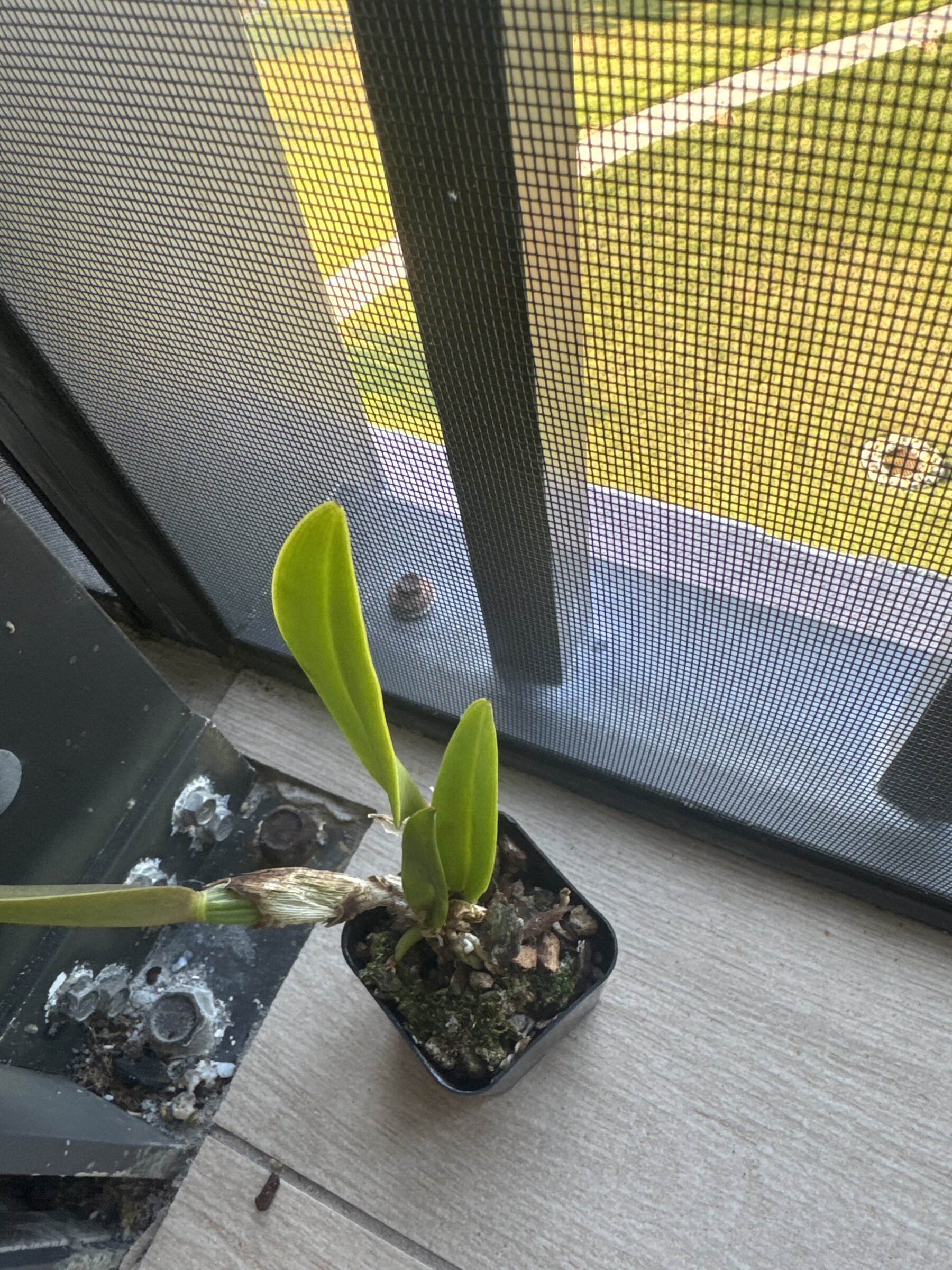
The plant repeatedly fell over in its flimsy container.
Notes
The immediate problem was stability rather than a documented foliage decline.
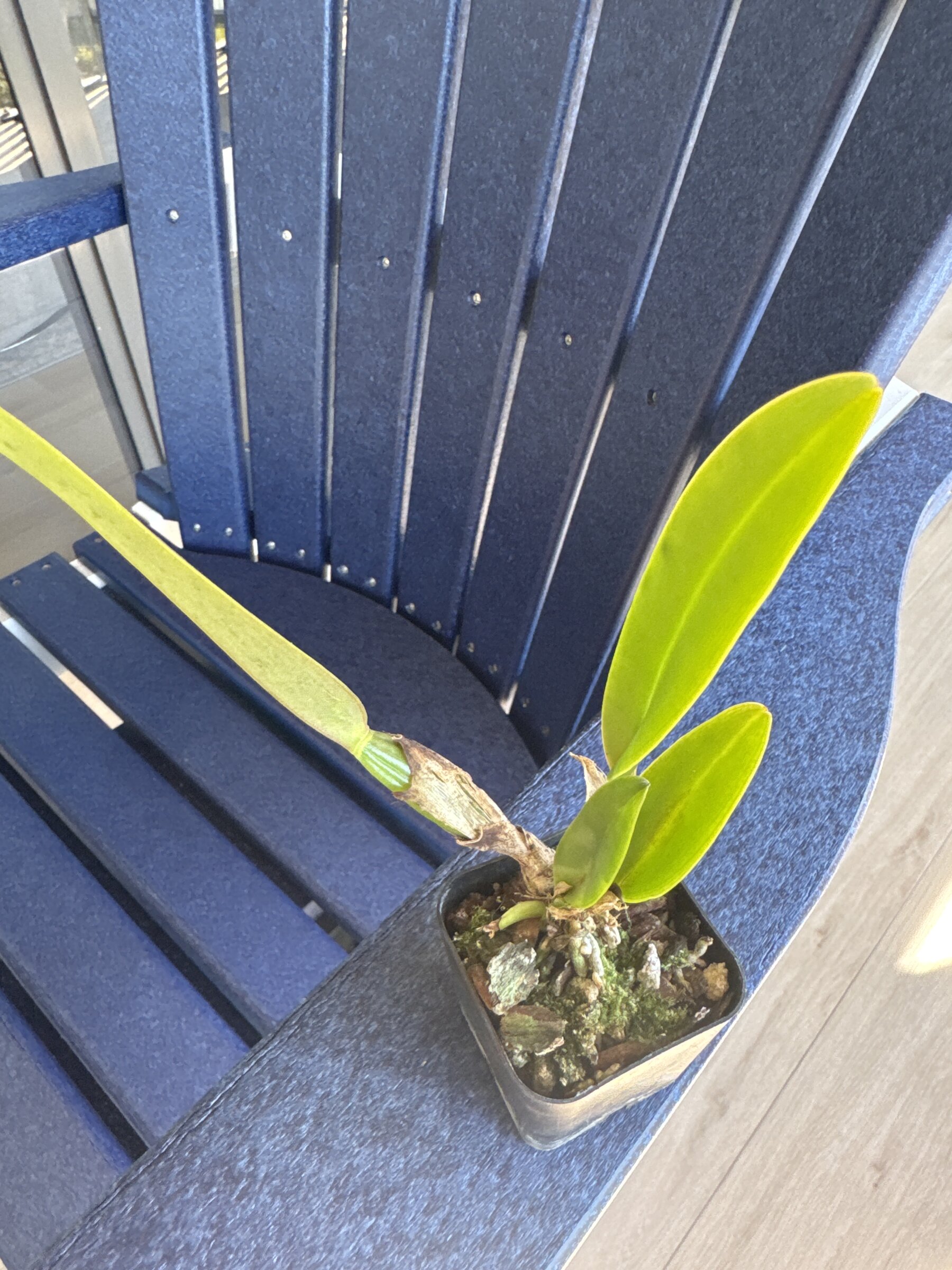
2026-02-11 — Early Check
Photos
What Happened
Completed the first documented follow-up after acclimation.
Observations
- Leaves remained green.
- Existing pseudobulbs remained upright.
- No rapid decline was visible above the medium.
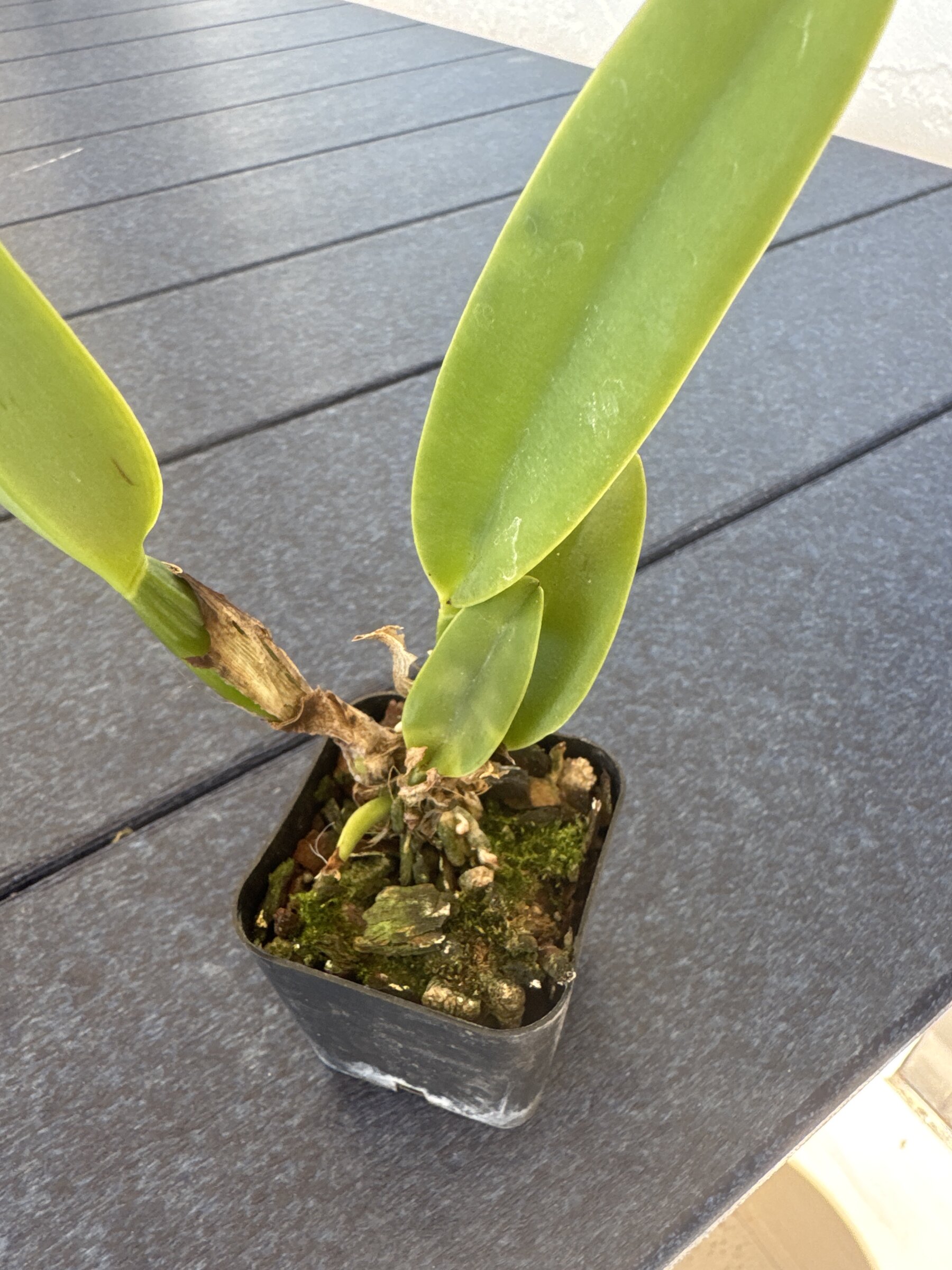
2026-02-03 — Packaging Removed
Photos
What Happened
Removed the mesh packaging and inspected the plant in its nursery setup.
Observations
- The foliage remained firm.
- The plant was upright but top-heavy.
- No emergency repot was documented.
2026-02-01 — Acquired
Photos
What Happened
Acquired a young Better-Gro Cattleya as the next orchid project.
Observations
- Leaves were firm and green.
- The plant was young, with small pseudobulbs and no flowers.
- It remained in the original mesh sleeve and nursery container.
Notes
The photograph’s XMP sidecar records February 1. The exported conversation begins the assessment on February 2.