Honey Pie
Honey Pie was less of a rescue and more of a case of, “I didn’t think Kroger deserved to ruin this one.”
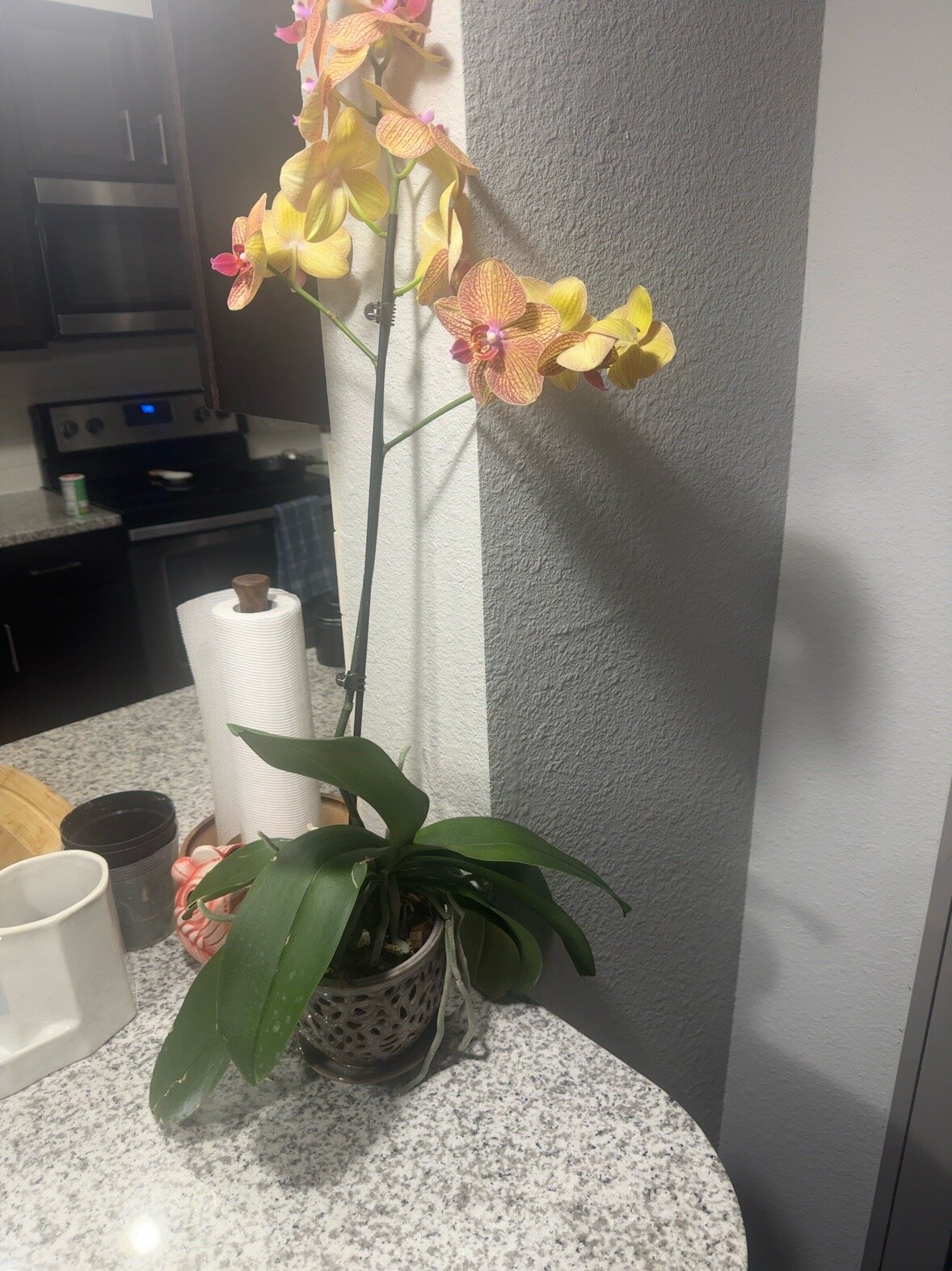
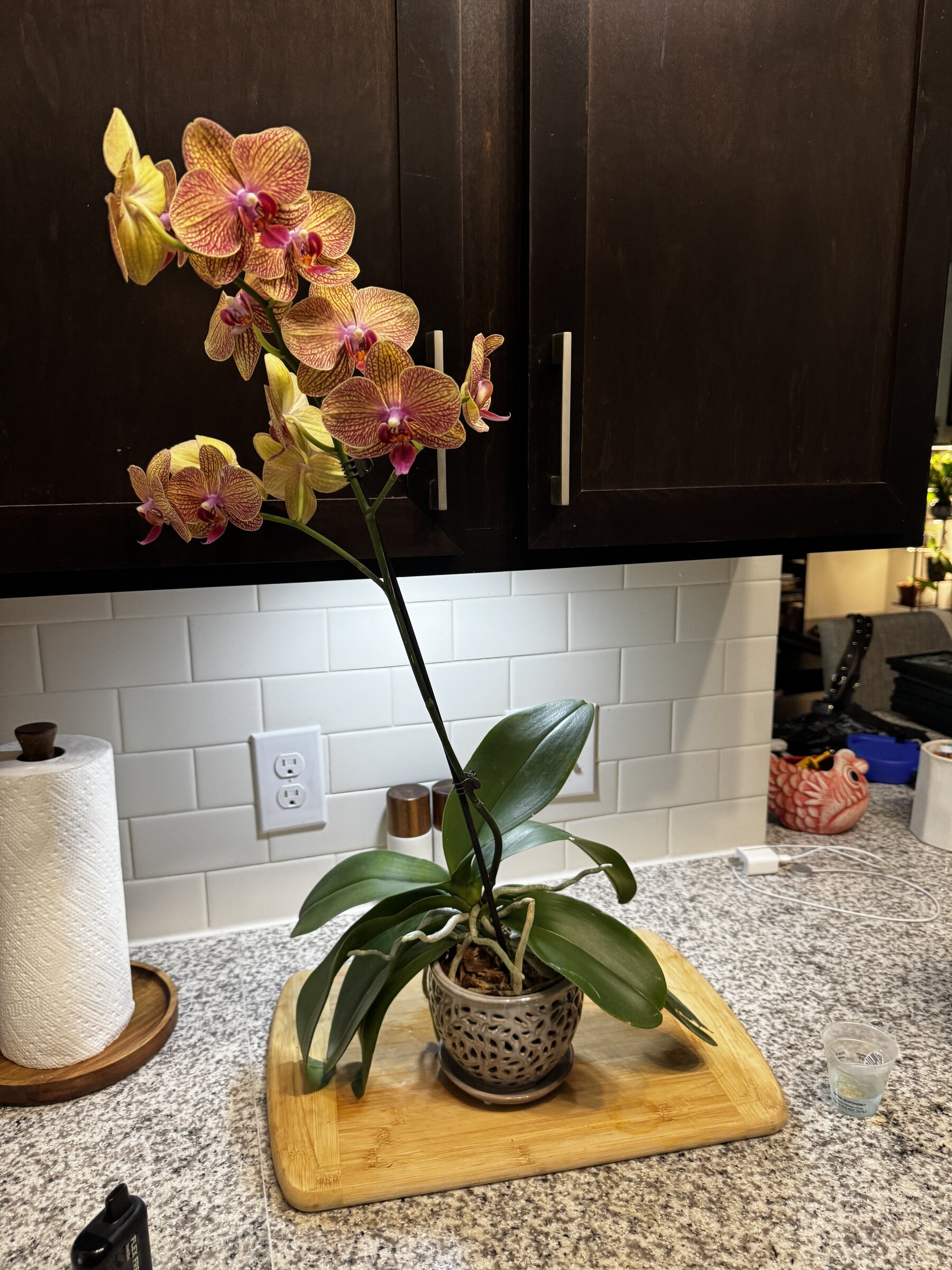
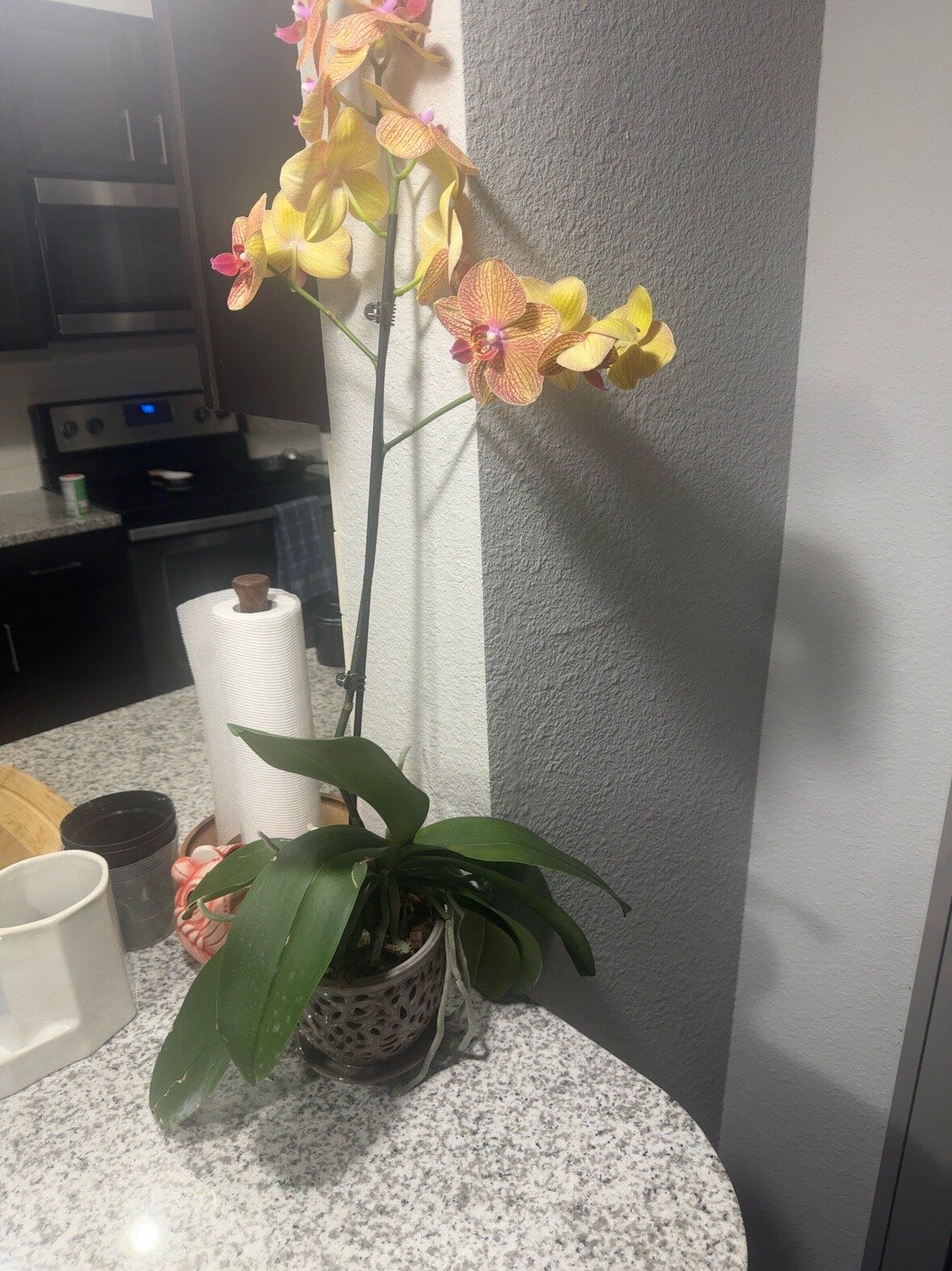
There was nothing especially tragic about her when I brought her home. She was a large, healthy Phalaenopsis with thick leaves, roots going everywhere, and a ridiculous number of yellow and raspberry flowers. Kroger had managed to get her that far. I decided that was enough Kroger involvement.
The name came first. The warm yellow flowers looked like honey until you got close enough to see all the raspberry veining and the bright pink centers. Honey Pie fit, and she joined the rest of the Beatles garden on June 14.
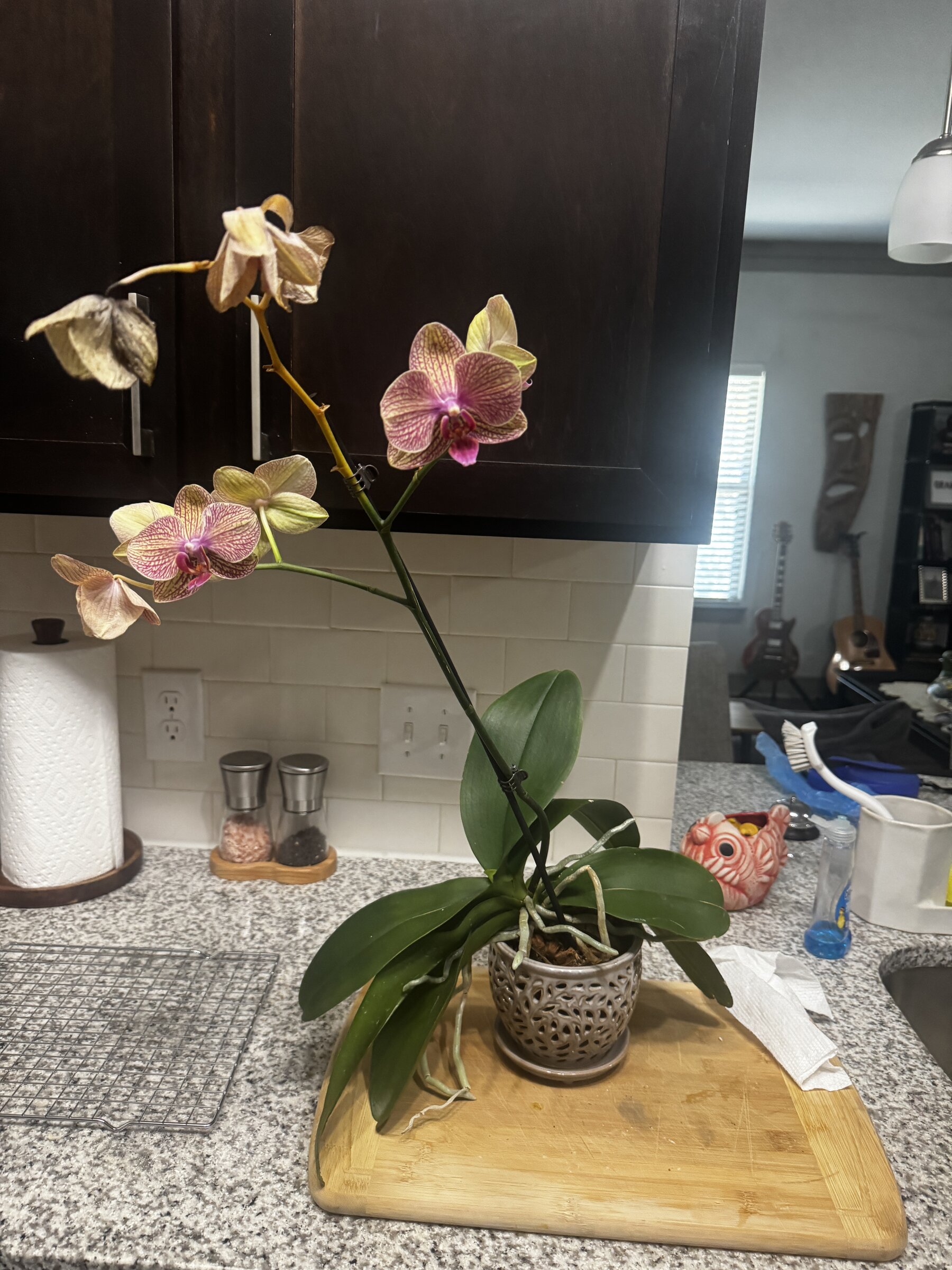
Most of her first six weeks were remarkably uneventful, which is a compliment. The leaves stayed firm. The roots stayed thick and continued growing. The flowers aged slowly instead of collapsing all at once. She was still carrying most of the original display in late July, long after I expected a grocery-store orchid to start giving up.
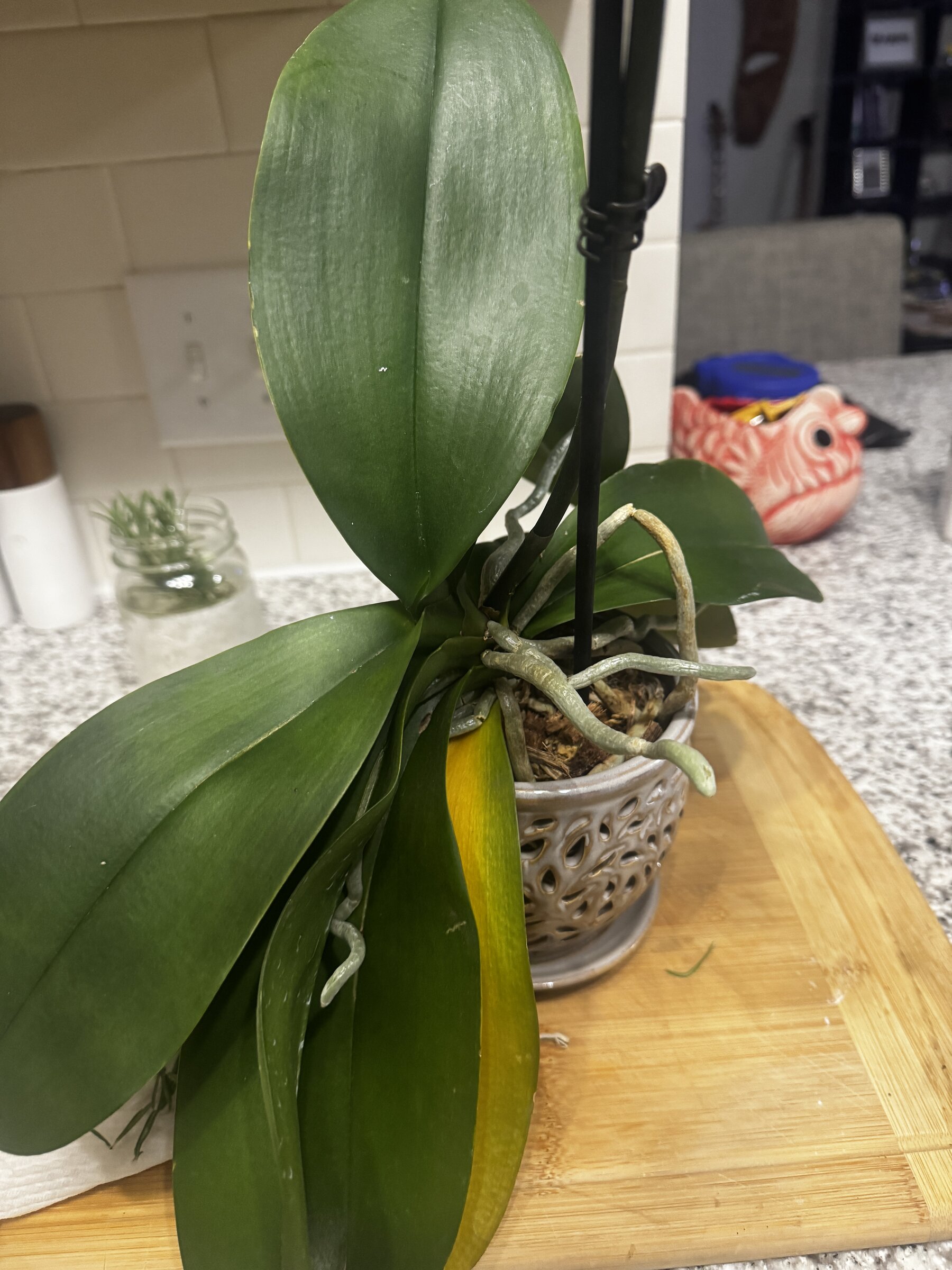
The first real change came on July 26, when the oldest bottom leaf turned yellow. Because it was one leaf, evenly yellowing from the bottom while everything above it remained healthy, it looked like normal aging rather than a problem. Even then, Honey Pie was still in bloom and otherwise looked almost exactly as good as the day she came home.
Honey Pie did not need a dramatic recovery. She needed somebody to notice a good orchid before neglect turned it into one. So far, getting her out of Kroger may have been the entire rescue.
Undated and historical notes
These sections retain their original wording and source order. They may describe earlier expectations; no exact dates have been inferred.
Source placement: after “2026-07-26 — Oldest Leaf Begins to Yellow”.
Looking Ahead
Future updates should capture:
- The end of the original bloom display.
- Natural loss of the oldest leaf.
- New leaf growth from the crown.
- Continued root growth.
- The first rebloom after leaving Kroger.
Observations and updates
Newest first. Observations on the same date retain their original order.
2026-09-07 — Weekly Update
Photos


Observations
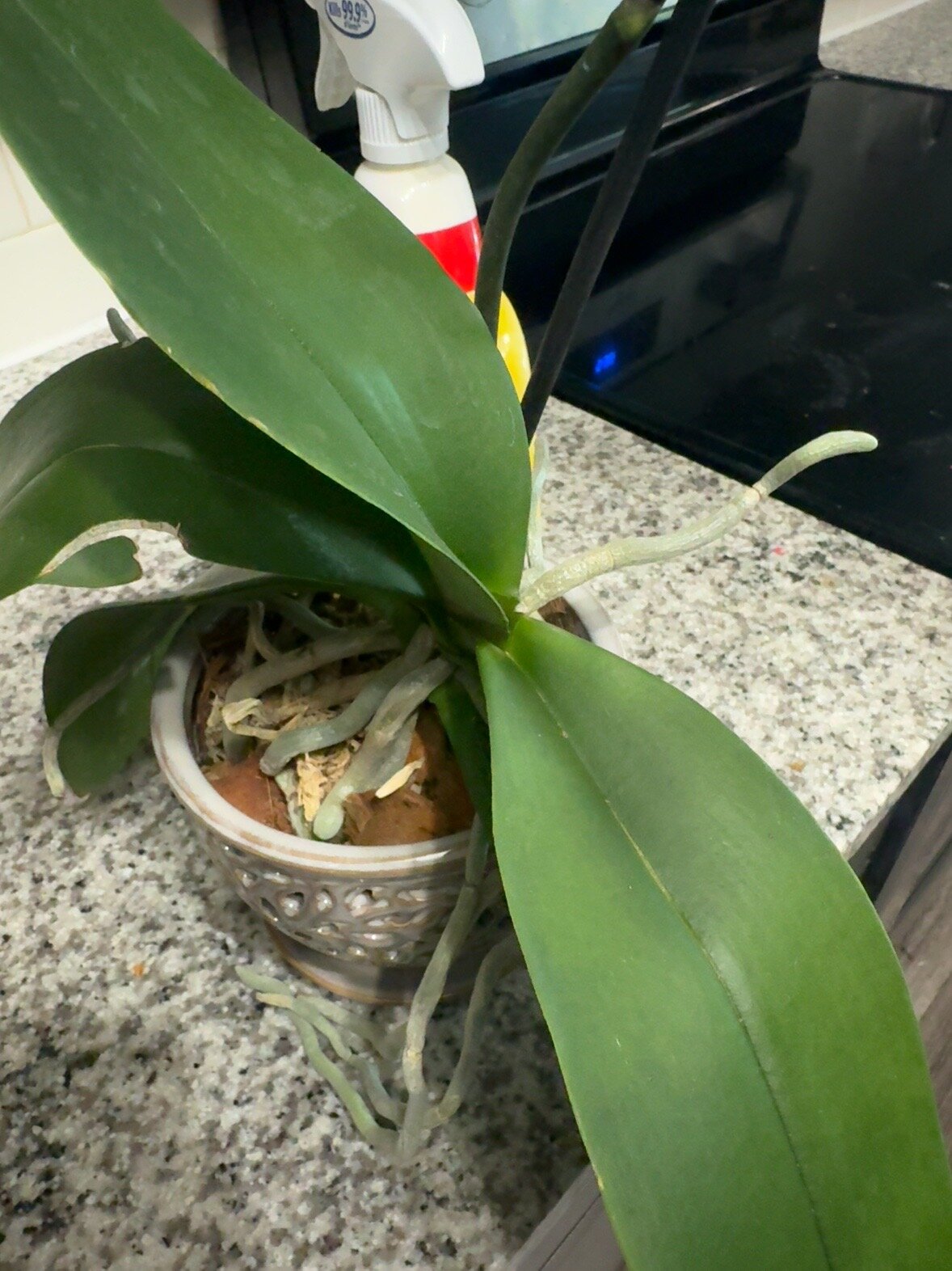
Her marathon bloom is finally coming to an end. The upper branch of the spike is now yellowing and dying back, along with its spent flowers, while the lower branches remain green and still have a few decent blooms. The plant itself continues to look healthy—firm green leaves and substantial roots—so this looks like normal end-of-bloom behavior.
Care
Watered
2026-08-30 — Weekly Update
Photos
Observations
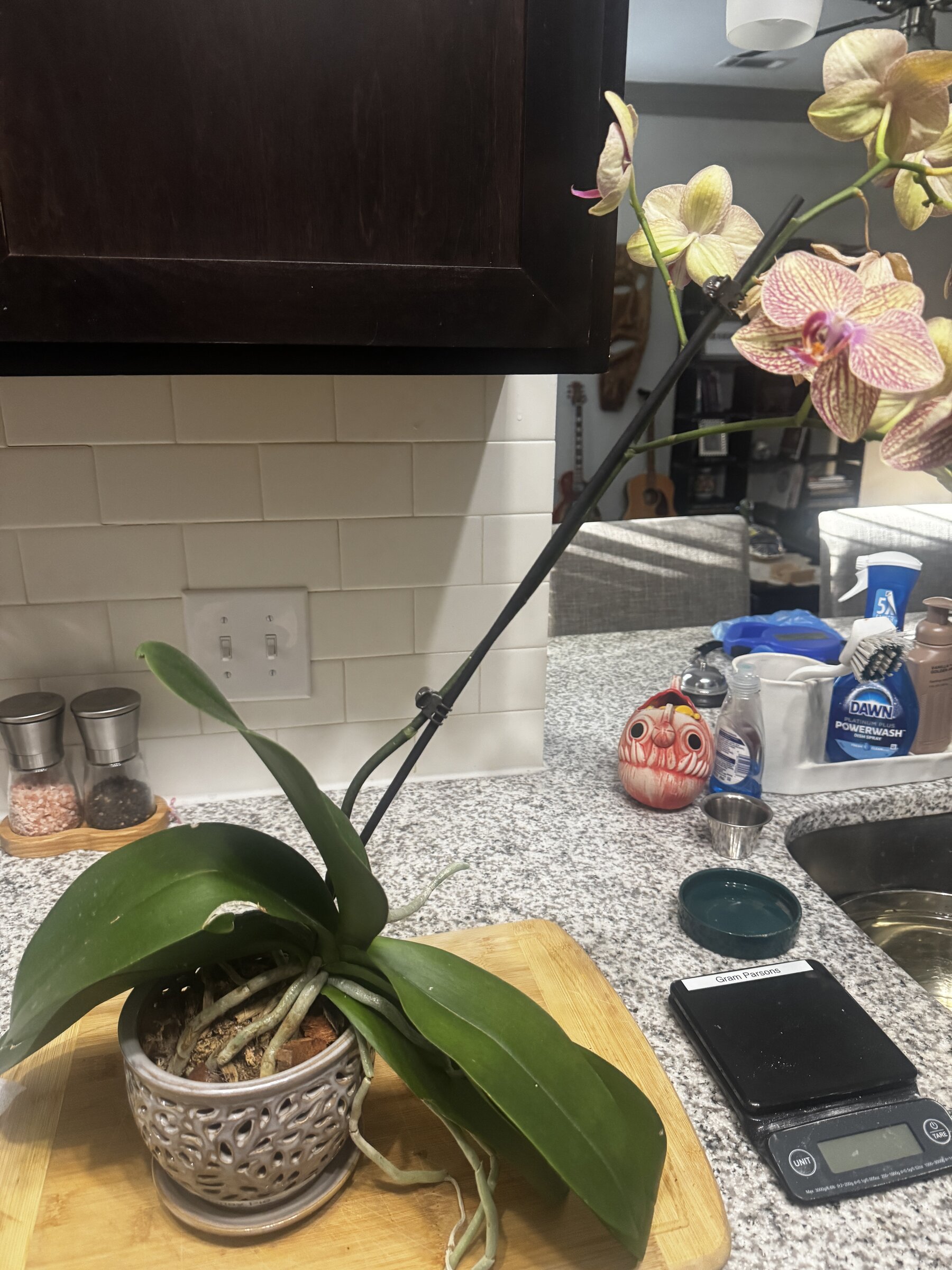
She still looks very healthy vegetatively: the leaves are firm and green, and the exposed roots remain substantial. The bloom cycle is now clearly in its final stretch, with only a handful of flowers remaining, but the flower spike itself is still green—so I’d continue leaving it alone and see what Honey Pie does with it once the last blooms drop.
Care
watered
2026-08-23 — Weekly Update
Photos
Observations
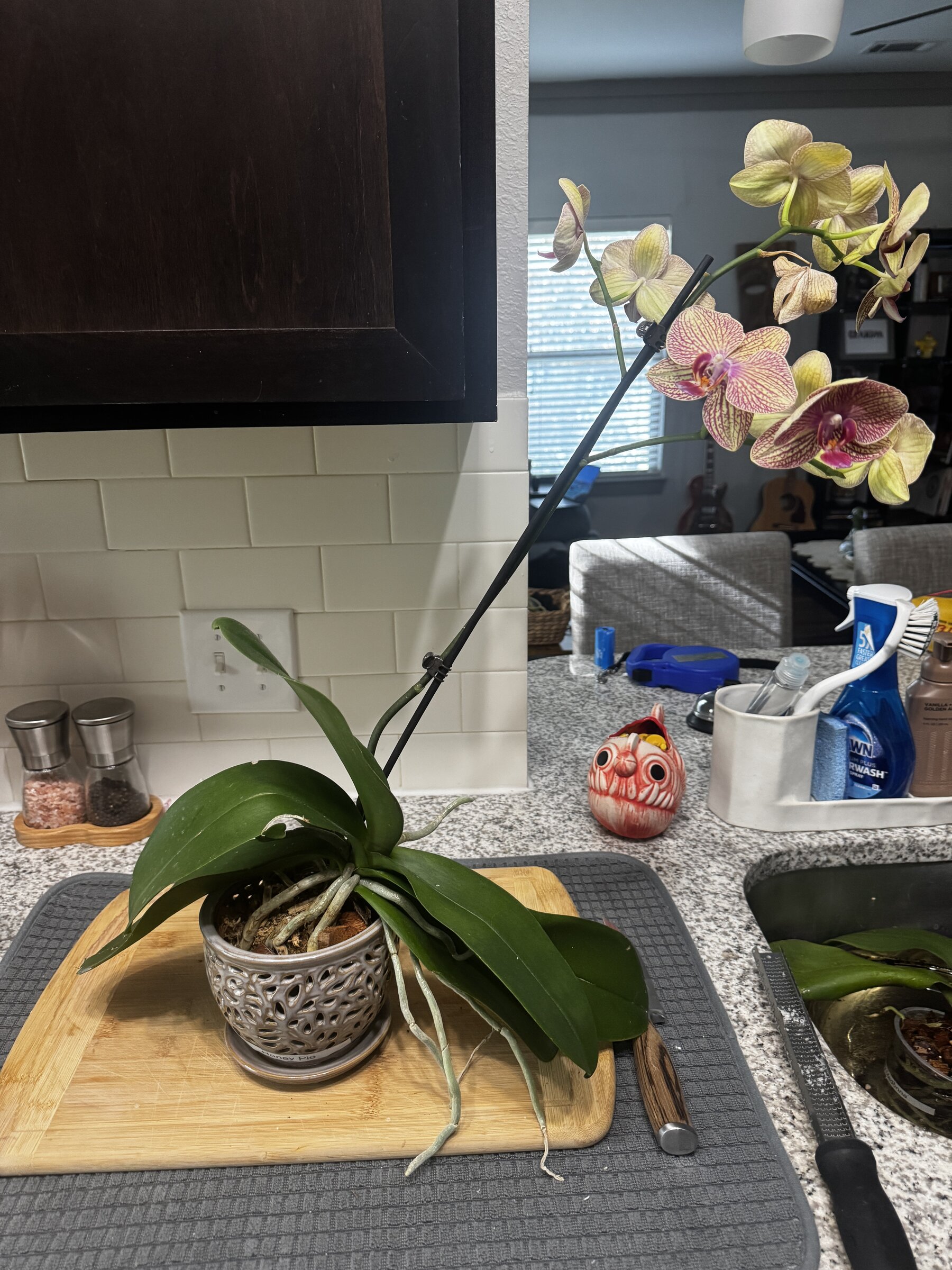
She’s still looking healthy underneath, with firm green foliage and substantial roots. The bloom decline has accelerated quite a bit this week—several flowers are now spent or close to it, although a few are stubbornly hanging on.
Care
Watered.
2026-08-18 — Weekly Update
Photos
Observations
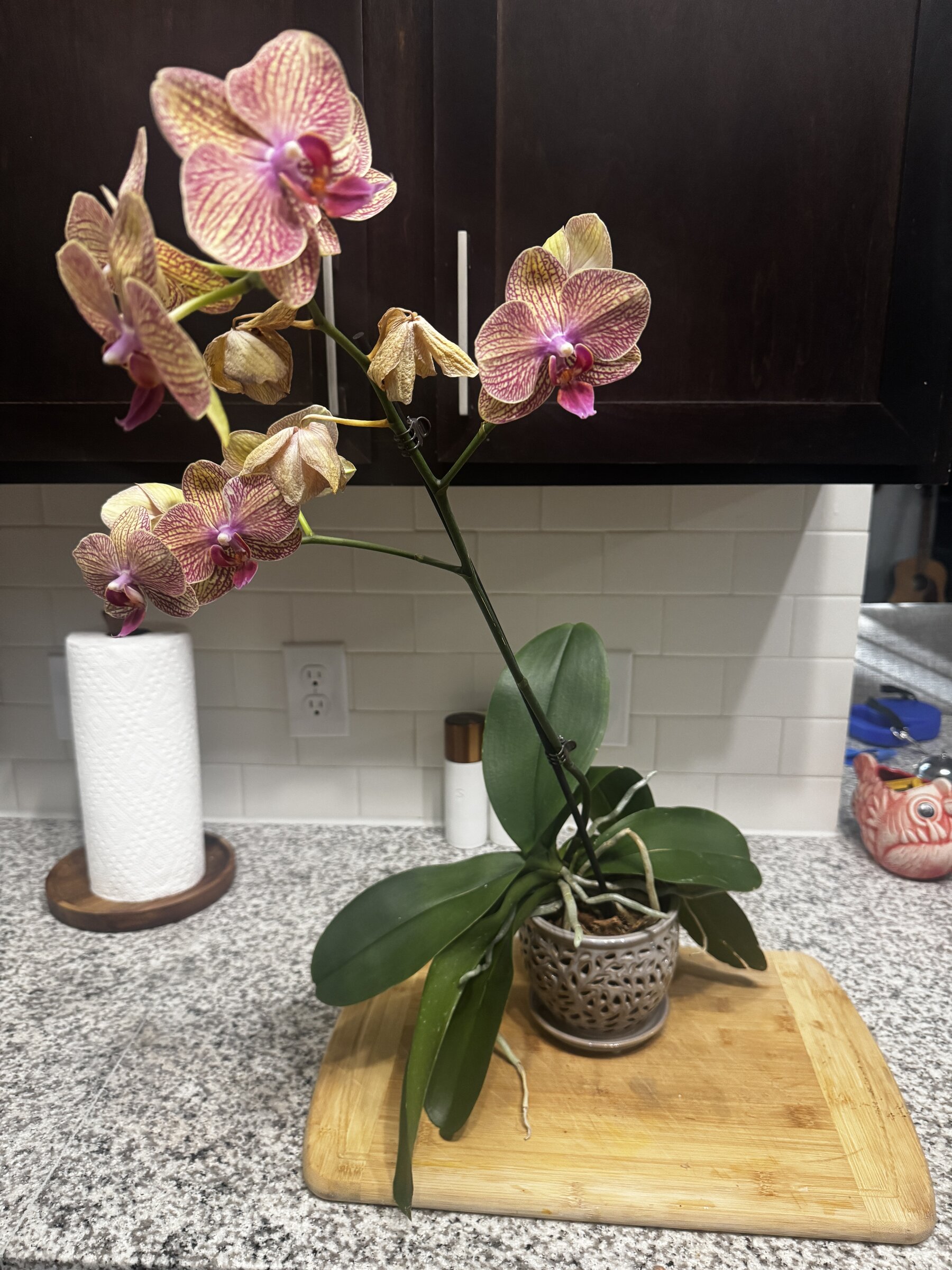
Honey Pie remains healthy with firm green leaves and a strong root system while her long bloom cycle is finally winding down. Several flowers have faded, but the plant looks well positioned to transition into new root and leaf growth.
Care
Watered
2026-08-09 — Weekly Update
Photos
Observations
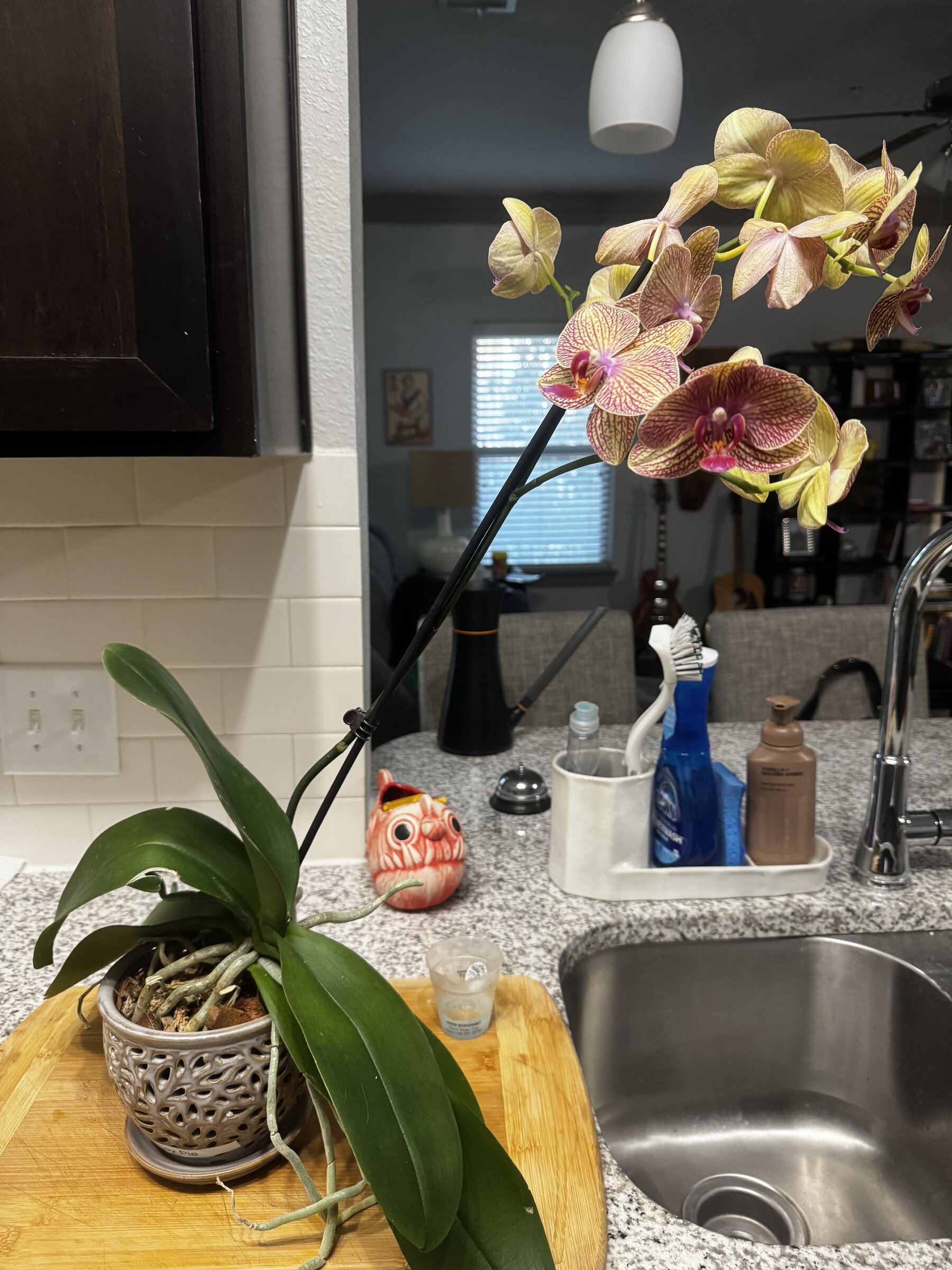
Honey Pie remains in bloom, although the older flowers are beginning to fade. The foliage remains firm and healthy.
Care
Fertilized.
2026-08-02 — Weekly Update
Photos

Observations
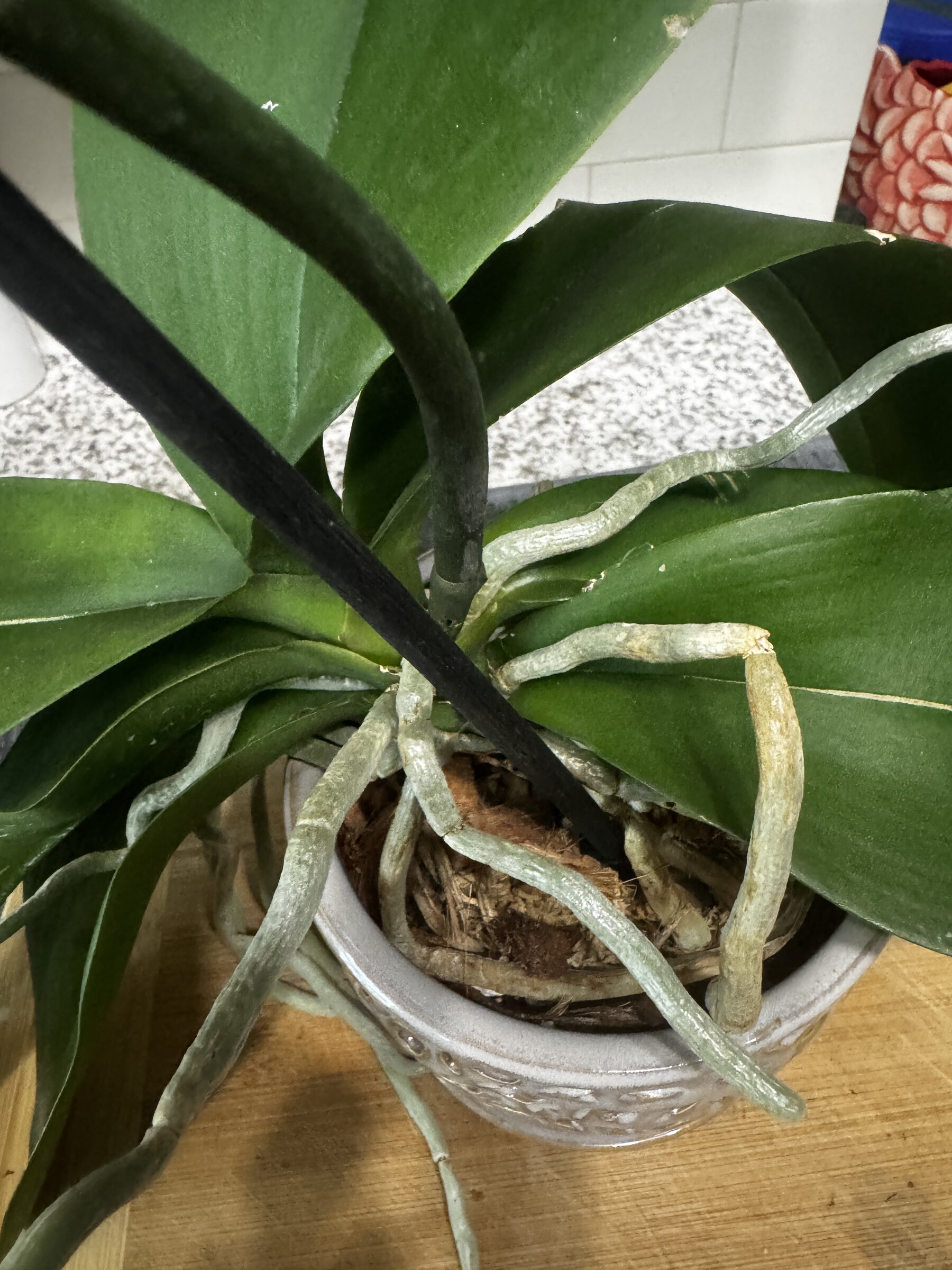
Blooms still doing well but fading a little
Care
Watered
2026-07-26 — Oldest Leaf Begins to Yellow
Photos

What Happened
The lowest leaf turned yellow while the orchid continued carrying much of its original bloom display.
Observations
- Yellowing was limited to the oldest, bottom-most leaf.
- The yellowing was even across that leaf.
- Upper leaves remained thick, firm, and green.
- The crown remained healthy.
- Aerial roots remained plump and silvery.
- Many flowers remained attractive, though the oldest blooms continued to fade.
Notes
The pattern was consistent with normal leaf senescence. The leaf was left attached so the plant could reclaim its resources naturally.
Lessons
One evenly yellowing bottom leaf is not the same as a plant-wide decline. Healthy upper leaves, crown, and roots provide the necessary context.
2026-07-19 — Long Bloom Continues
Photos

What Happened
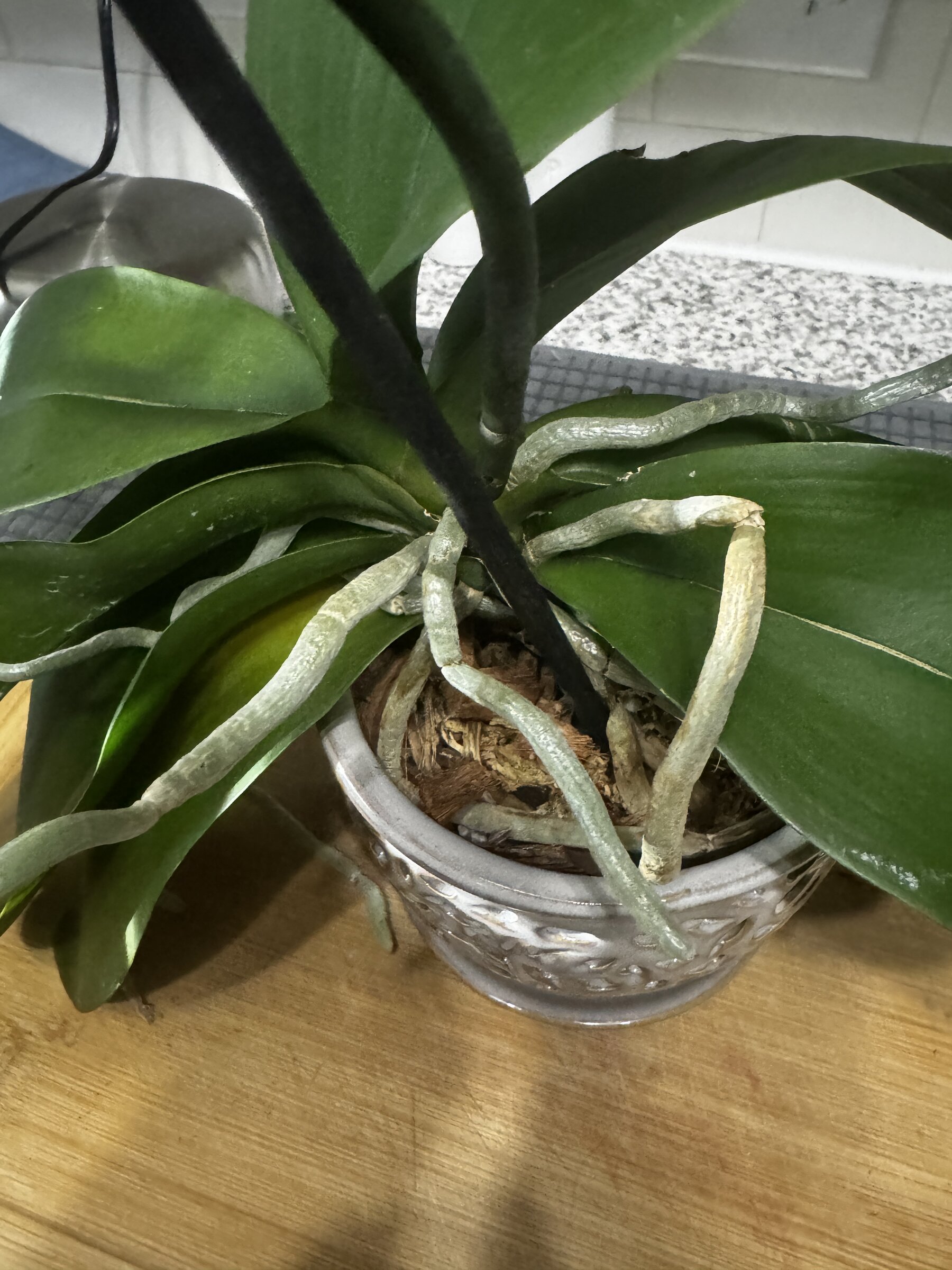
Weekly inspection focused on the long-running bloom display and root health.
Observations
- Most flowers remained open and colorful.
- The oldest flowers had faded to a softer yellow.
- Leaves remained thick, firm, and green.
- The crown appeared clean and healthy.
- Aerial roots remained thick, silvery, and firm.
- A tan section on one root appeared dry and intact rather than soft or rotten.
- The bark remained open enough for airflow.
Notes
There was no urgency to repot. The root with the older tan section was left alone unless it became soft, hollow, or mushy.
2026-07-12 — Fertilized During Bloom Transition
Photos

What Happened
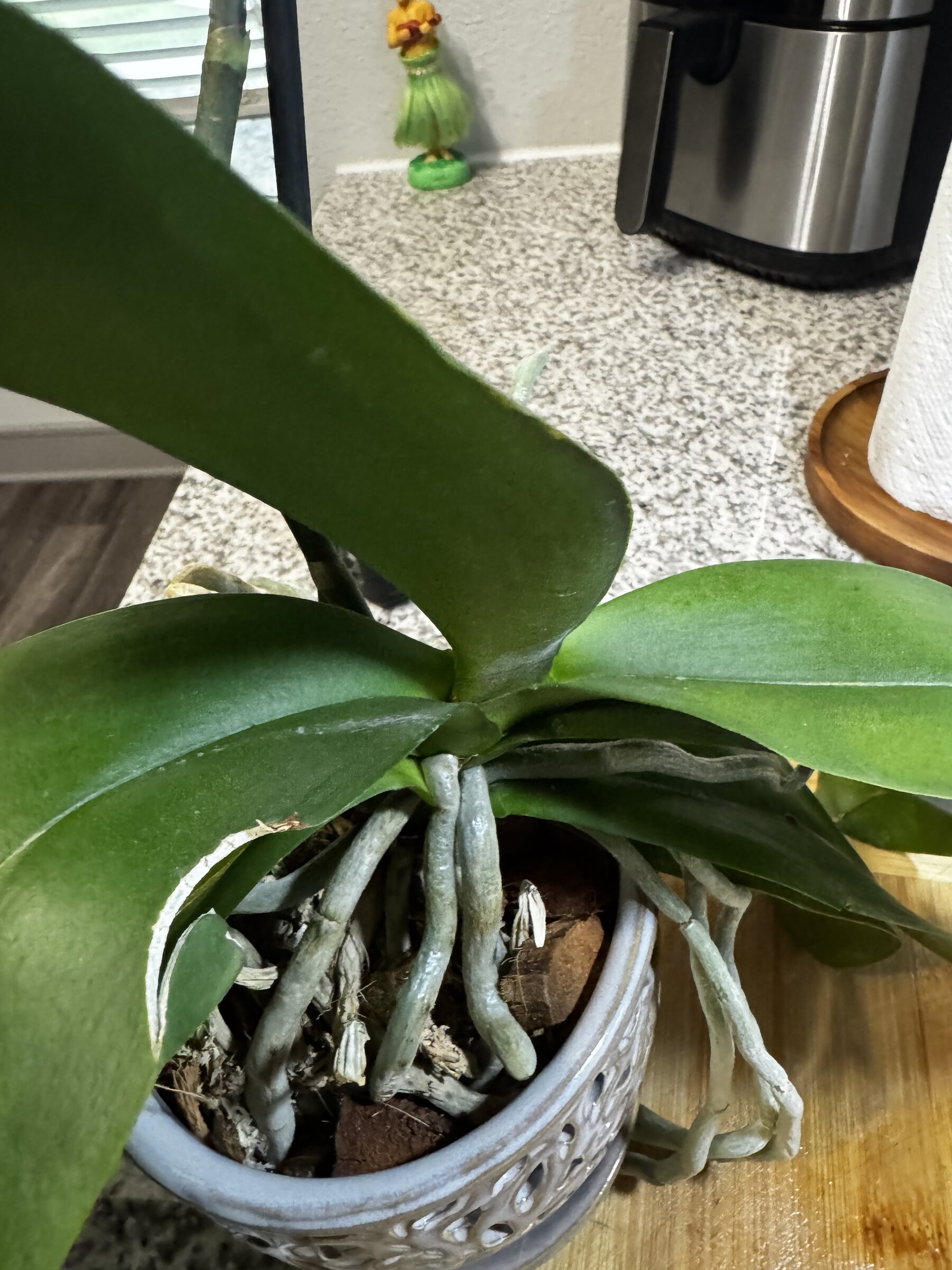
Watered thoroughly with dilute orchid fertilizer.
Observations
- Leaves were firm, glossy, and deep green.
- A pre-existing tear in one older leaf remained cosmetic and unchanged.
- Aerial roots were plump with active tips.
- Older blooms were fading while newer flowers remained colorful.
- No dehydration or crown problems were visible.
Notes
The plant was beginning the transition from flowering toward vegetative growth, but remained in excellent condition.
2026-07-05 — Bloom Fade Begins
Photos
What Happened
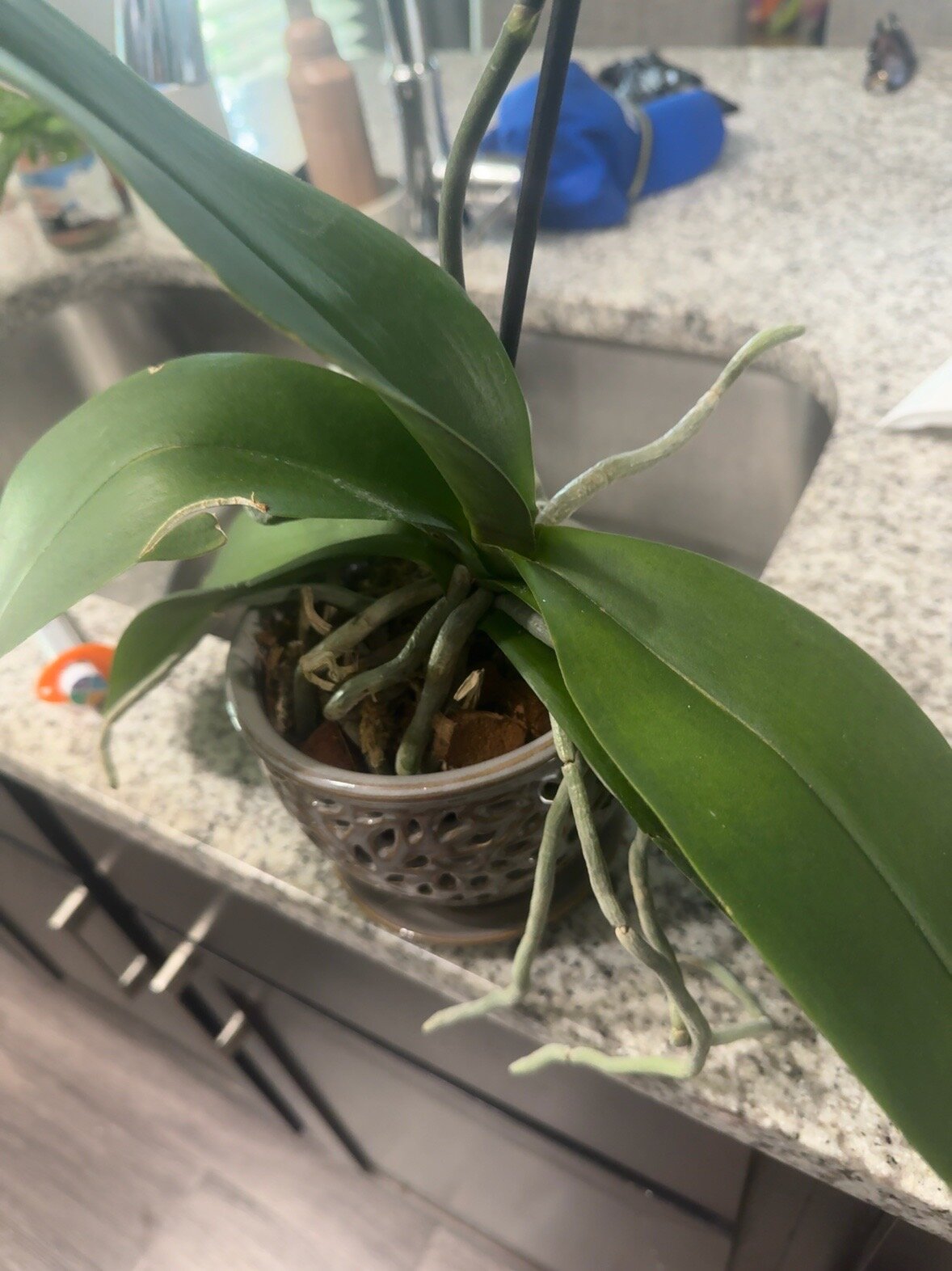
The oldest flowers began a gradual, natural fade.
Observations
- Root growth continued.
- Older flowers began losing some color.
- The plant remained healthy overall.
2026-06-28 — Active Root Growth
Photos

What Happened
Weekly progress review showed clear aerial root activity.
Observations
- Active aerial root growth was visible.
- The plant continued holding its flowers.
- No decline was documented in the leaves or crown.
Notes
The exported conversation labels this entry 6/28/06. The matching XMP
sidecars and weekly sequence establish the date as 2026-06-28.
2026-06-21 — First Weekly Check
Photos

What Happened
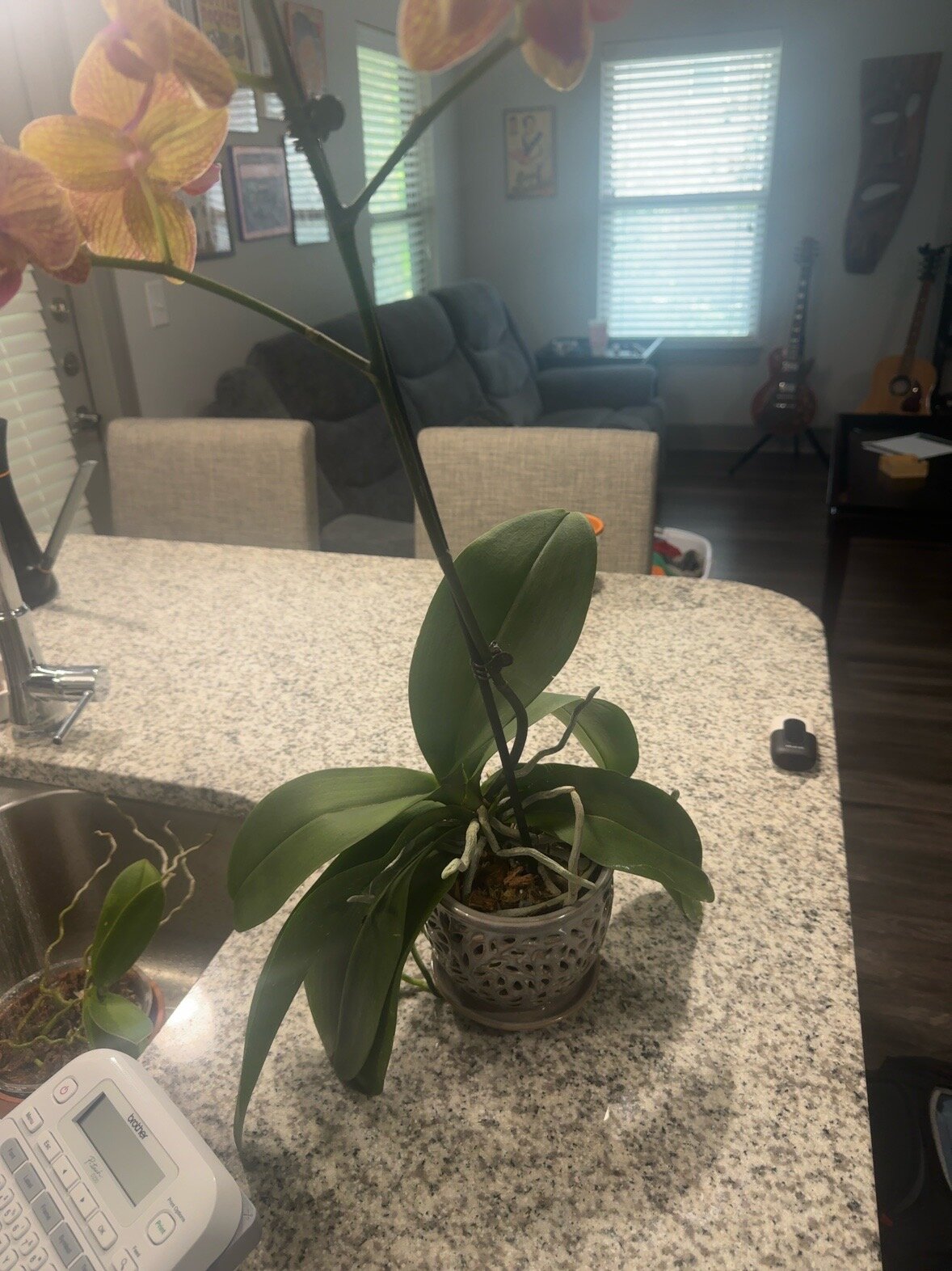
Completed the first documented weekly health check.
Observations
- No visible stress was documented.
- The plant remained in full bloom.
- Leaves and roots remained healthy.
2026-06-14 — Brought Home and Named
Photos
What Happened
Brought home a large blooming Phalaenopsis from Kroger and named it Honey Pie.
Observations
- The plant carried a full display of yellow flowers with raspberry veining and pink centers.
- Leaves were broad, thick, and dark green.
- Numerous thick aerial roots were visible.
- The plant appeared healthy at acquisition.
Notes
This was less of a rescue and more of, “I didn’t think Kroger deserved to ruin this one.”
The warm yellow and pink coloring inspired the name.
Lessons
Not every grocery-store orchid has to be in visible decline before it is worth bringing home.