Helter Skelter was never the dramatic one.
When I brought this Dendrobium home in Naples, it looked healthy from the start. The leaves were firm, the canes were upright, and there was no obvious sign of collapse or dehydration. Compared with some of the other orchids in the rescue collection, it did not seem to need saving so much as a better chance to establish itself.
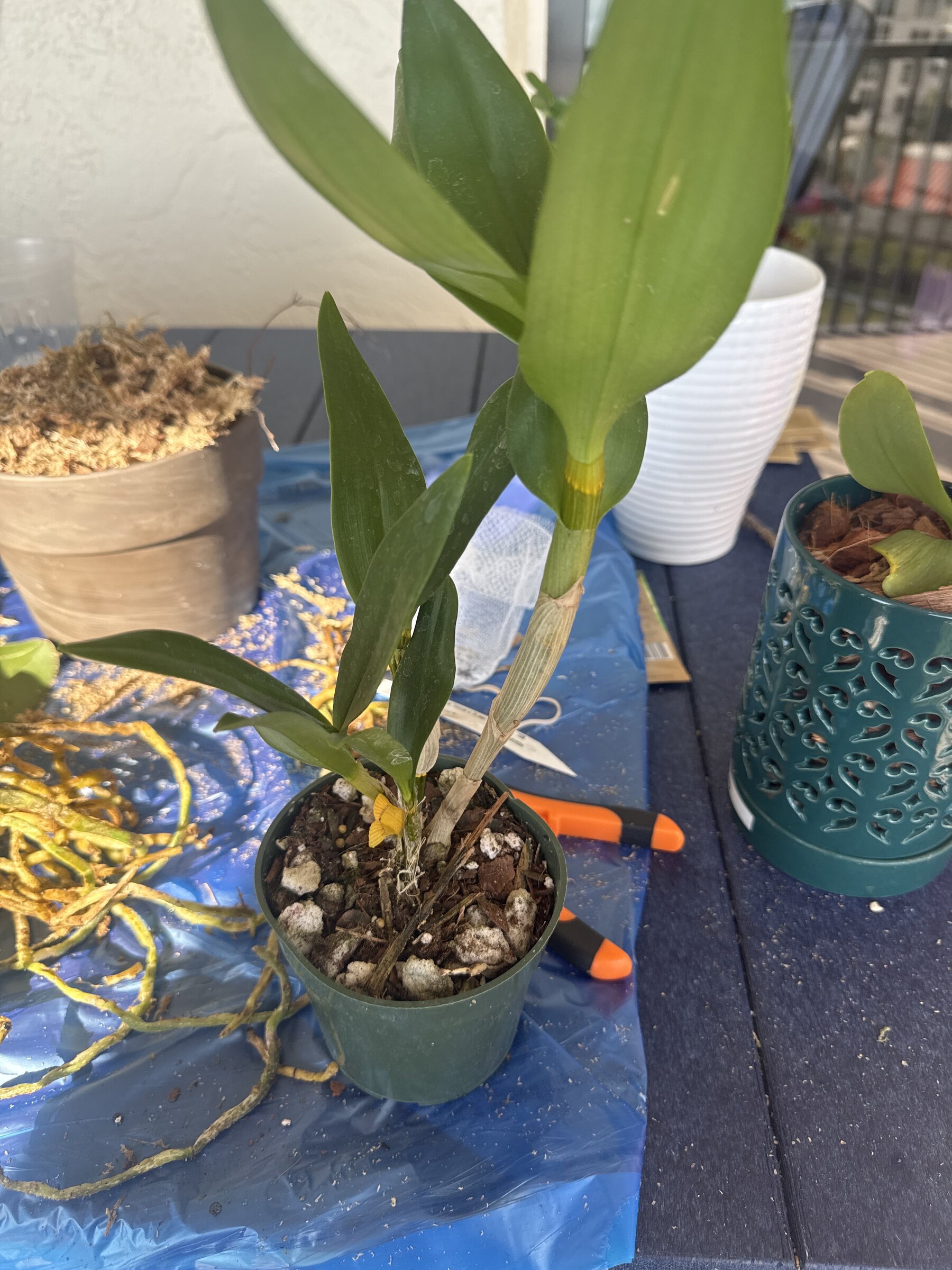
The main concern was the original nursery setup. After removing the packaging and inspecting the roots, I realized this plant would need care that was different from the Phalaenopsis orchids I was more familiar with: brighter light, more drying time between waterings, good airflow, and an open growing medium.
Helter Skelter responded by doing almost nothing dramatic.
It settled in.
The leaves stayed healthy. The canes remained firm. New growth appeared quietly and kept developing.
Then the entire collection moved from Naples, Florida, to Fort Worth, Texas.
Helter Skelter traded natural Florida light for indoor grow lights, adjusted to lower humidity, survived the long move, and continued growing as though none of it had been especially difficult.
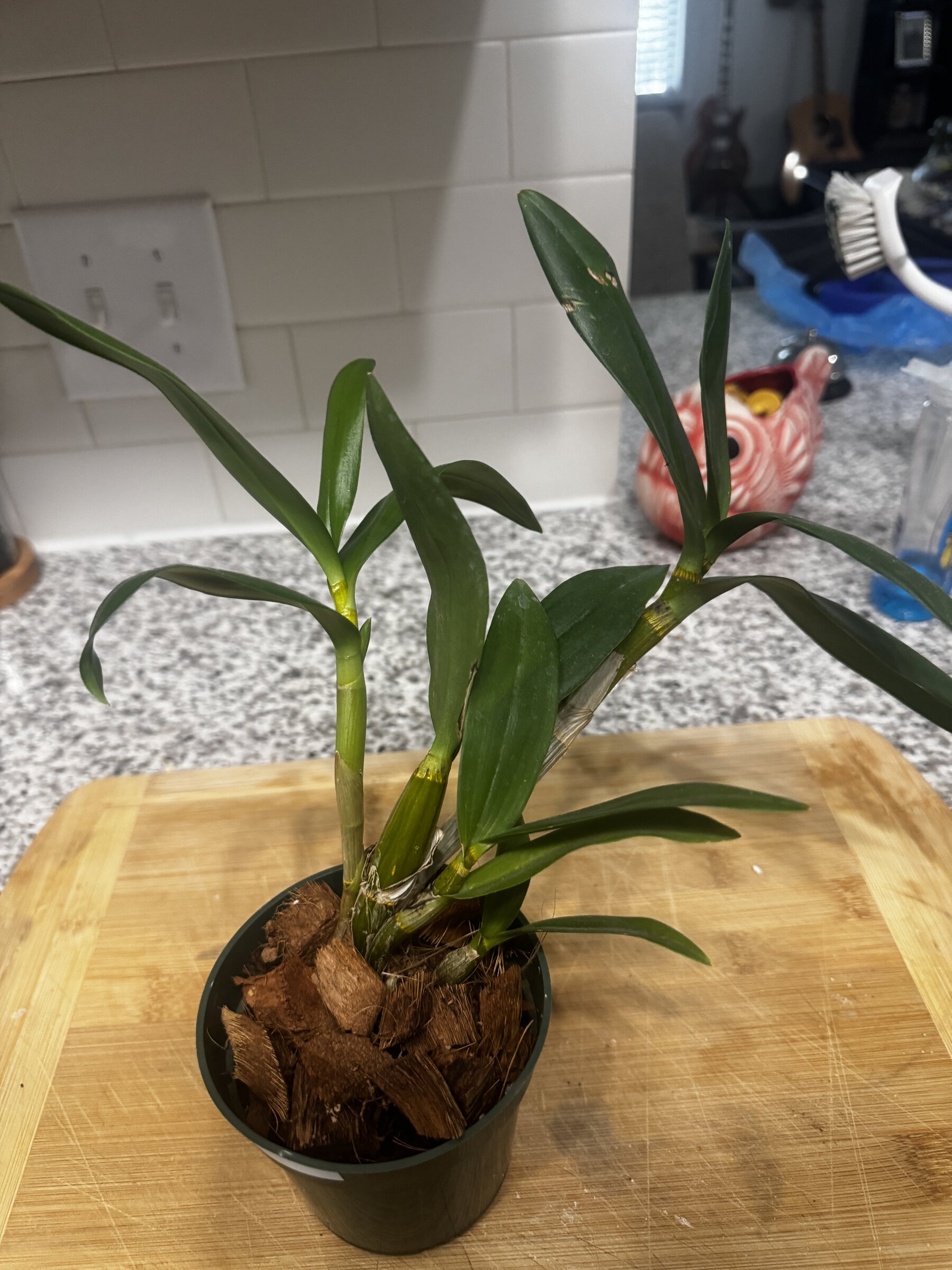
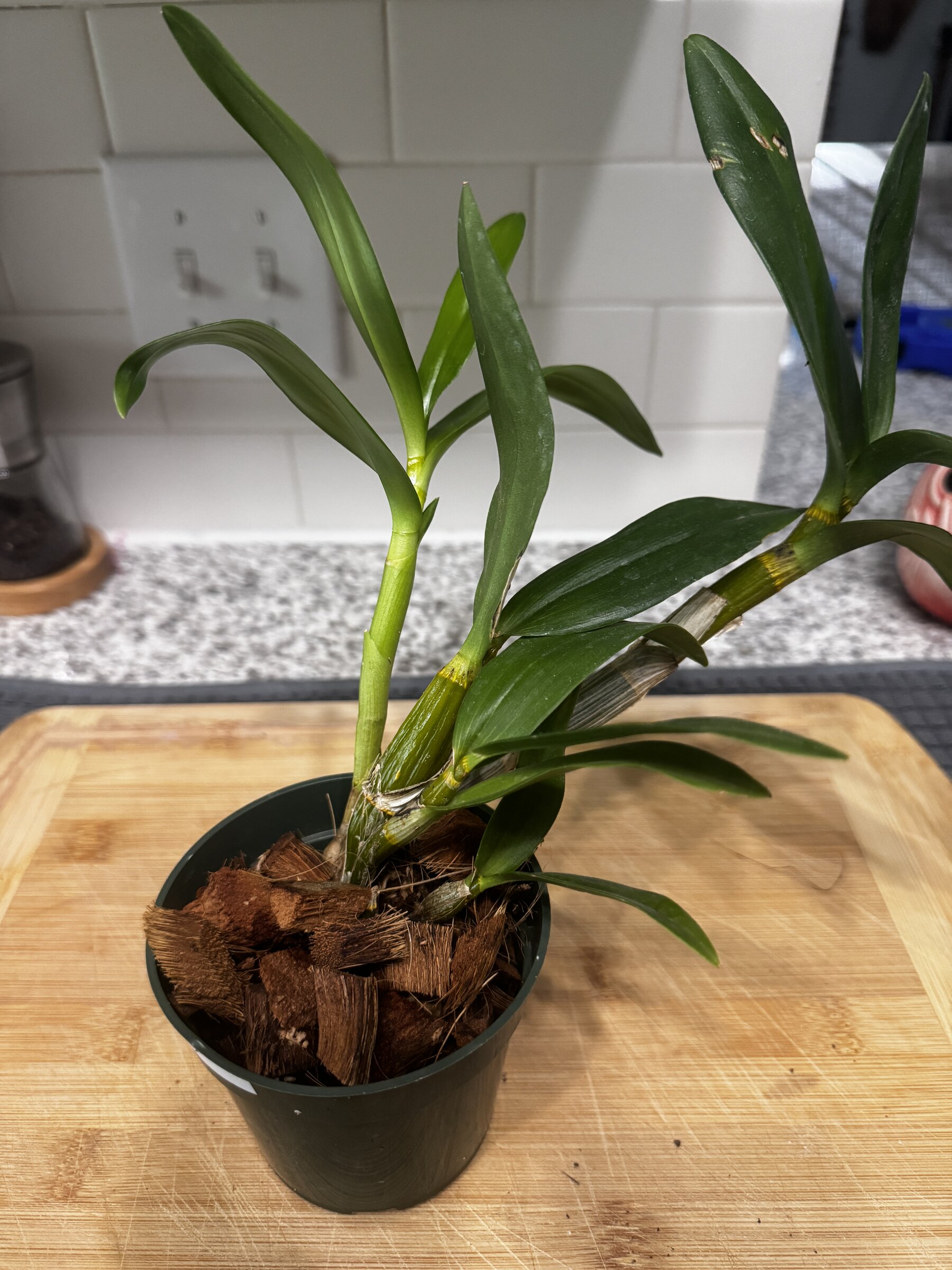
By early summer, a new basal growth had become obvious. A week later it was taller. Another week later it was opening a new leaf and thickening into a sturdy young cane.
That steady progress became Helter Skelter’s story.
It has never demanded much attention. It has simply kept building: one cane, then another, then another new growth.
There are no flowers yet, but that does not feel like a failure. Every healthy cane is part of the framework that may support future blooms.
Helter Skelter has become one of the strongest growers in the collection, not because it changed overnight, but because it never stopped moving forward.
Rescue History
Helter Skelter is a Dendrobium orchid acquired in Naples, Florida, on March 1, 2026.
Unlike several of the orchids in the rescue collection, Helter Skelter did not arrive in visibly poor condition. The leaves were firm, the canes looked healthy, and the plant appeared well hydrated. The main concern was the original Better-Gro packaging and root setup, which included dense material around the roots that needed to be inspected carefully.
From the beginning, Helter Skelter behaved less like a rescue in crisis and more like a plant that needed the right conditions and enough time to establish itself.
Over the following months, it acclimated successfully, survived the move from Florida to Texas, transitioned from natural light to indoor grow lights, and continued producing new basal growth.
Undated and historical notes
These sections retain their original wording and source order. They may describe earlier expectations; no exact dates have been inferred.
Source placement: after “2026-04-17 — Final Florida Update”.
Spring 2026 — Move from Florida to Texas
What Happened
Helter Skelter moved with the rest of the orchid collection from Naples, Florida, to Fort Worth, Texas.
The relocation changed several growing conditions:
- Natural light was replaced by indoor grow lights.
- Humidity was lower.
- The plant moved from a Florida climate to an indoor Texas environment.
- Water use and drying time changed.
Observations
- The plant survived the approximately 1,300-mile move.
- Existing canes remained intact.
- No significant leaf loss was documented.
- Growth continued after the move.
Lessons
A strong root system and healthy cane structure can give a Dendrobium enough resilience to handle a major environmental change.
Source placement: after “2026-07-05 — A Developing Clump”.
Looking Ahead
Helter Skelter will continue to be monitored for meaningful milestones rather than weekly changes.
Future updates should focus on:
- New basal growth
- Cane maturation
- Root development
- Pot fullness
- Repotting needs
- Flower spikes
- First blooms
The immediate goal is not to force flowering.
The priority is allowing the plant to continue building a healthy clump of mature canes that can support stronger flowering in the future.
Observations and updates
Newest first. Observations on the same date retain their original order.
2026-09-07 — Weekly Update
Photos
Observations
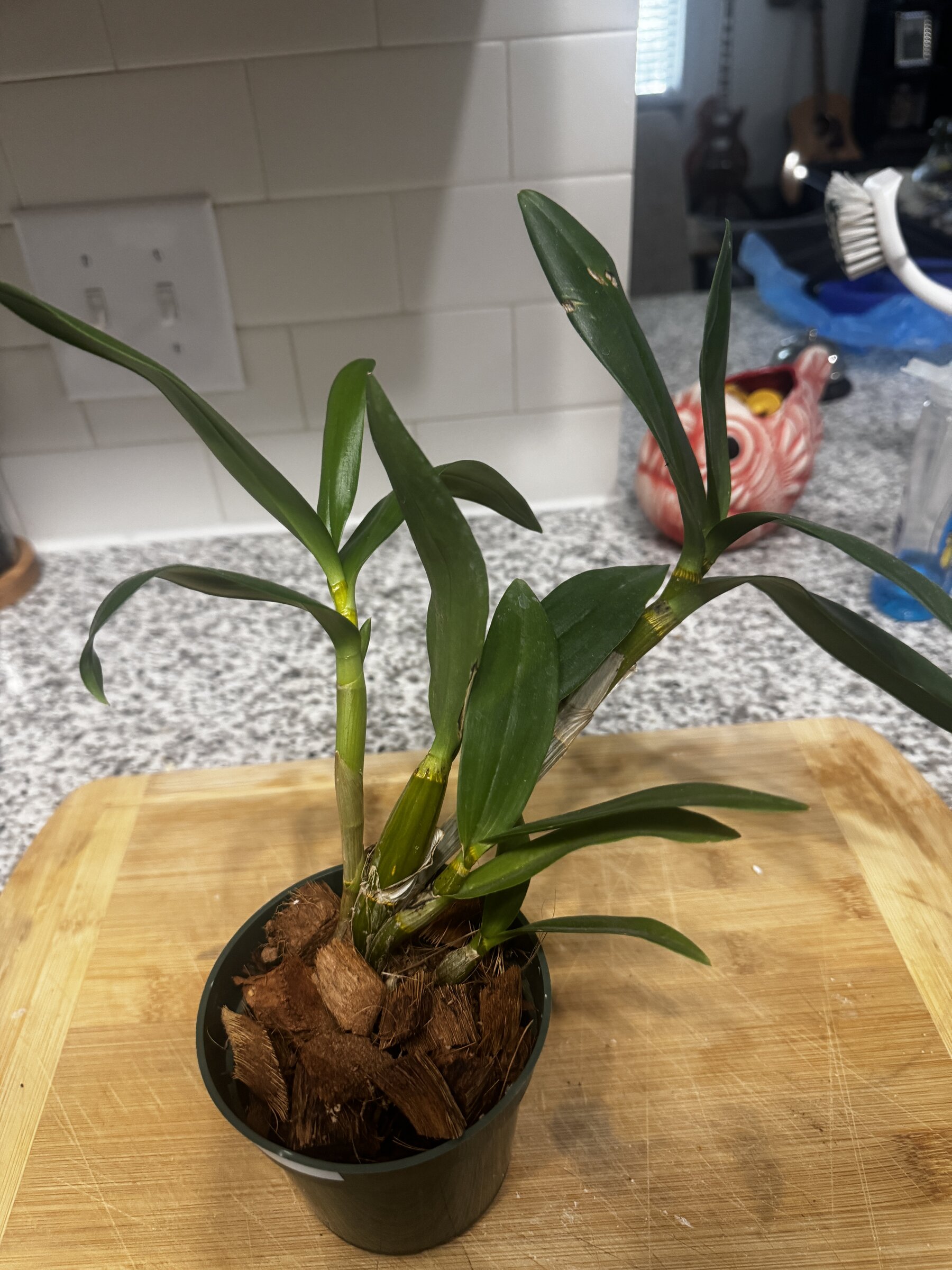
Helter Skelter remains vigorous, with its newest cane approaching maturity after a summer of strong growth. Older growth remains healthy and stable, and there are no new concerns visible.
Care
Watered
2026-08-30 — Weekly Update
Photos
Observations
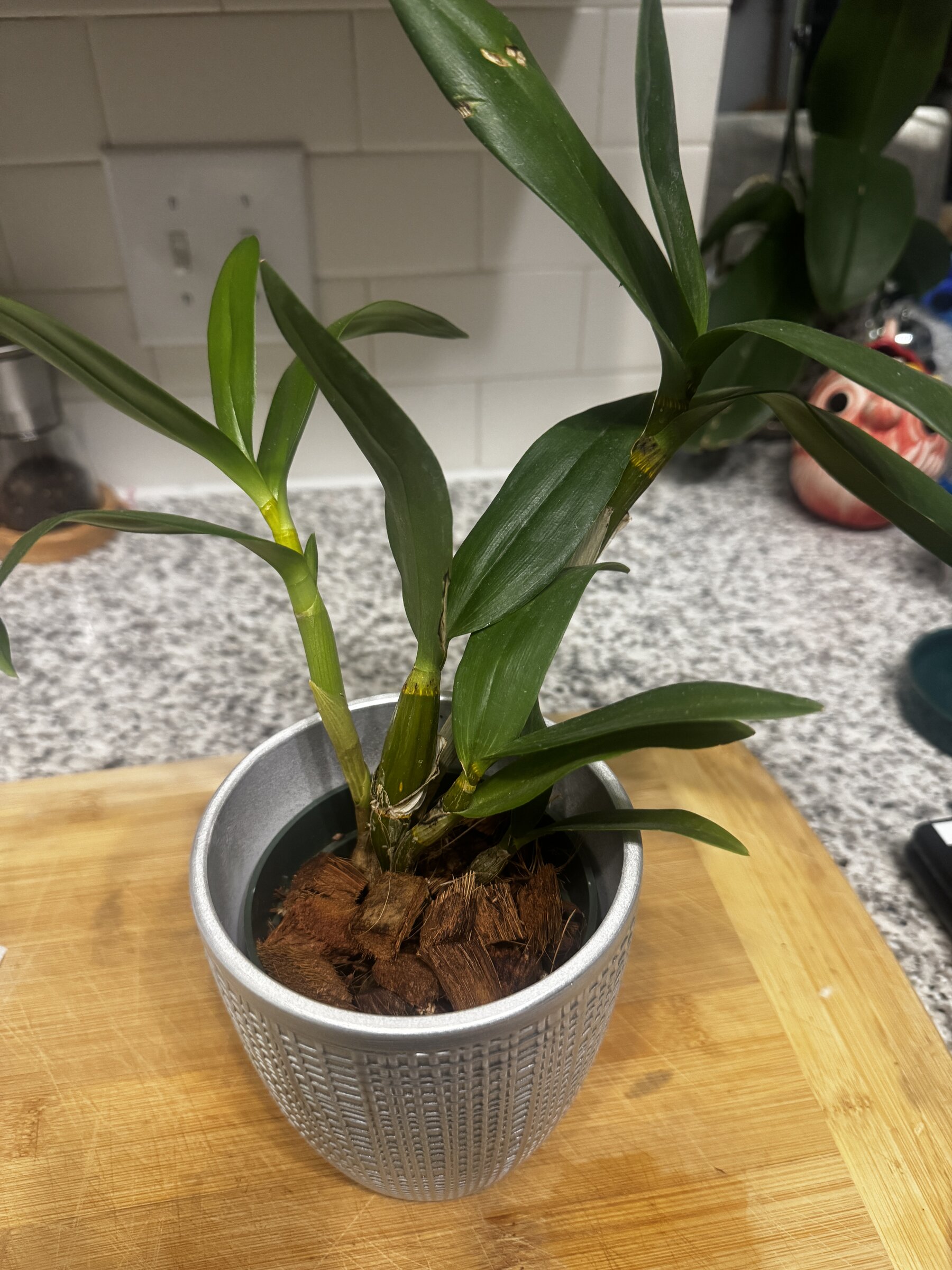
Helter Skelter remains vigorous, with its newest cane now approaching the size of the established growths and beginning to mature. Foliage remains firm and healthy throughout, and the plant continues its remarkably steady growth.
Care
watered
2026-08-23 — Weekly Update
Photos
Observations
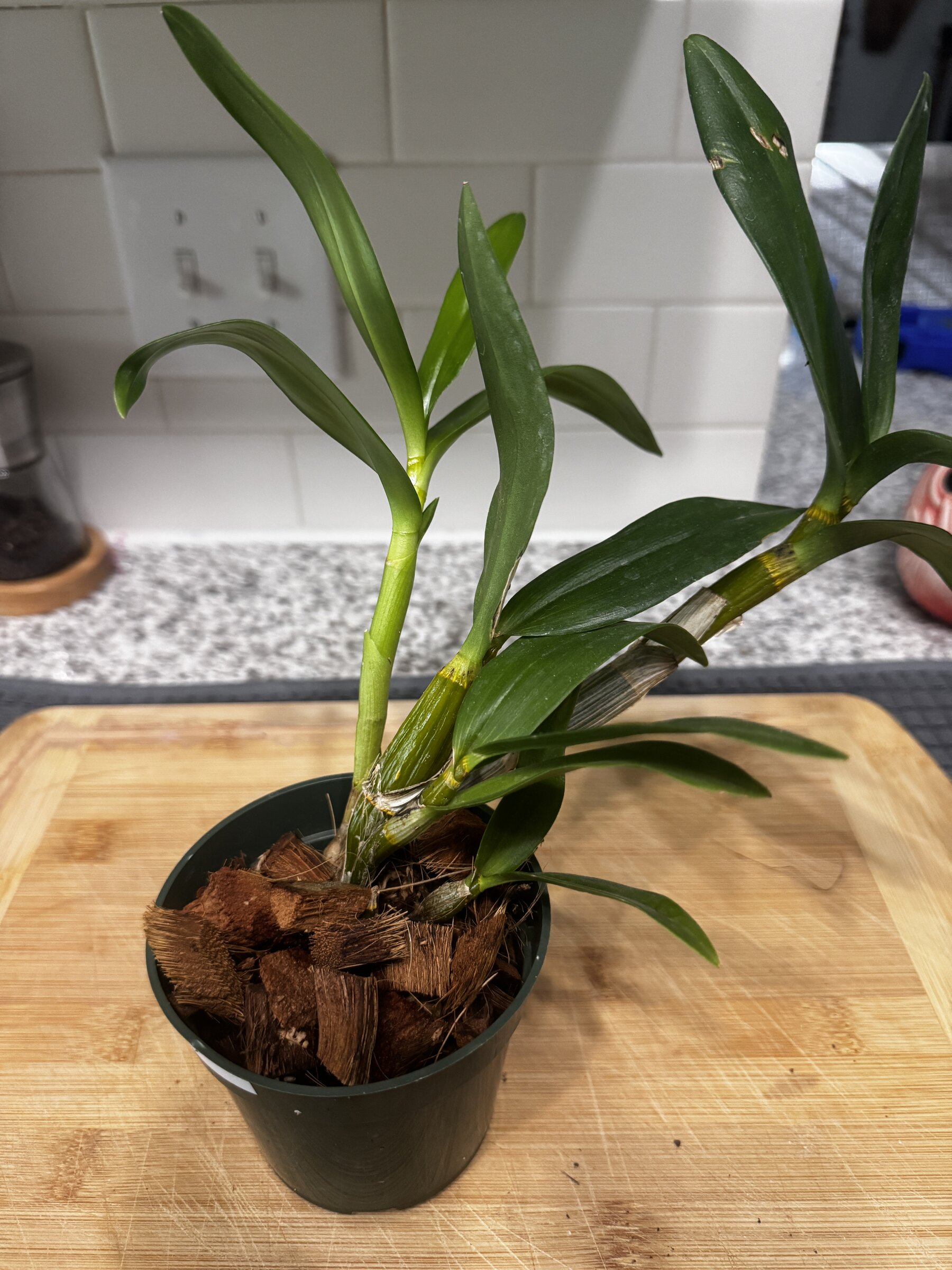
Helter Skelter continues strong growth, with the newest cane gaining size and beginning to look increasingly mature. Foliage remains firm and healthy throughout, with no new problems visible.
Care
Watered.
2026-08-18 — Weekly Update
Photos
Observations
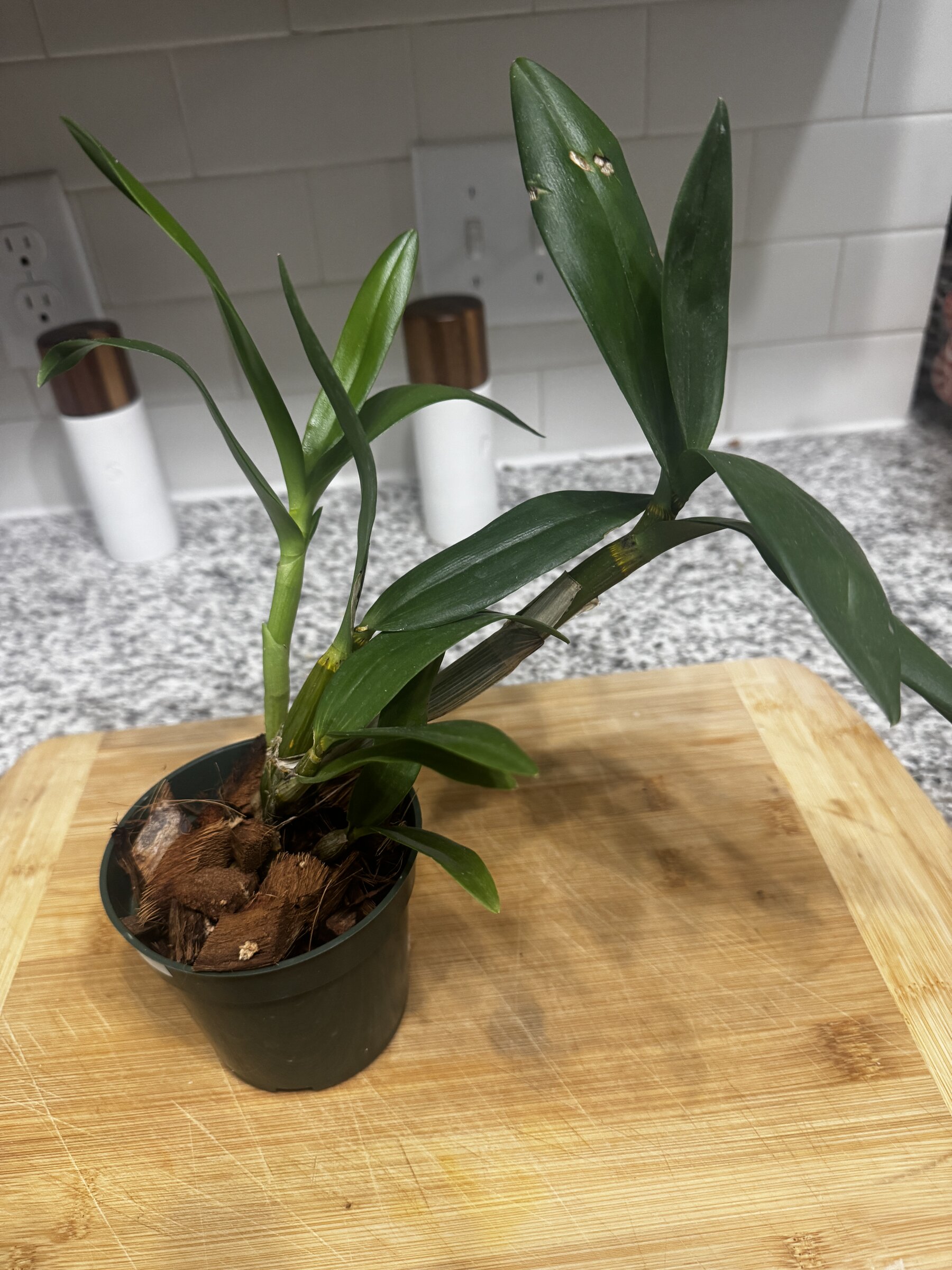
Helter Skelter continues strong active growth, with the newest cane gaining height and its upper leaves continuing to open. The developing cane remains firm and healthy, while the older growth and previous cosmetic leaf damage remain stable.
Care
Watered
2026-08-09 — Weekly Update
Photos
Observations
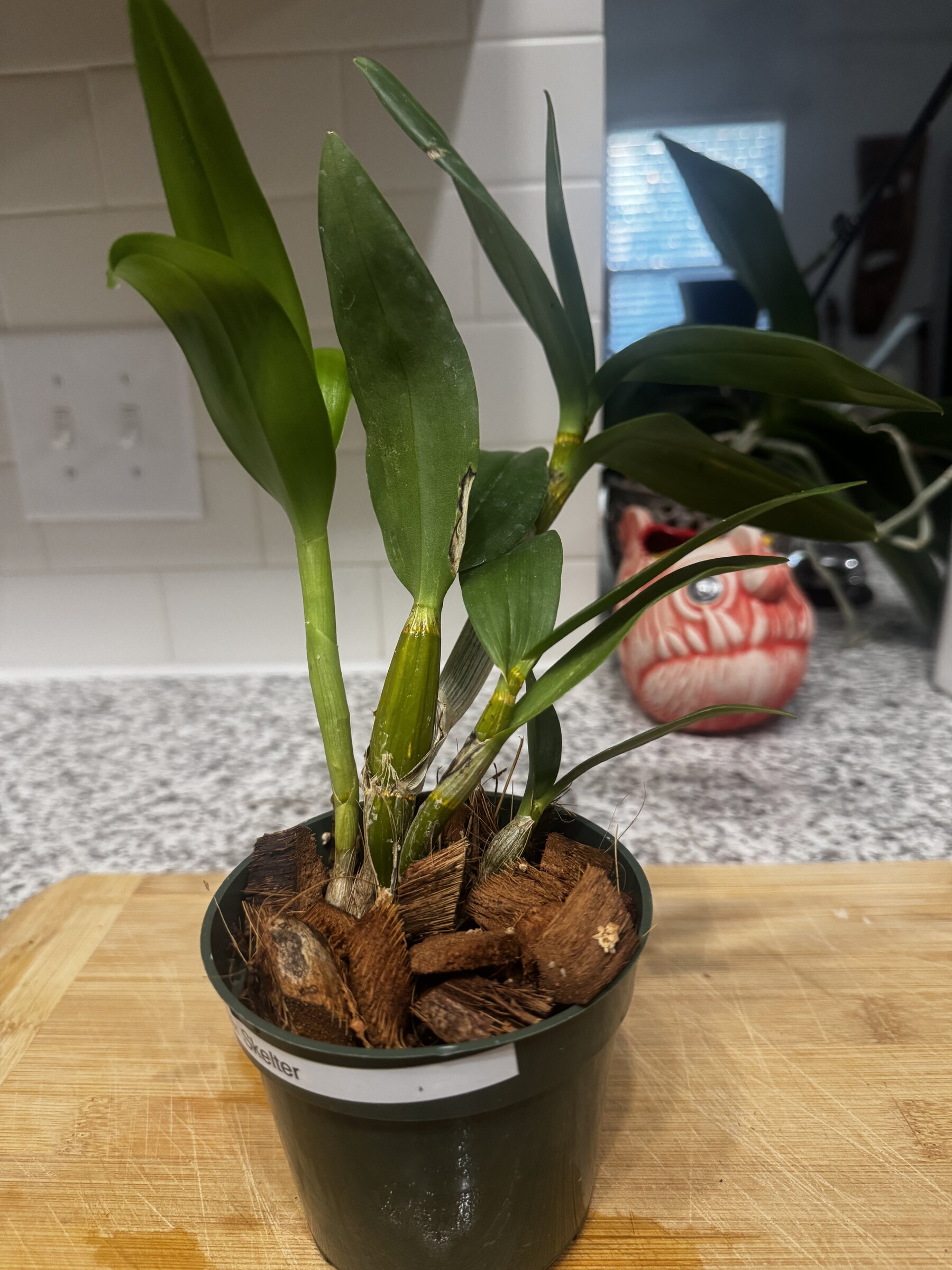
Helter Skelter continues steady vegetative growth. The newest cane is developing well, and the established growths remain green and stable.
Care
Fertilized.
2026-08-02 — Weekly Update
Photos
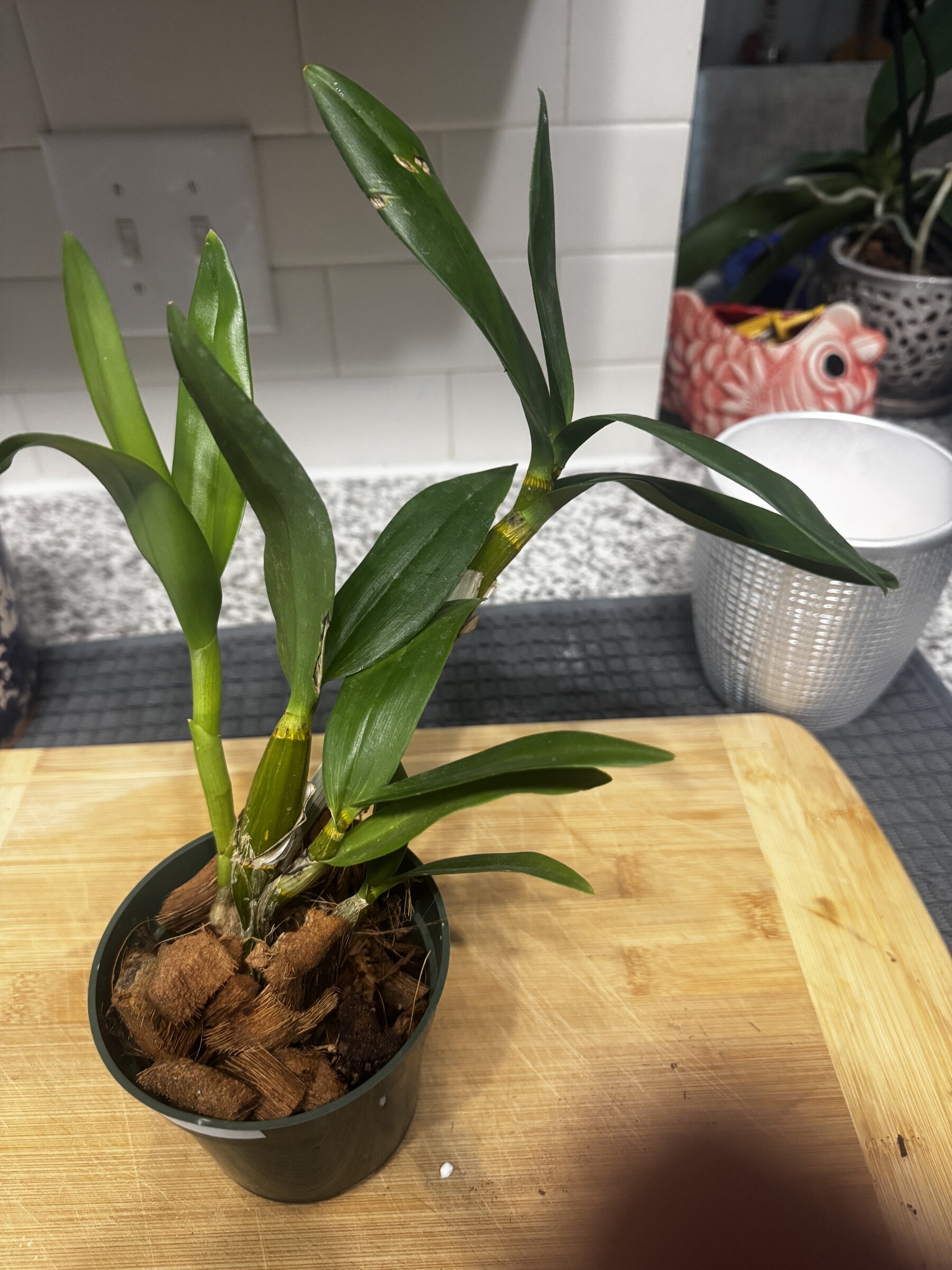
Observations
Continuing growth. The newest cane is making progress.
Care
Watered
2026-07-05 — A Developing Clump
Photos
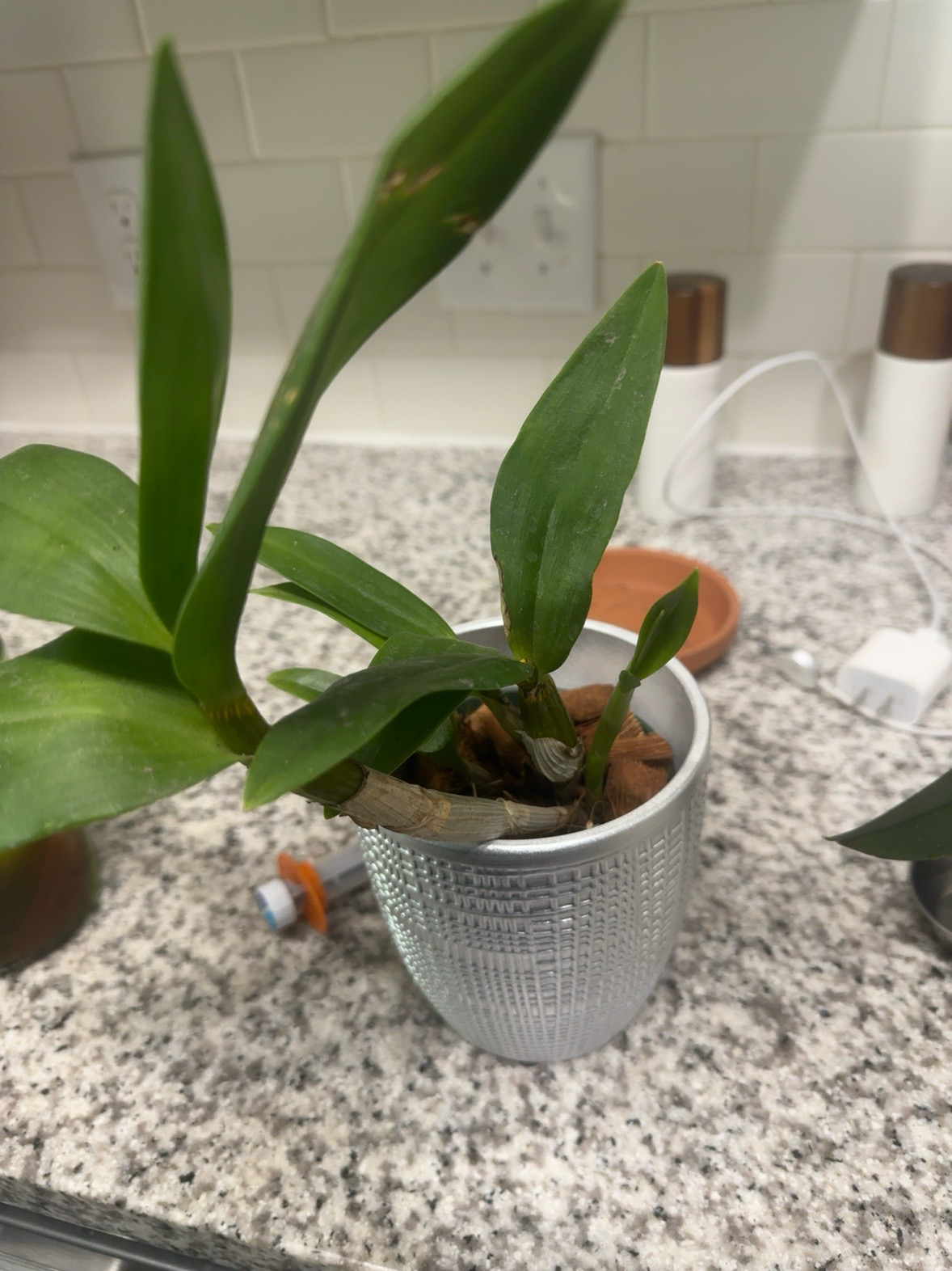
What Happened
By early July, the newest growth had continued developing rapidly.
Observations
- The newest shoot was taller than the previous week.
- A new leaf was opening.
- The developing cane was thickening rather than merely stretching.
- Mature canes remained firm.
- Leaves remained healthy and compact.
- The plant was beginning to occupy more of the pot.
- No significant setbacks had occurred since acquisition.
Notes
When Helter Skelter first arrived, it consisted of only a few canes.
By July, it was beginning to form a genuine clump with multiple generations of growth.
The indoor grow-light setup continued to provide enough light to support compact, sturdy development.
Current Status
Helter Skelter is thriving.
It has:
- Acclimated successfully
- Survived the move from Florida to Texas
- Transitioned to indoor grow lights
- Maintained healthy leaves and canes
- Produced multiple new growths
- Continued expanding without major setbacks
2026-06-28 — Growth Accelerates
Photos
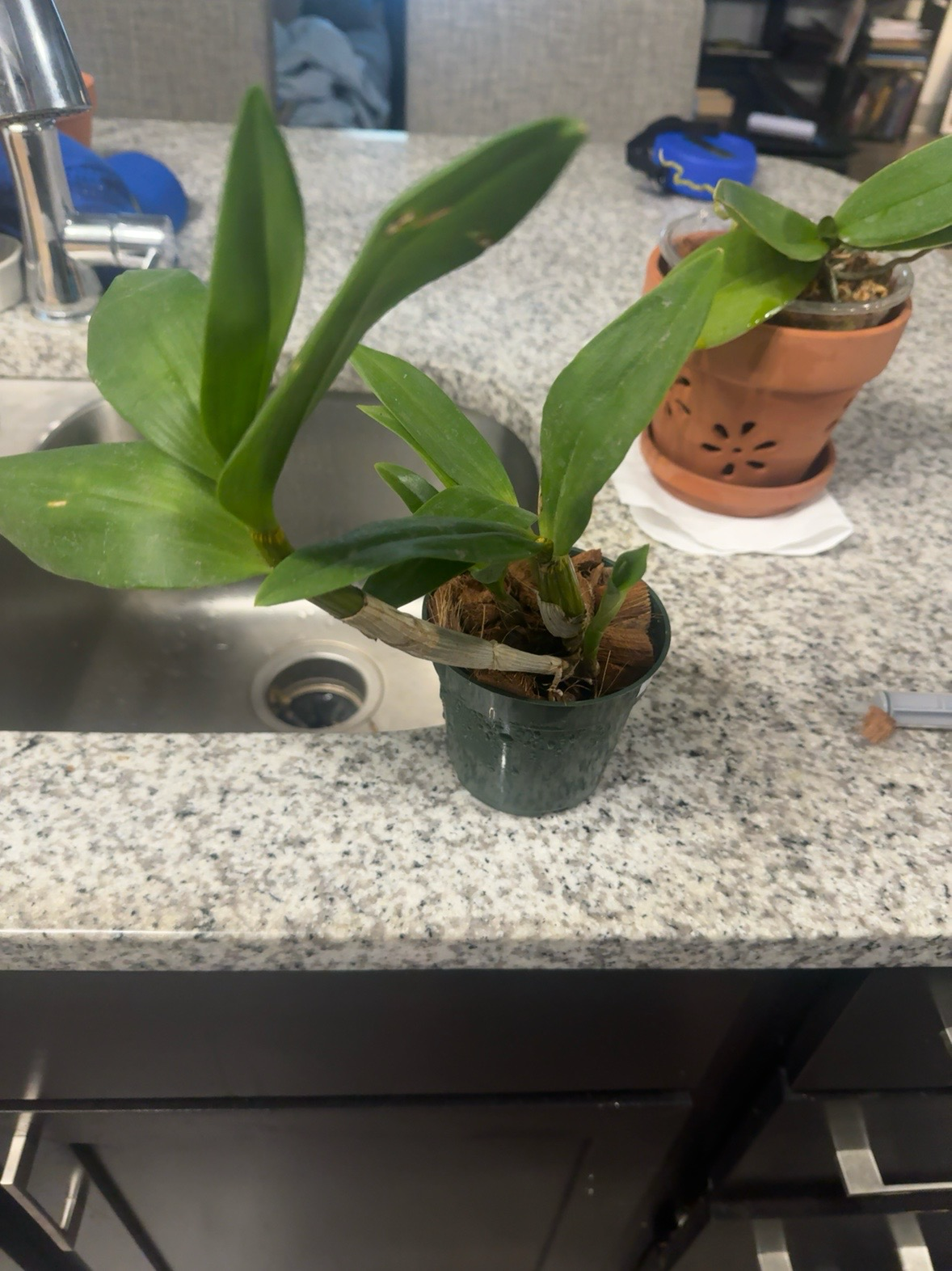
What Happened
The newest basal growth made obvious progress over the following week.
Observations
- The new shoot was noticeably taller.
- The growth remained upright and compact.
- Leaves were thick, firm, and medium green.
- The plant showed no stretching from insufficient light.
- Existing canes remained healthy.
- The coconut husk medium continued providing good airflow.
Notes
The plant now showed a clear progression of growth stages:
- Mature cane
- Intermediate cane
- Younger established cane
- New actively growing shoot
This is the structure expected from a Dendrobium gradually developing into a fuller specimen plant.
Bloom Outlook
No flower spike was visible.
That was not considered a setback. The plant appeared to be using its energy to build a stronger framework of canes before flowering.
2026-06-21 — New Basal Growth
Photos
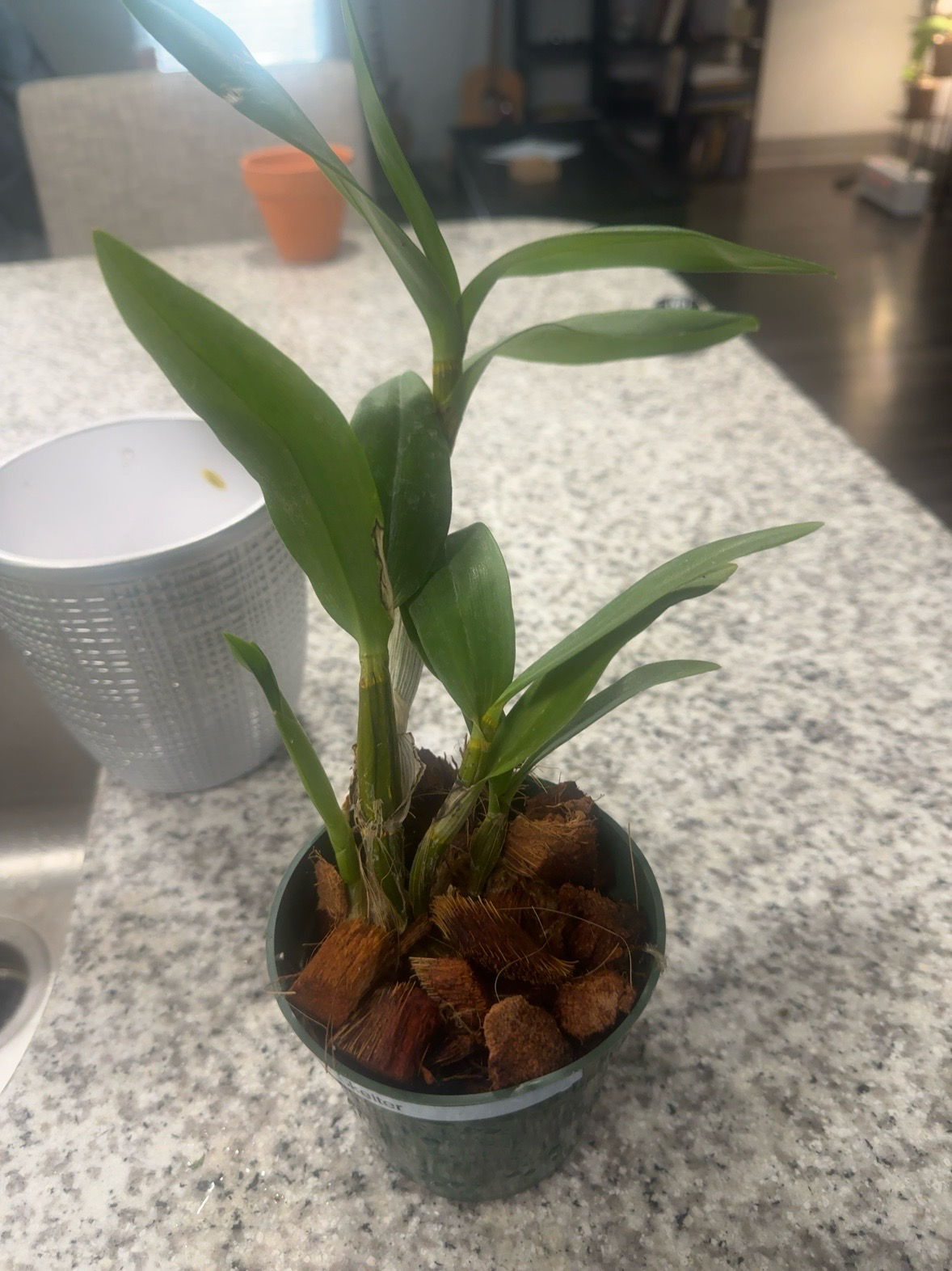
What Happened
A new basal growth on the left side of the plant had become clearly visible.
Observations
- A mature cane remained firm and productive.
- An intermediate cane continued developing.
- A larger young cane was established on the right.
- A second new growth was emerging on the left.
- Leaves remained firm and evenly colored.
- No dehydration or major blemishes were visible.
- The coconut husk medium remained open and airy.
Notes
This was the clearest sign yet that Helter Skelter was actively building a stronger plant.
The new basal growth showed that it had successfully acclimated to:
- The original purchase environment
- Root inspection
- Florida growing conditions
- A long-distance move
- Indoor grow lights in Texas
Lessons
For a Dendrobium, new cane growth is one of the best indicators of long-term health.
Each healthy cane also creates another potential future bloom site.
2026-06-13 — First Texas Update
Photos
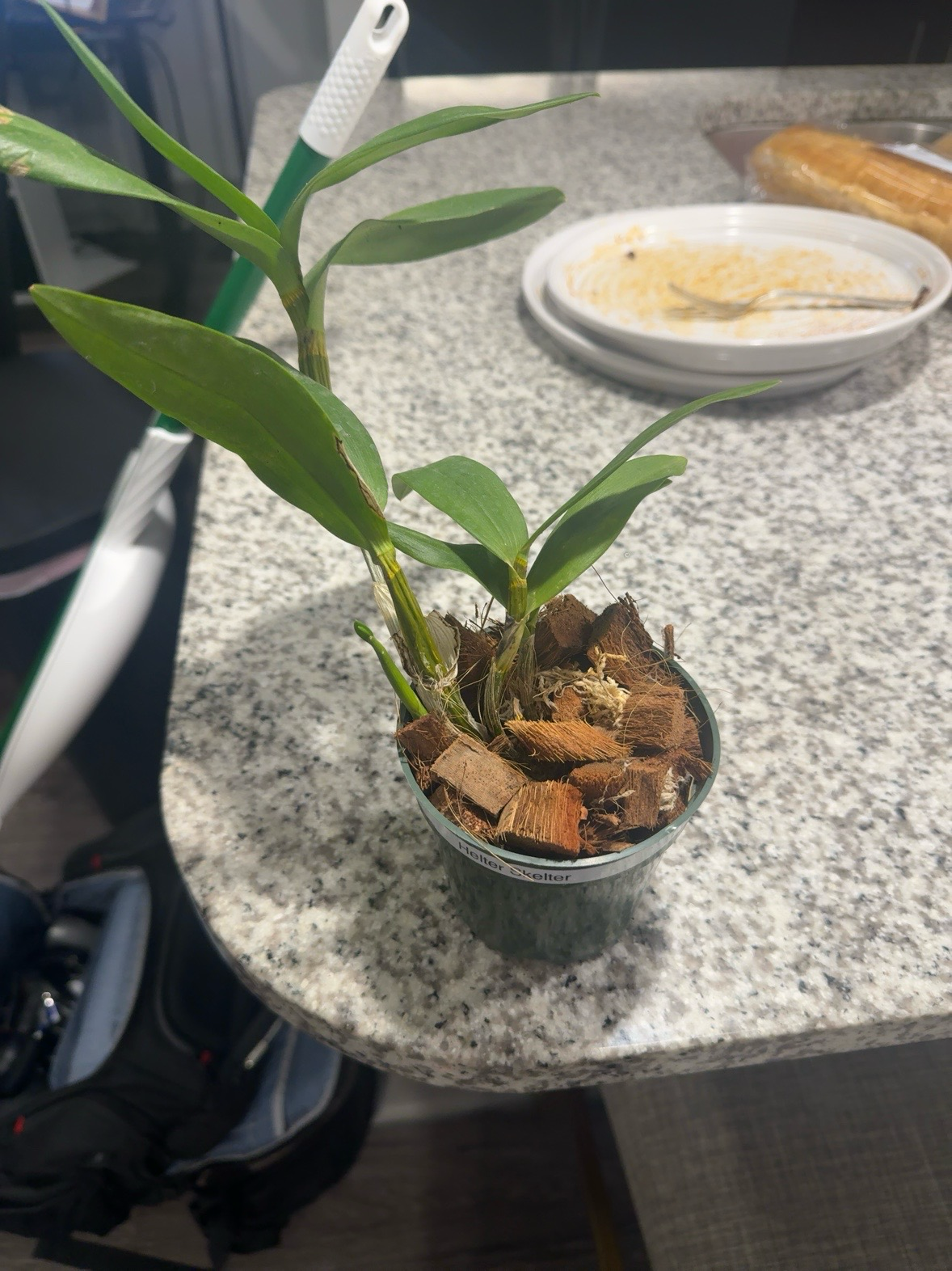
What Happened
Helter Skelter was photographed after settling into its new home in Fort Worth.
Observations
- The plant appeared healthy after the move.
- Canes remained upright.
- Leaves retained good color.
- The transition to indoor grow lights appeared successful.
Notes
The plant had handled the move with fewer visible setbacks than many of the other orchids.
Helter Skelter was beginning to look less like an individual plant with a few canes and more like the beginning of a developing clump.
2026-04-17 — Final Florida Update
Photos
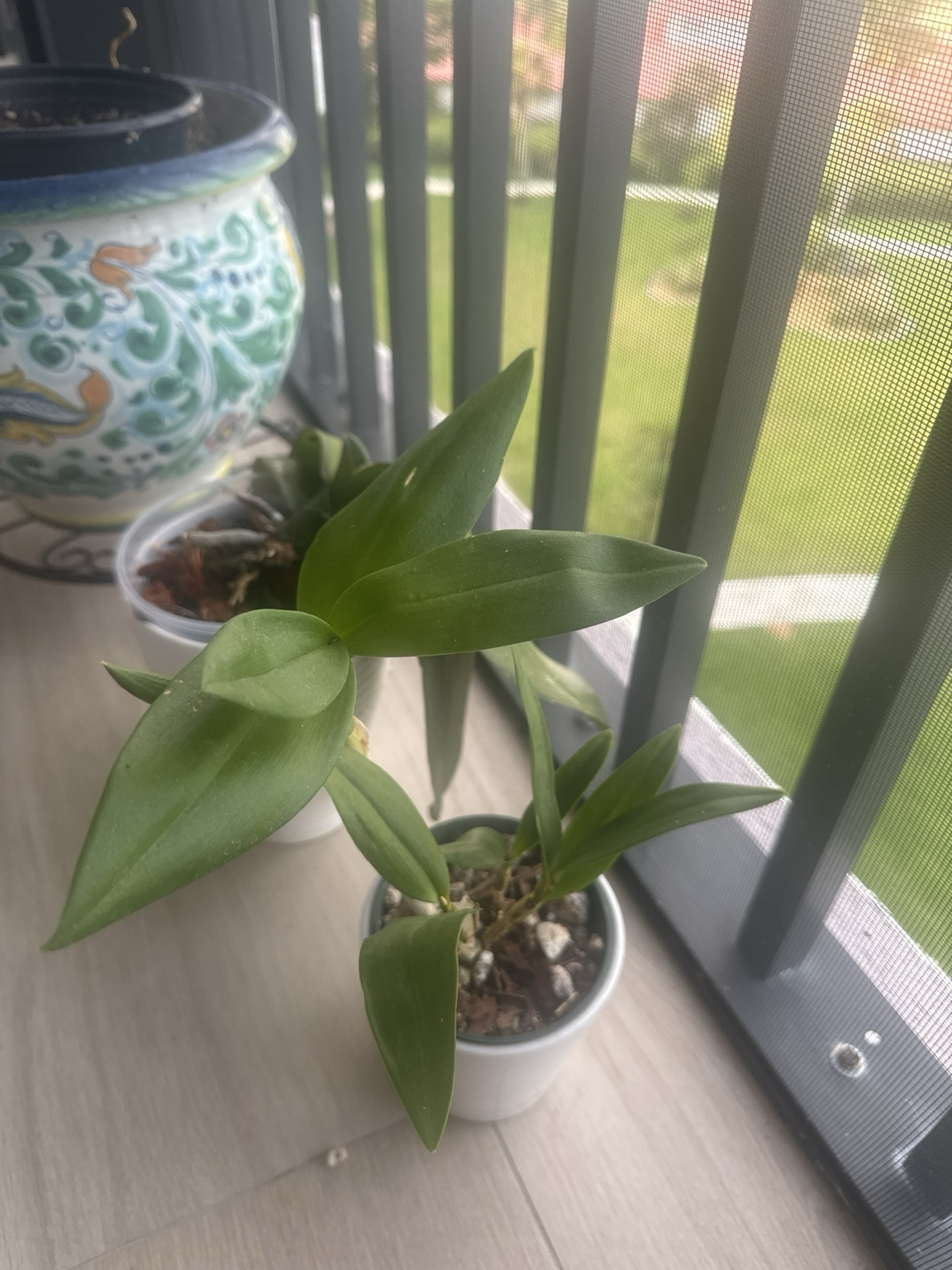
What Happened
This was the final documented photograph before the move from Florida to Texas.
Observations
- The plant remained healthy.
- Leaves and canes were stable.
- No visible setbacks were present before transport.
Notes
Helter Skelter entered the move in strong condition, which likely helped it tolerate the change in location, light, humidity, and routine.
2026-04-12 — Building Strength
Photos
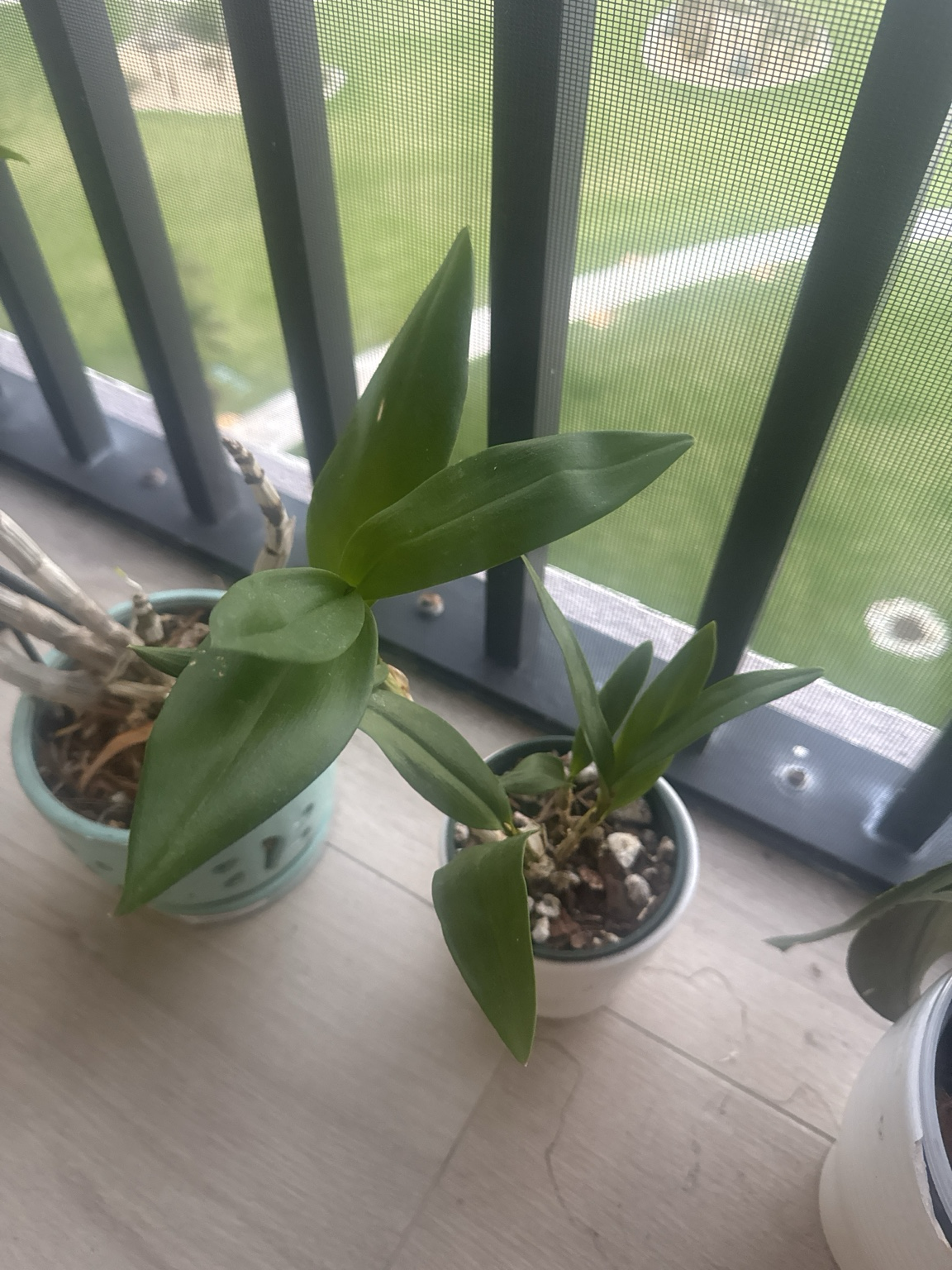
What Happened
By mid-April, Helter Skelter continued developing without interruption.
Observations
- Existing canes remained firm.
- Foliage continued to look healthy.
- Growth remained compact.
- No signs of insufficient light were visible.
Notes
The plant was not producing flowers, but it appeared to be investing energy into vegetative growth and cane development.
For a young Dendrobium, building a stronger framework of canes was more important than forcing an early bloom.
2026-03-29 — Steady Growth
Photos
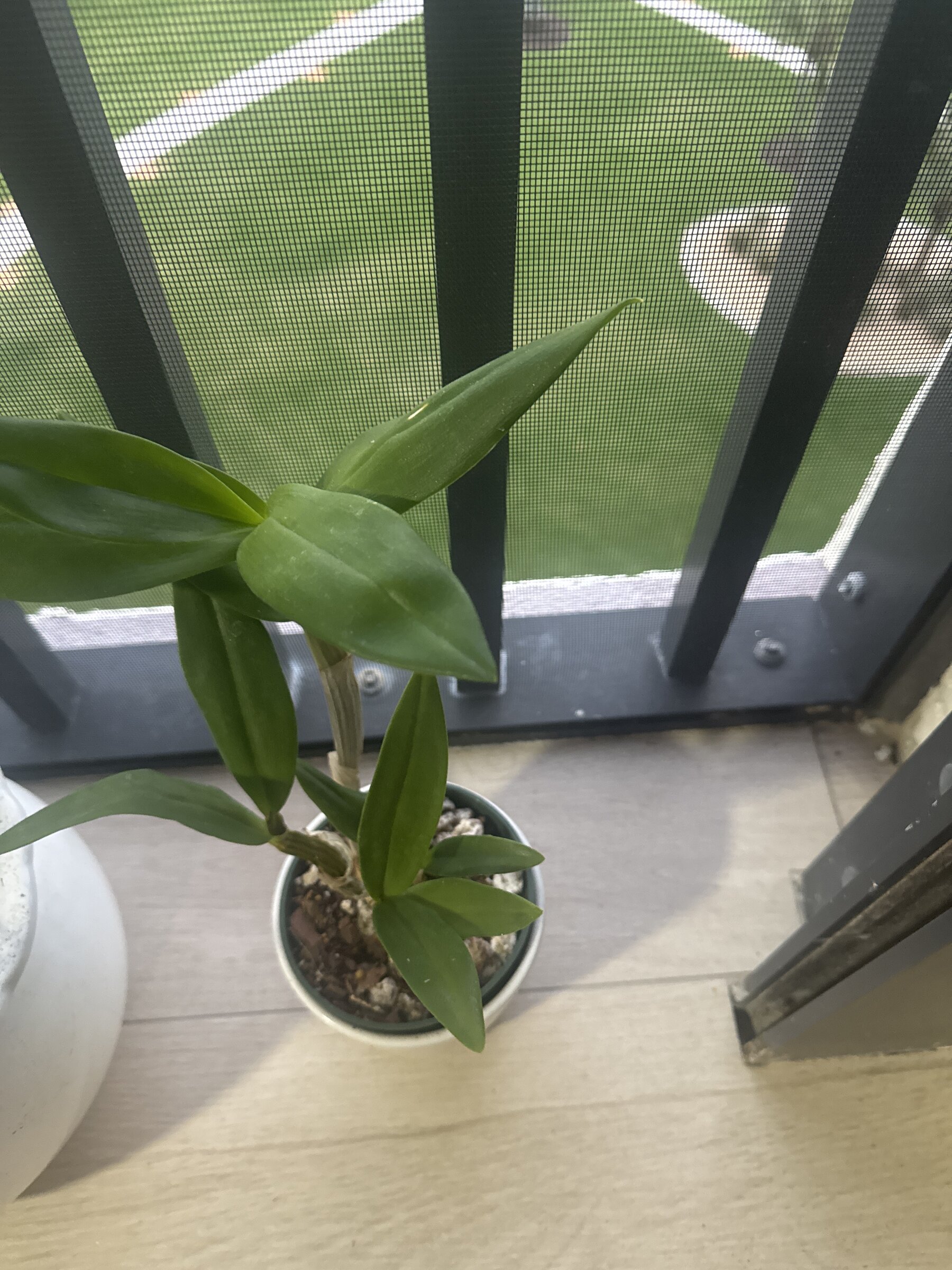
What Happened
By the end of March, Helter Skelter had completed its first month in the collection.
Observations
- Overall health remained strong.
- Leaves maintained good color and firmness.
- Cane structure remained stable.
- The plant showed no signs of decline.
Notes
Helter Skelter was already proving to be one of the most dependable orchids in the collection.
While other plants required close monitoring, this one seemed satisfied with consistent care and enough light.
2026-03-22 — Healthy Progress
Photos
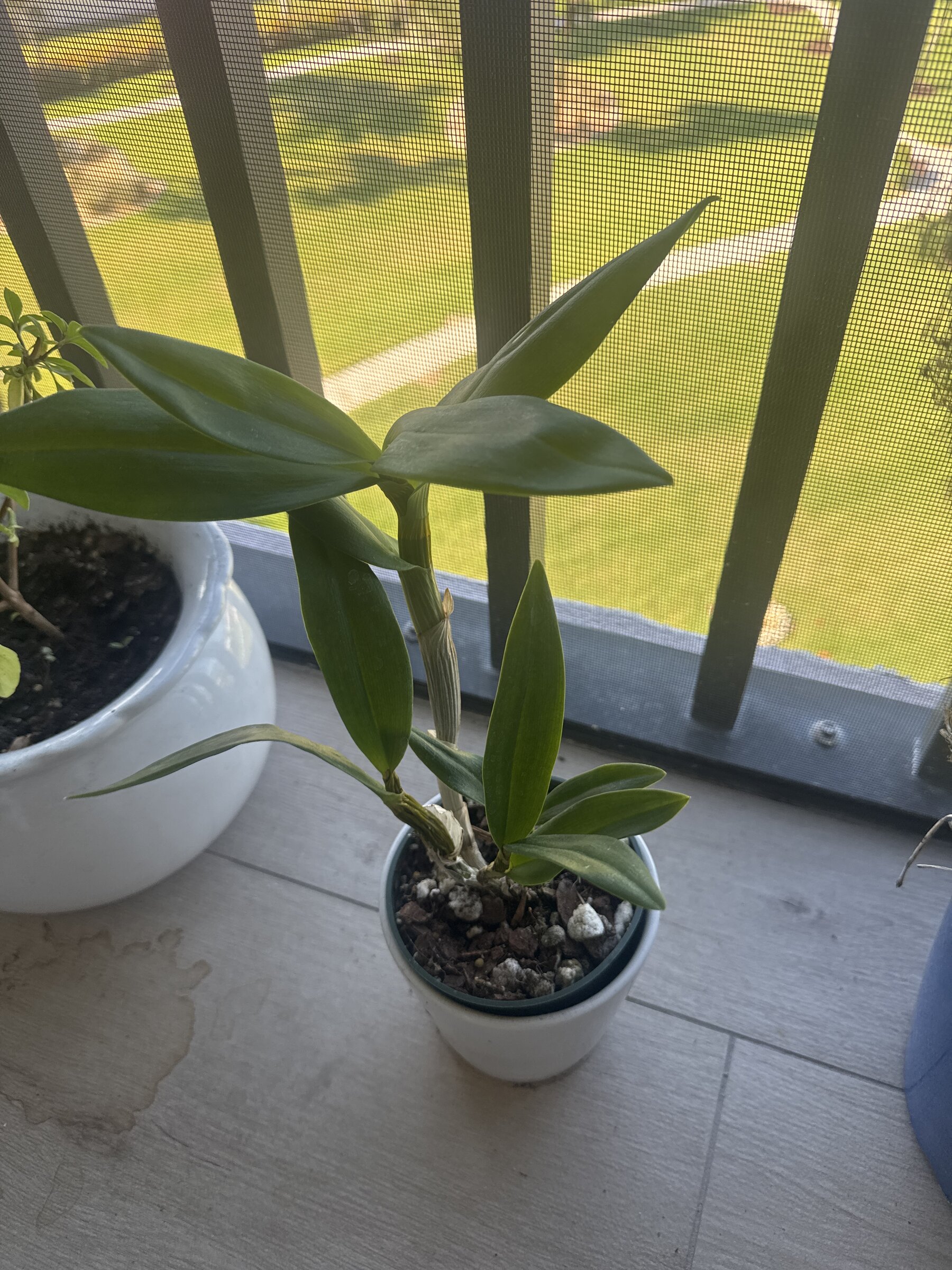
What Happened
Three weeks after acquisition, the plant continued to look stable and well established.
Observations
- Leaves remained firm and evenly colored.
- Existing canes showed no obvious shriveling.
- The plant continued adapting to its environment.
- No major care changes appeared necessary.
Lessons
Not every rescue requires aggressive intervention.
Sometimes the best response is simply to identify what the plant needs and avoid disrupting a healthy adjustment.
2026-03-15 — Continued Stability
Photos
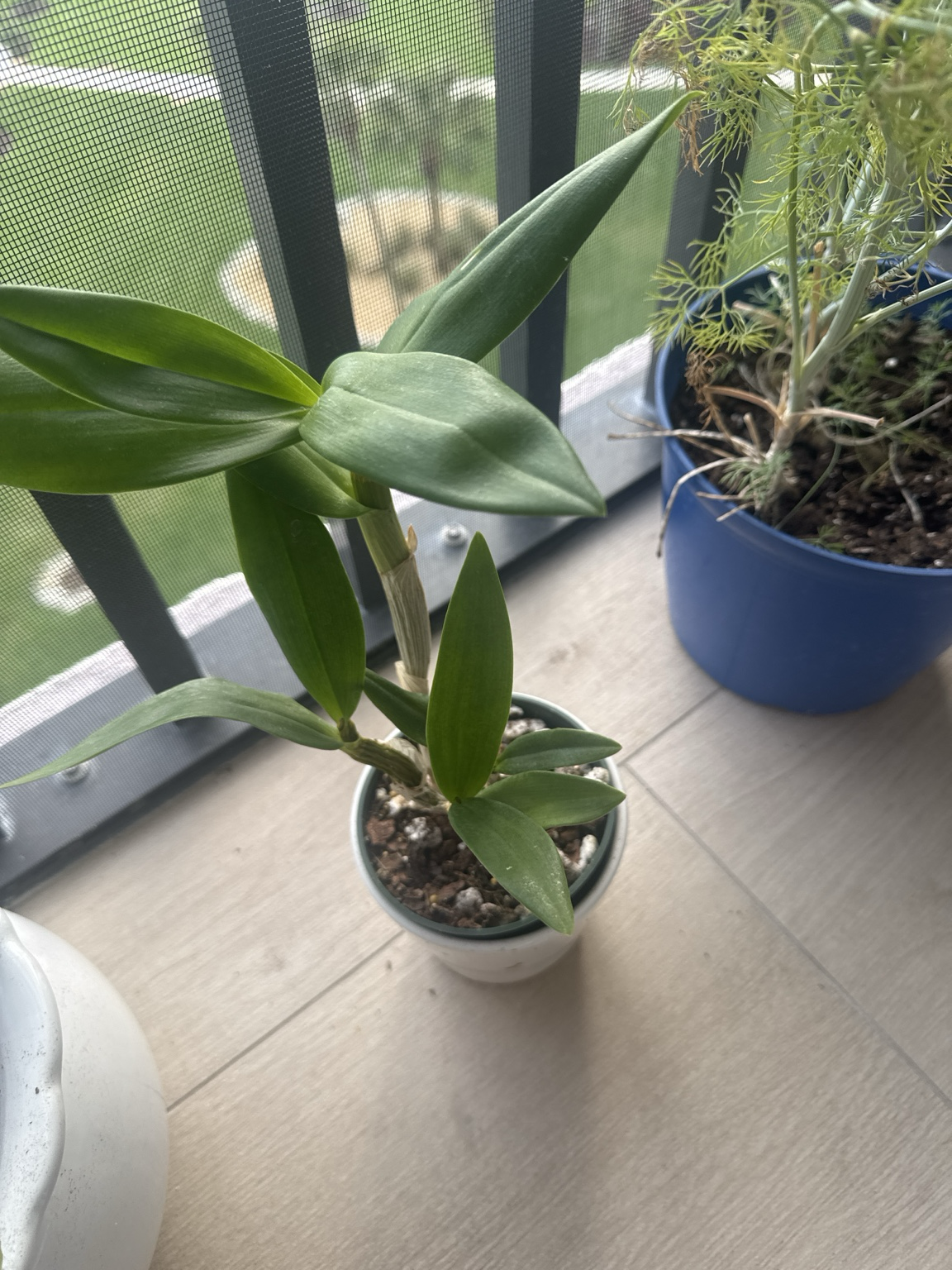
What Happened
Two weeks after acquisition, Helter Skelter continued acclimating without visible setbacks.
Observations
- Foliage remained healthy.
- Canes maintained their structure.
- No major yellowing or leaf loss was visible.
- Growth remained compact.
Notes
Helter Skelter was beginning to establish a pattern that would continue throughout the following months: steady, quiet growth without drama.
2026-03-07 — Early Acclimation
Photos
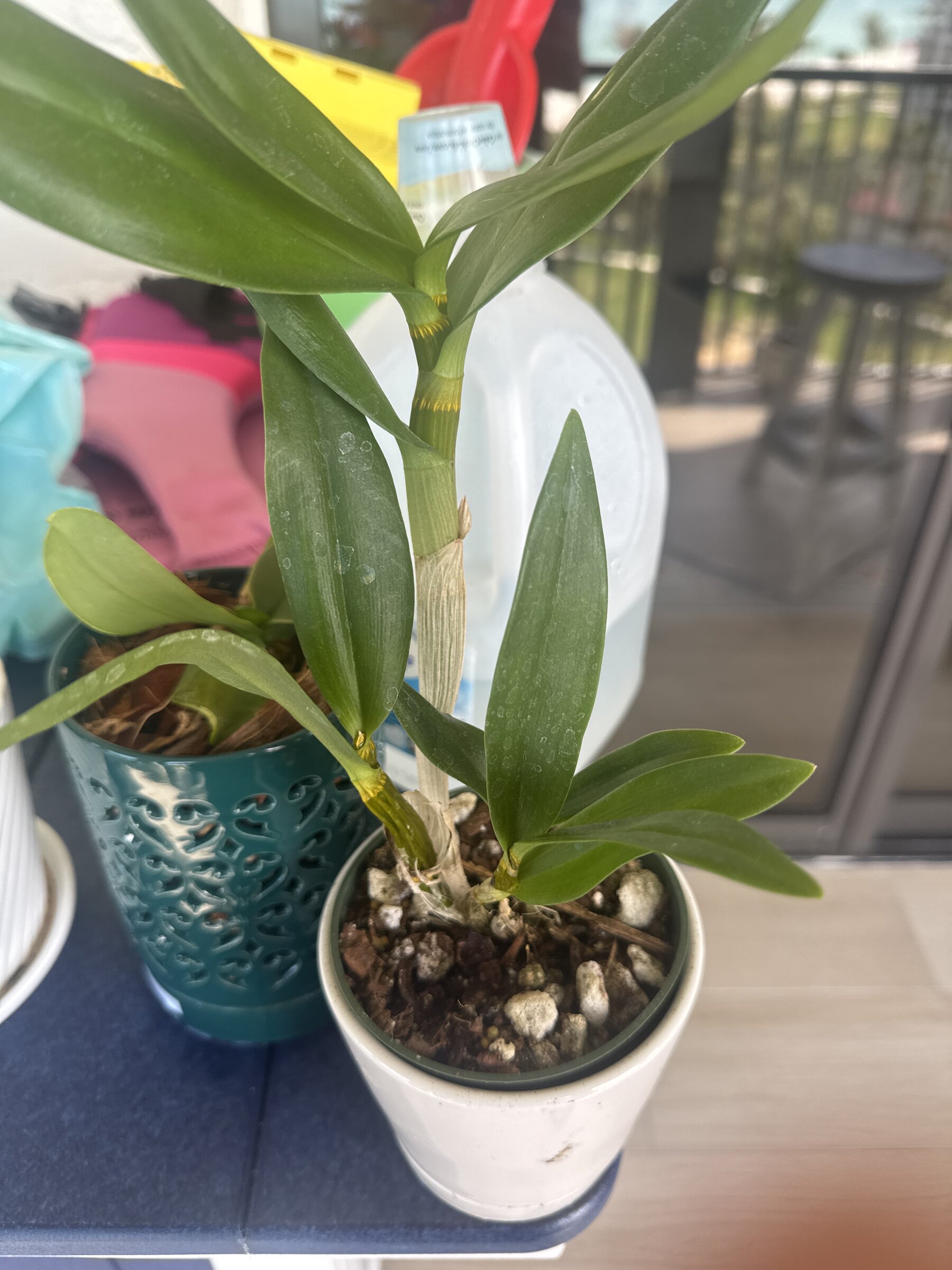
What Happened
One week after acquisition, Helter Skelter appeared to be settling into its new environment.
Observations
- Leaves remained firm.
- Canes remained upright.
- No significant dehydration was visible.
- No immediate decline followed the root inspection.
Notes
The plant was already showing signs that it could adapt without extensive intervention.
The goal at this point was consistency rather than correction.
2026-03-01 — Acquisition
Photos
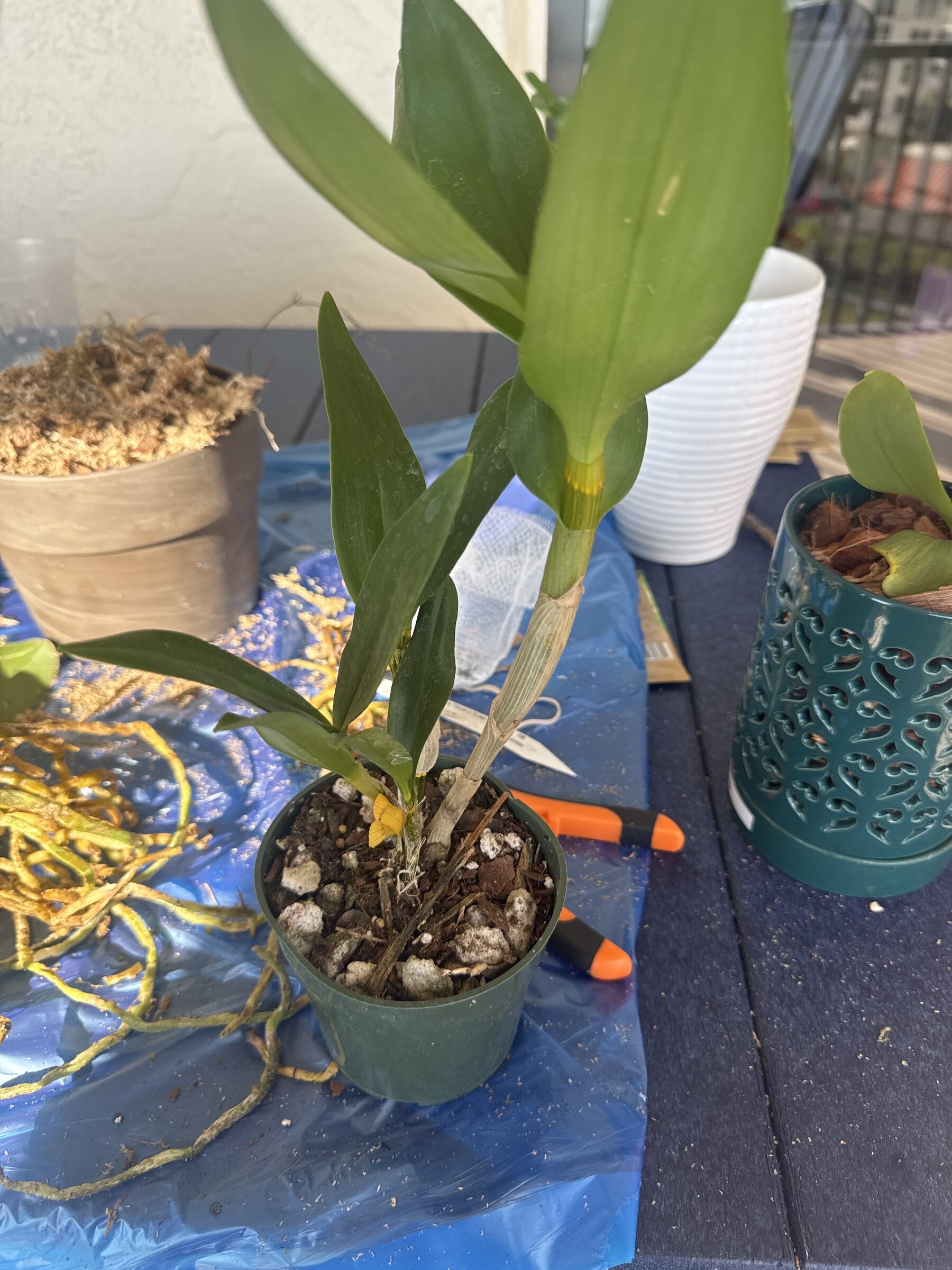
What Happened
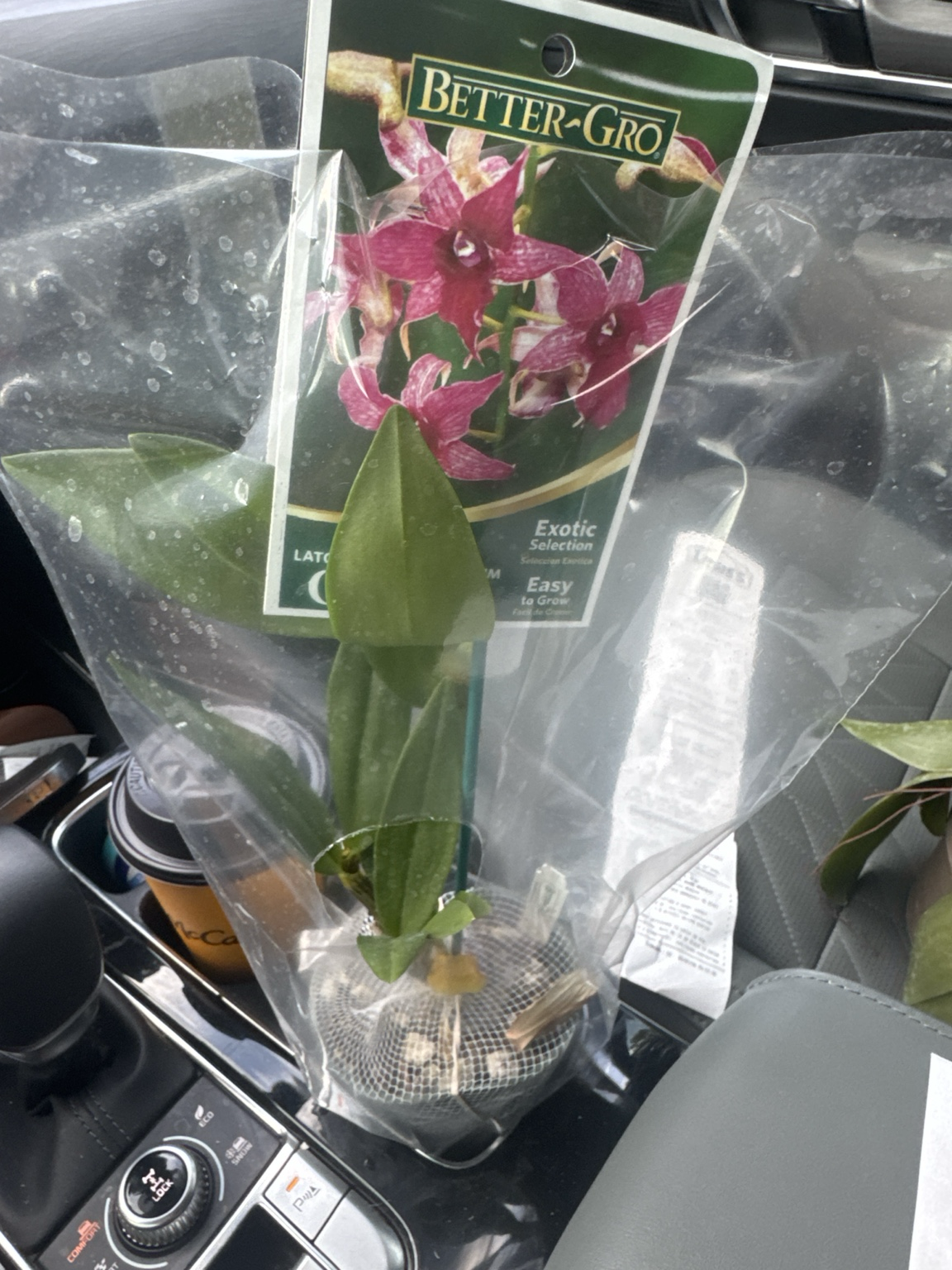
Helter Skelter was purchased as a Better-Gro Dendrobium orchid.
The plant was still inside its original plastic sleeve and nursery packaging when first photographed.
Observations
- Leaves appeared firm and healthy.
- Canes showed no obvious shriveling.
- Growth was compact rather than stretched.
- The plant did not appear dehydrated.
- The root system was still enclosed in the original nursery setup.
Notes
The plant looked strong enough that no emergency repotting was needed before inspecting the roots.
The first priority was to remove the plastic sleeve, allow better airflow, and examine the growing medium.
2026-03-01 — Initial Root Inspection
Photos
What Happened
Helter Skelter was removed from the nursery pot so the root system and growing medium could be inspected.
Observations
- The plant had multiple canes at different stages of maturity.
- The roots were contained in the original nursery material.
- The plant remained structurally firm during inspection.
- No major collapse or dehydration was visible.
Notes
The inspection confirmed that Helter Skelter was not in immediate distress.
Rather than treating it like a damaged Phalaenopsis, care would need to reflect the needs of a Dendrobium:
- Brighter light
- More drying between waterings
- Good airflow
- An open growing medium