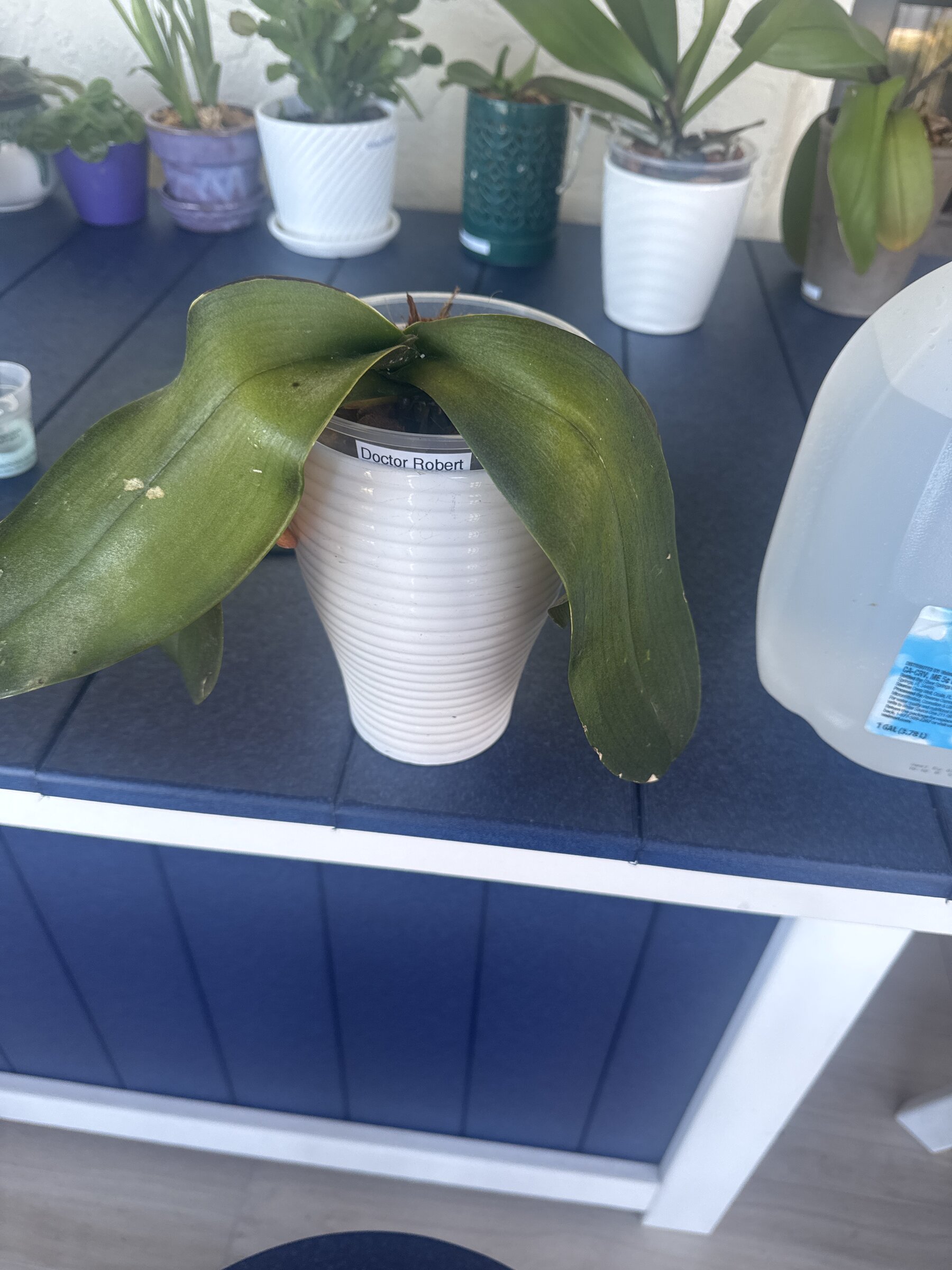
Most people probably wouldn’t have given him a second glance.
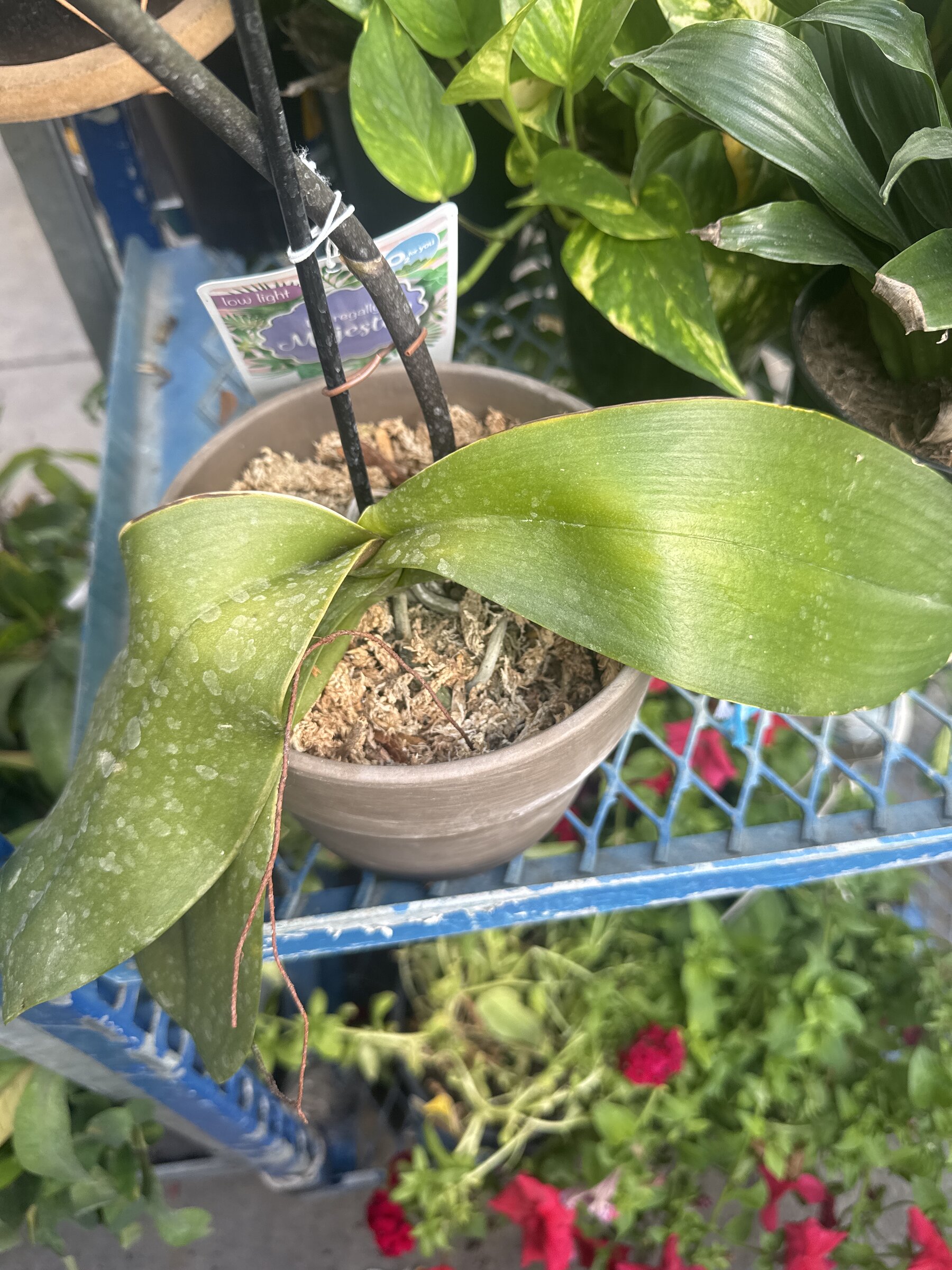
I found Doctor Robert sitting on a clearance rack at Lowe’s among a collection of neglected orchids that looked like they had seen better days. Most shoppers saw dying plants. I saw orchids that still deserved a chance.
I’ve always had a soft spot for rescuing struggling plants, so Doctor Robert came home with me.
What started as a simple rescue gradually became something more. I began photographing his progress, recording observations, and documenting what I was learning along the way. Before long, I wasn’t just trying to save an orchid—I was keeping a journal of the experience.
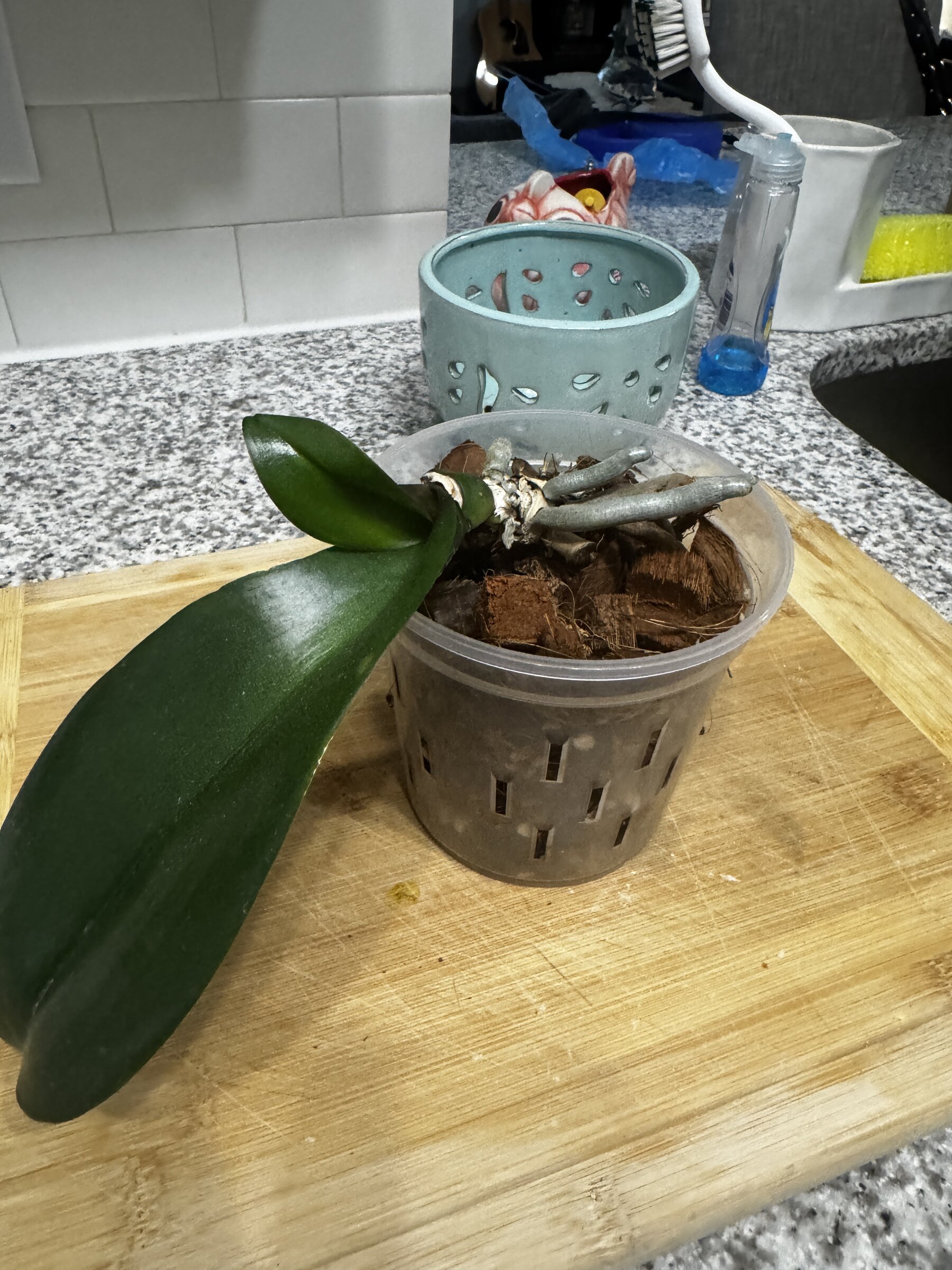
Over the next several months, Doctor Robert slowly recovered. New roots appeared. A new leaf emerged. The damaged leaves from his past eventually dropped away, leaving only the healthy growth that had developed after the rescue began.
Then, halfway through the journey, we both moved from Naples, Florida, to Fort Worth, Texas.
For several weeks the journal went quiet while everything was packed, transported, and unpacked again. When I finally had time to check on the orchids, Doctor Robert was still with me. He had survived the move and was quietly continuing his recovery.
Today, every healthy part of Doctor Robert—the leaf, the roots, and the plant’s future growth—developed after the rescue began.
He’s no longer just an orchid I picked up on clearance.
He’s become a reminder that recovery usually happens slowly, patience matters more than constant intervention, and sometimes the best stories begin when something looks beyond saving.
Rescue History
Doctor Robert is a rescued Phalaenopsis orchid that I found on a Lowe’s clearance rack in March 2026.
I’ve always had a soft spot for struggling plants. Rather than simply trying to keep this one alive, I decided to document the rescue from beginning to end. This journal follows Doctor Robert’s recovery from the day I brought him home, through a cross-country move from Florida to Texas, and into his new life in Fort Worth.
The story isn’t just about saving an orchid. It’s about learning patience, paying attention to small changes, and discovering that recovery rarely happens as quickly—or as dramatically—as we’d like.
Undated and historical notes
These sections retain their original wording and source order. They may describe earlier expectations; no exact dates have been inferred.
Source placement: after “2026-04-10 — Looking Healthier”.
Mid-April — Steady Recovery
Photos
- IMG_93B6D73C-0134-4EF1-AB5C-9ABFCE0B6128.jpeg (2026-04-12)
- IMG_C7758B54-F0A7-45E2-84EE-3C76C3852B6E.jpeg (2026-04-18)
What Happened
By the middle of April, Doctor Robert had settled into a slow but consistent recovery.
There weren’t any dramatic overnight changes, but each week brought small improvements.
Observations
- Plant continued looking healthier.
- Color remained noticeably greener.
- The new center leaf continued to grow.
- Overall posture slowly improved.
Notes
These weren’t exciting updates, but they were reassuring ones.
Instead of wondering whether the rescue would work, I had started looking forward to comparing this week’s photos with last week’s. The improvements were becoming easier to see over time than they were from one day to the next.
Lessons
Most orchid recoveries aren’t dramatic. The biggest changes become obvious only when you compare photographs taken weeks apart.
Source placement: after “2026-04-10 — Looking Healthier”.
Late Spring 2026 — A Cross-Country Move
What Happened
Life became much busier than orchid journaling.
During this period I relocated from Florida to Fort Worth, Texas. Like the rest of my orchid collection, Doctor Robert made the trip with me.
For roughly six weeks there are no photographs or journal entries—not because the rescue had been abandoned, but because moving across the country naturally took priority.
Observations
- Doctor Robert successfully survived the move.
- Growing conditions changed significantly.
- New home.
- Different light.
- Different humidity.
- Different climate.
Notes
Moving the collection safely became the immediate goal.
Once everything was unpacked and settled into the new apartment, I could finally turn my attention back to the orchids. Doctor Robert had survived another challenge, and now we could both settle into our new home.
Lessons
Plants don’t exist in isolation from our lives. Sometimes a gap in the journal tells part of the story just as clearly as the entries themselves.
Source placement: after “2026-07-05 — Ready for the Next Chapter”.
Looking Ahead
Doctor Robert continues to recover in Fort Worth, Texas.
The emergency rescue phase is complete. Future journal entries will focus on meaningful milestones rather than weekly observations, including:
- New roots
- New leaves
- Flower spikes
- Blooms
- Repotting
- Significant changes in health
The story isn’t finished—it’s simply entered a quieter chapter.
Observations and updates
Newest first. Observations on the same date retain their original order.
2026-09-07 — Weekly Update
Photos
Observations
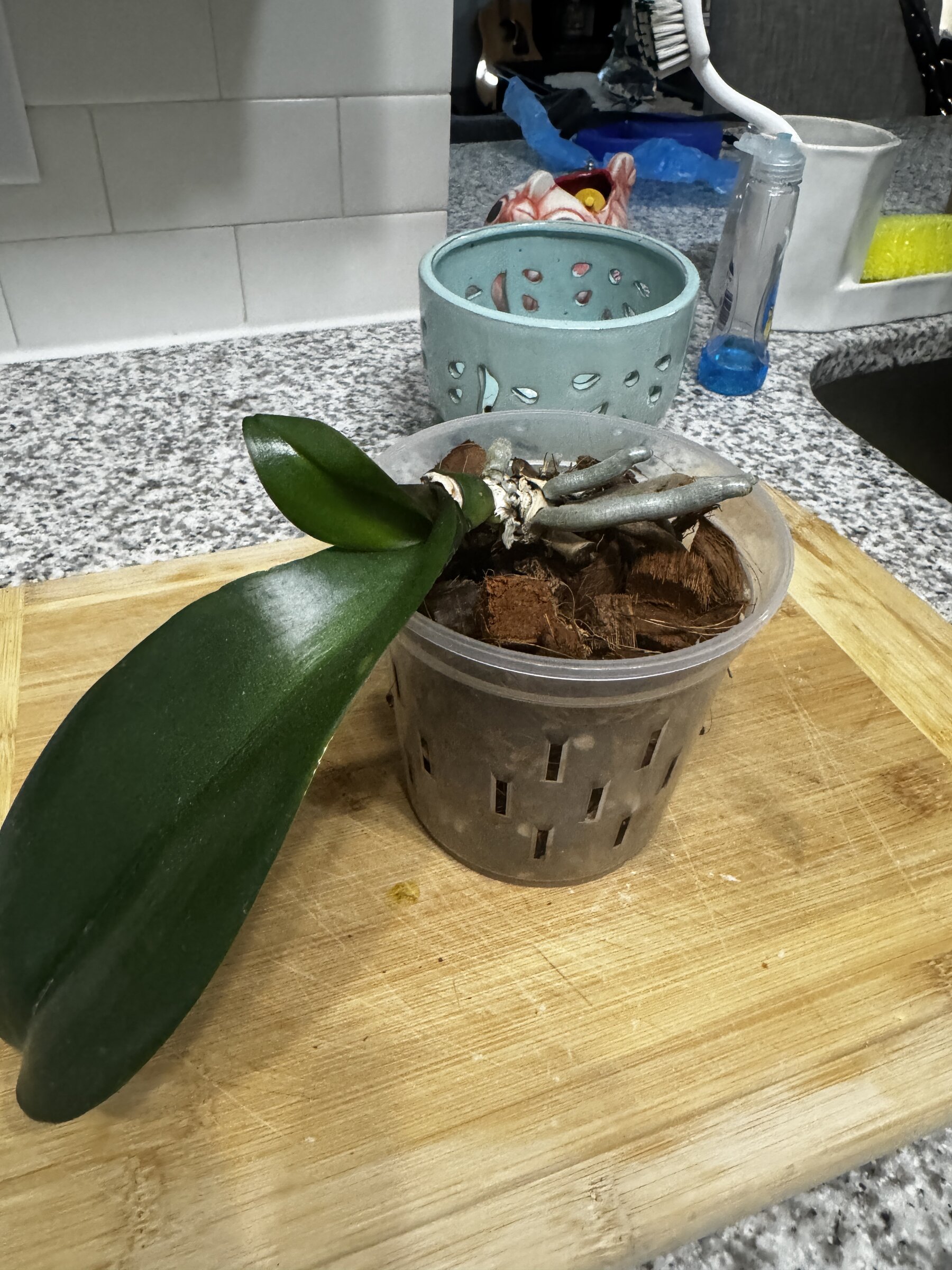
Doctor Robert continues his steady comeback. The new leaf has grown considerably and is now a substantial, healthy second leaf, while the original survivor leaf remains dark green, glossy, and firm; his exposed roots also continue to look plump and healthy.
Care
Watered
2026-08-30 — Weekly Update
Photos
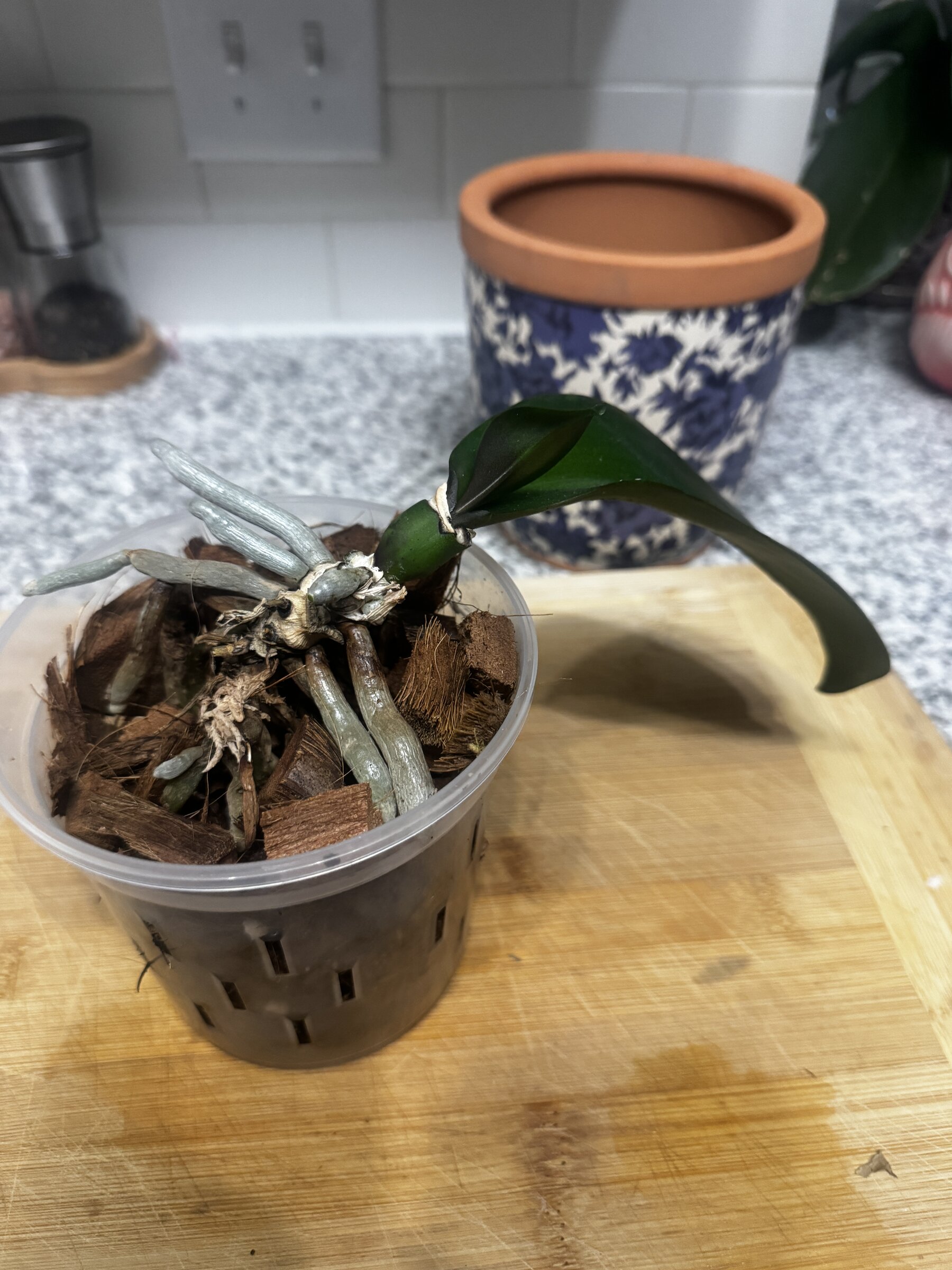
Observations
Doctor Robert continues to look very good. The new leaf has grown substantially over the past few weeks and is now clearly developing into a proper second leaf, while the older leaf remains dark, firm, and glossy.
Care
watered
2026-08-23 — Weekly Update
Photos
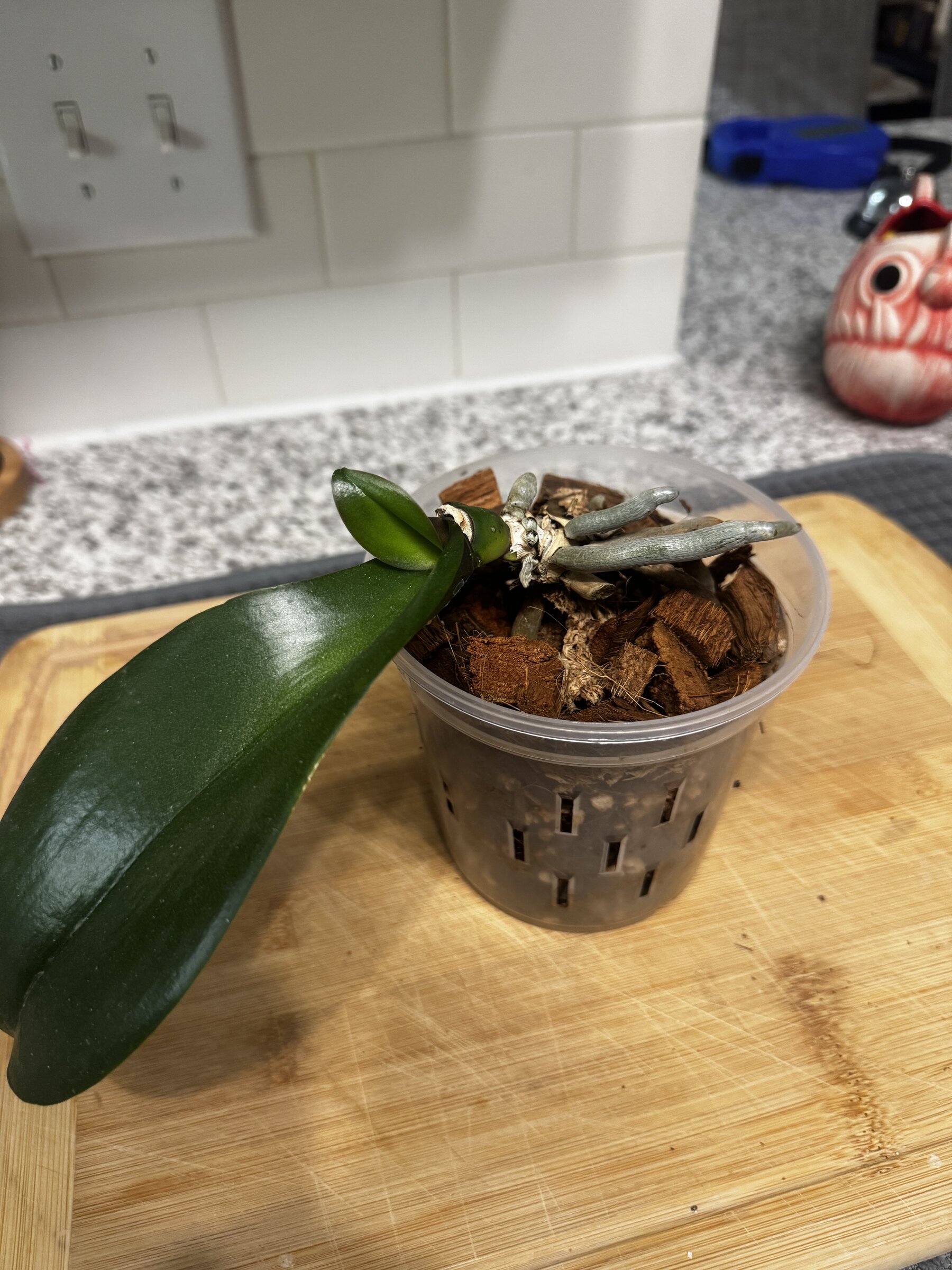
Observations
Doctor Robert continues to look excellent. The new leaf has made very noticeable progress even since 8/18—larger, thicker, and opening nicely—while the mature leaf remains firm and glossy and the exposed roots look substantial.
Care
Watered.
2026-08-18 — Weekly Update
Photos
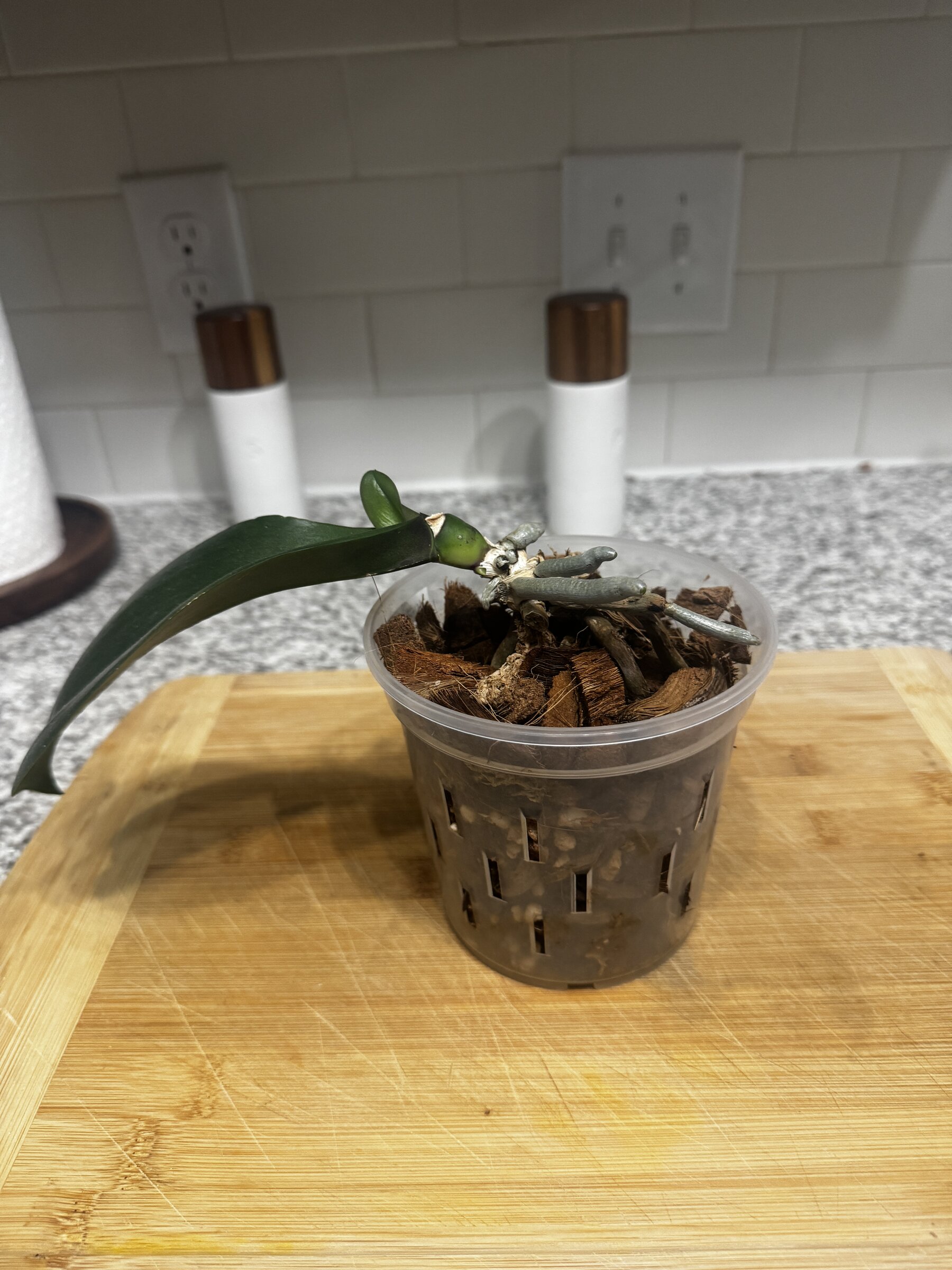
Observations
Doctor Robert continues to look good. That new leaf has grown considerably since 8/9 and is standing up nicely, while the mature leaf remains firm and dark green; the exposed roots also still look solid.
Care
Watered
2026-08-09 — Weekly Update
Photos
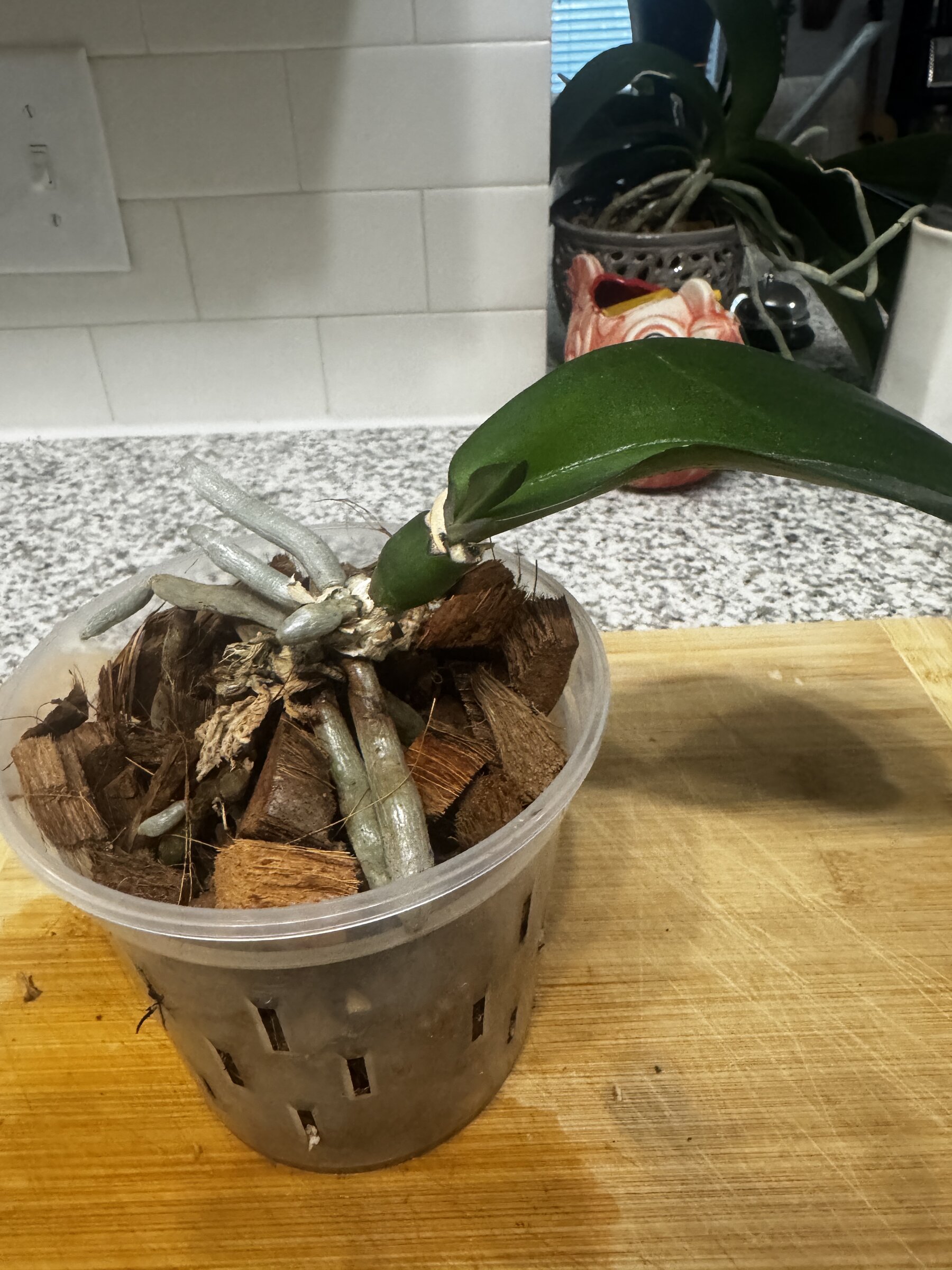
Observations
Doctor Robert’s remaining leaf stays firm and glossy. The root system was cleaned up by removing dead roots while preserving the healthy roots supporting his recovery.
Care
Removed dead roots and fertilized.
2026-08-02 — Weekly Update
Photos

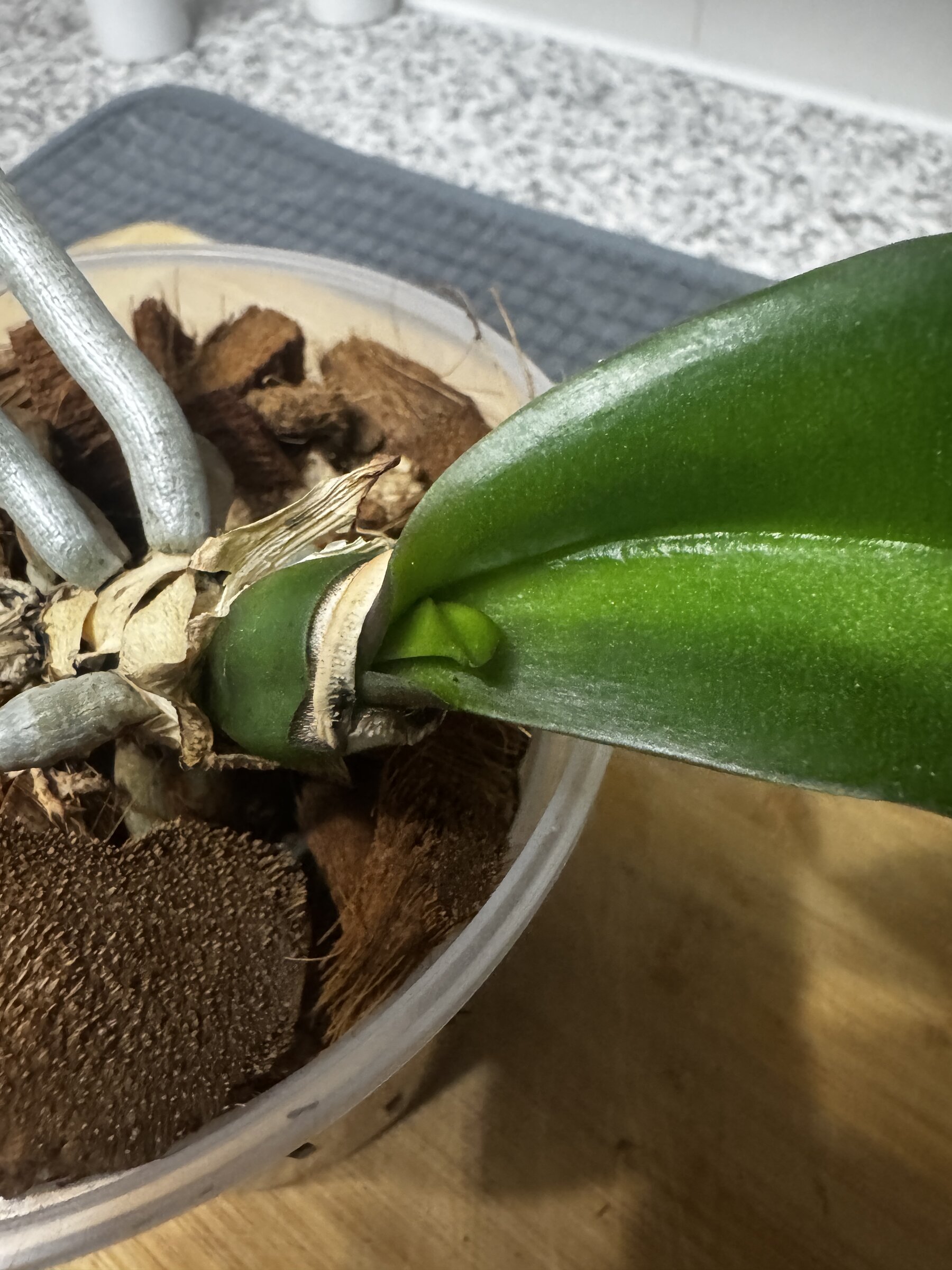
Observations
Doctor Robert appears to have reached an important turning point. The suspected new leaf is now clearly visible as folded leaf tissue emerging from the crown, while the remaining mature leaf stays firm and glossy. With a healthy root system still supporting him, he seems to be shifting from rebuilding roots to producing new foliage for the first time since the rescue.
2026-07-12 — Weekly Update
Photos
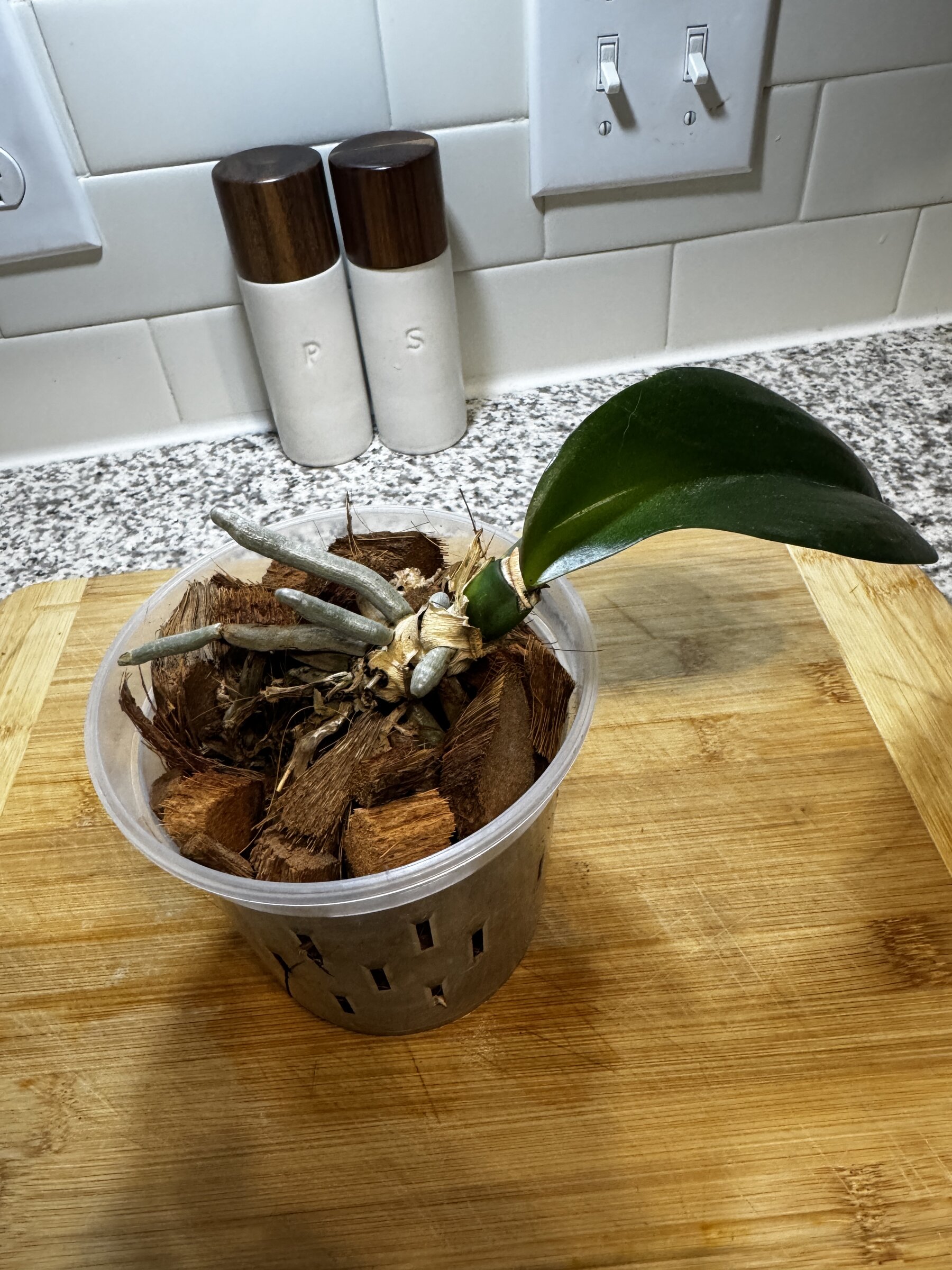
Observations
Doctor Robert received his first fertilizer since the move and continues to show steady recovery. The remaining leaf is thick, glossy, and healthy, while multiple roots are actively growing, giving him a much stronger foundation than he had just a few months ago.
Care
Fertilized
2026-07-05 — Ready for the Next Chapter
Photos
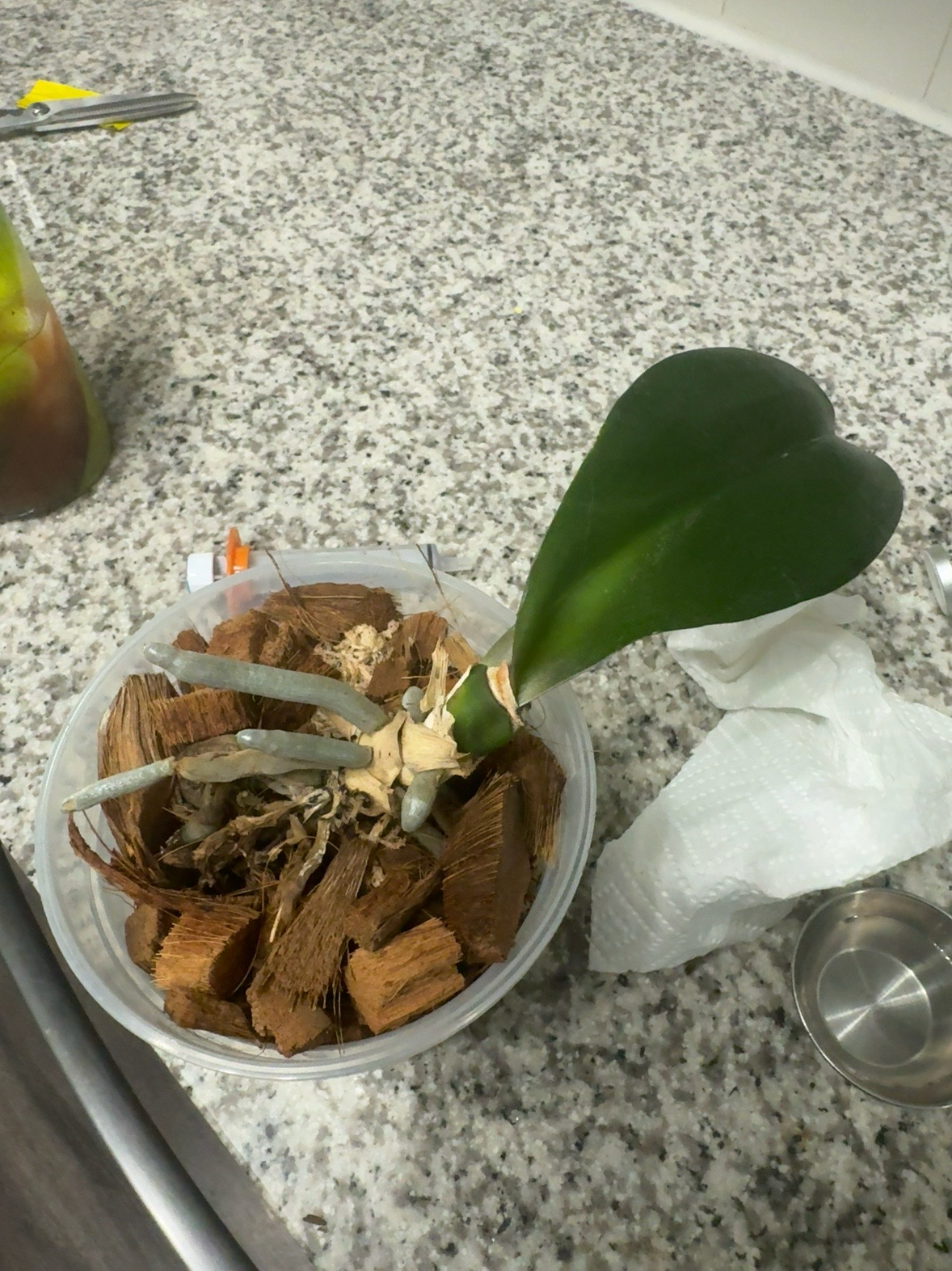
What Happened
By early July, Doctor Robert had settled into his new home in Texas.
The dramatic changes of the rescue were over. Recovery had become slow, steady, and measured in weeks instead of days.
Observations
- The new leaf that first emerged in Naples had become Doctor Robert’s only remaining leaf.
- That leaf looked healthy, vibrant, and fully established.
- The aerial roots that first appeared in Florida remained short but noticeably plump and healthy.
- The plant appeared stable and well established in its new environment.
- No significant setbacks since the move.
Notes
A few months earlier, I was wondering whether Doctor Robert would survive.
Now I wasn’t thinking about survival anymore—I was looking for signs that he was building a healthy future.
It struck me that the only remaining leaf wasn’t one of the original leaves from the neglected orchid I had brought home from Lowe’s. It was the new leaf that first emerged during the rescue in Naples. Every healthy part of the plant now represented growth that had happened under my care.
The leaves told part of the story, but the roots were just as encouraging. Those small aerial roots had survived a cross-country move and continued to look healthy, reminding me that recovery was still happening even if it wasn’t dramatic.
The rescue wasn’t over, but it no longer felt uncertain.
Lessons
A rescue doesn’t end when a plant starts looking better.
The real goal is establishing healthy, sustainable growth that will support the plant for years to come.
2026-06-28 — The Lonely Leaf
Photos
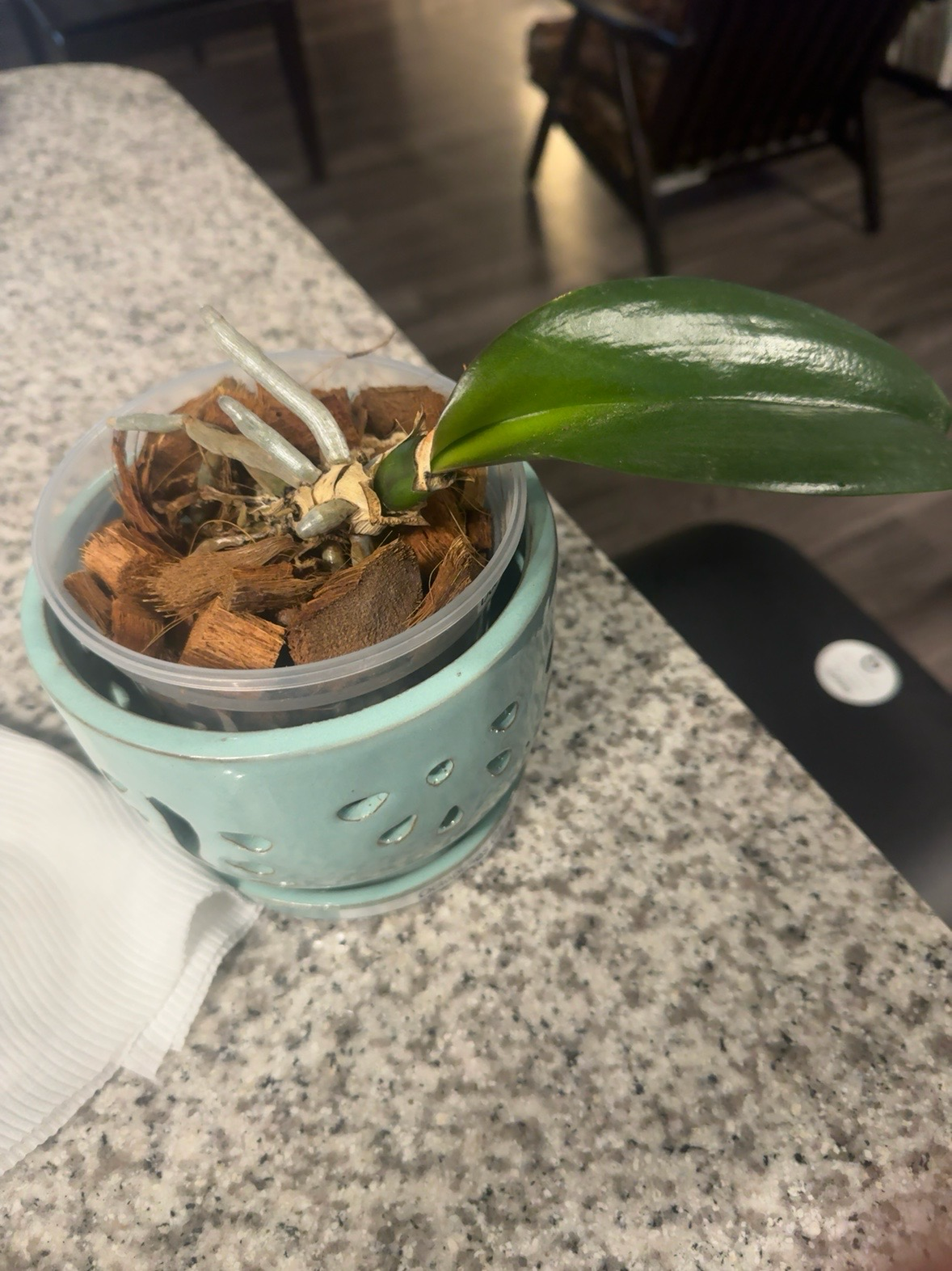
What Happened
Another week passed with little visible change, but one thing had become obvious.
Doctor Robert had put nearly all of his energy into a single leaf.
Observations
- One healthy leaf had become the dominant feature of the plant.
- Older damaged foliage was gone.
- No obvious new growth this week.
- The remaining leaf looked vibrant and healthy.
Notes
It may have been a lonely leaf, but it was a really good-looking leaf.
A few months earlier I would have measured success by how many leaves the plant had. Now I was paying attention to the quality of the growth instead. I’d rather have one healthy leaf than several struggling ones.
Lessons
Recovery isn’t measured by quantity.
Healthy growth matters far more than hanging onto damaged leaves.
2026-06-21 — Quiet Progress
Photos
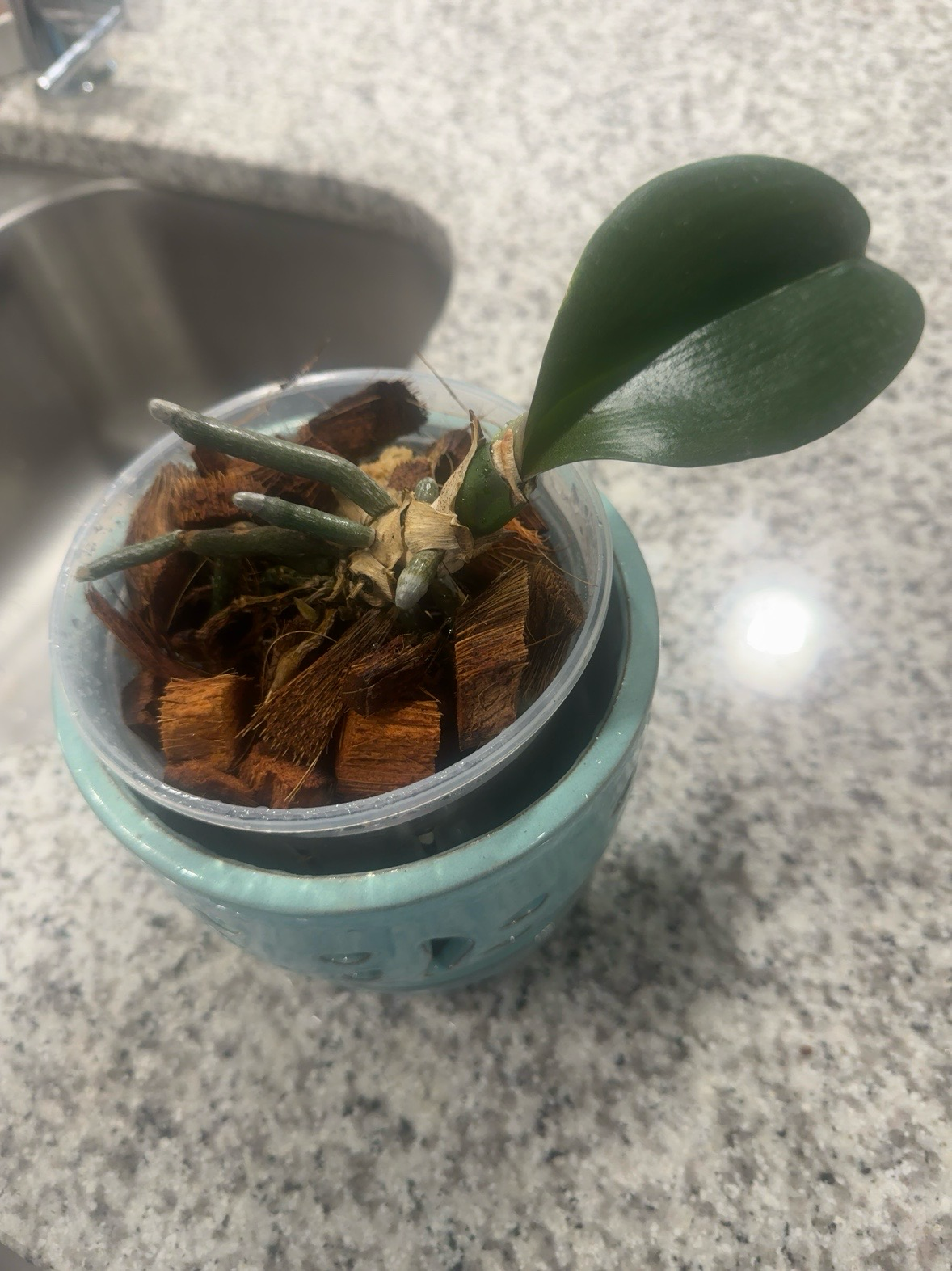
What Happened
A week after settling into his new home, Doctor Robert looked much the same as before.
There wasn’t any dramatic new growth, but there also weren’t any signs of decline.
Observations
- Overall appearance remained stable.
- The remaining healthy leaf continued to look excellent.
- No significant visible changes from the previous week.
Notes
Early in the rescue, I probably would have been disappointed by a week like this.
By now I understood that recovery often happens below the surface before it becomes visible above it. Stability had become something worth appreciating.
Lessons
Sometimes “nothing changed” is exactly the outcome you’re hoping for.
For a recovering orchid, a week without decline can be just as meaningful as a week with obvious new growth.
2026-06-13 — A New Beginning in Texas
Photos
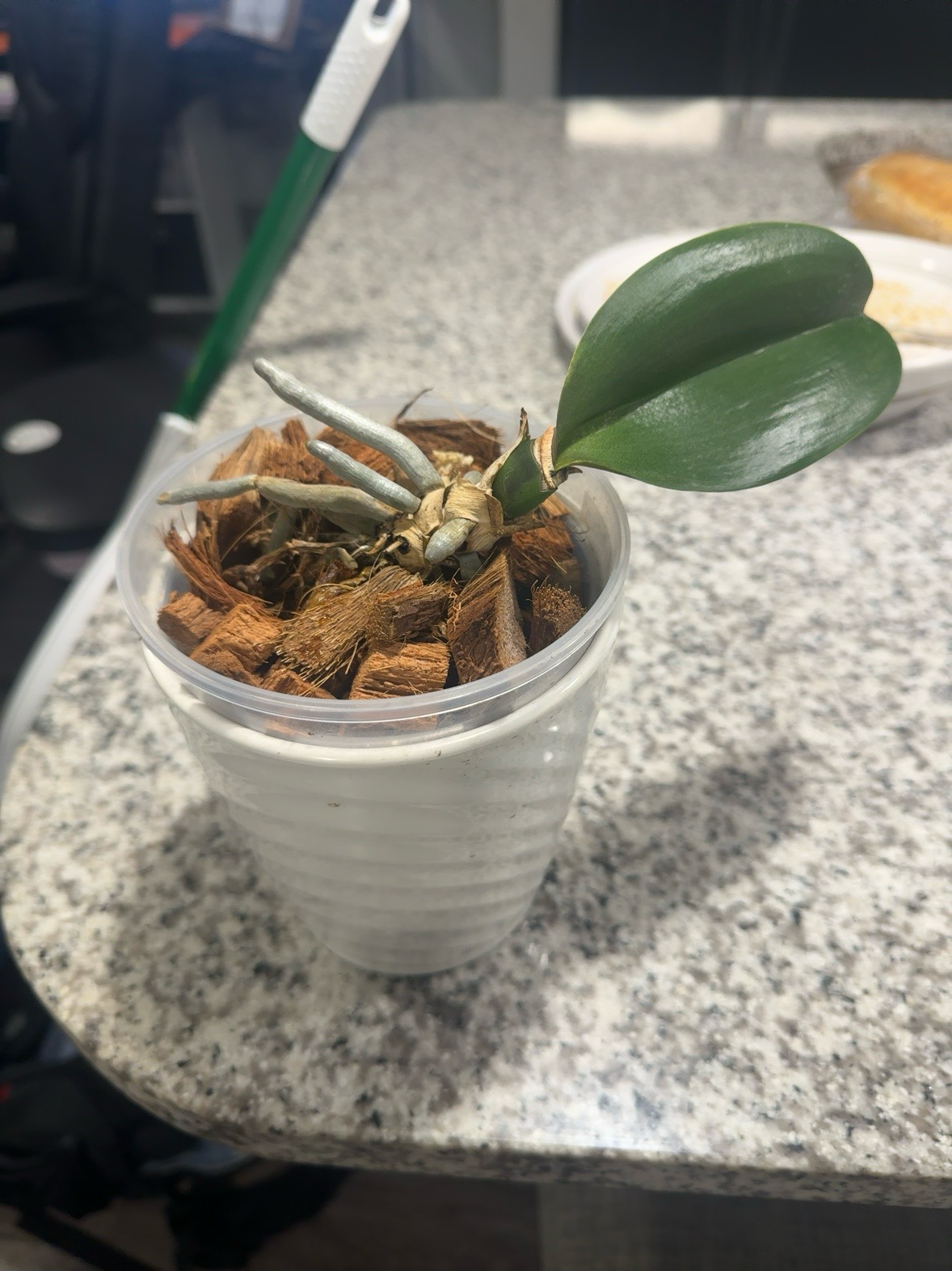
What Happened
After relocating from Florida to Fort Worth, Texas, Doctor Robert was finally unpacked and reunited with the rest of the collection.
The move created a six-week gap in the journal. During that time the focus was simply getting everything safely across the country and settled into a new home.
Observations
- Most of the damaged leaves had naturally dropped during the move.
- One healthy leaf remained.
- The plant looked dramatically different than it had before leaving Florida.
- The remaining leaf looked healthy and vibrant.
Notes
At first glance it looked like Doctor Robert had taken a major step backward.
In reality, he had finally let go of the leaves that had been damaged long before the rescue began. What remained was healthy tissue and a much stronger foundation for future growth.
The rescue had entered a new phase.
Lessons
Sometimes recovery looks worse before it looks better.
Losing damaged leaves isn’t always a setback—it can be an important part of the healing process.
2026-04-10 — Looking Healthier
Photos
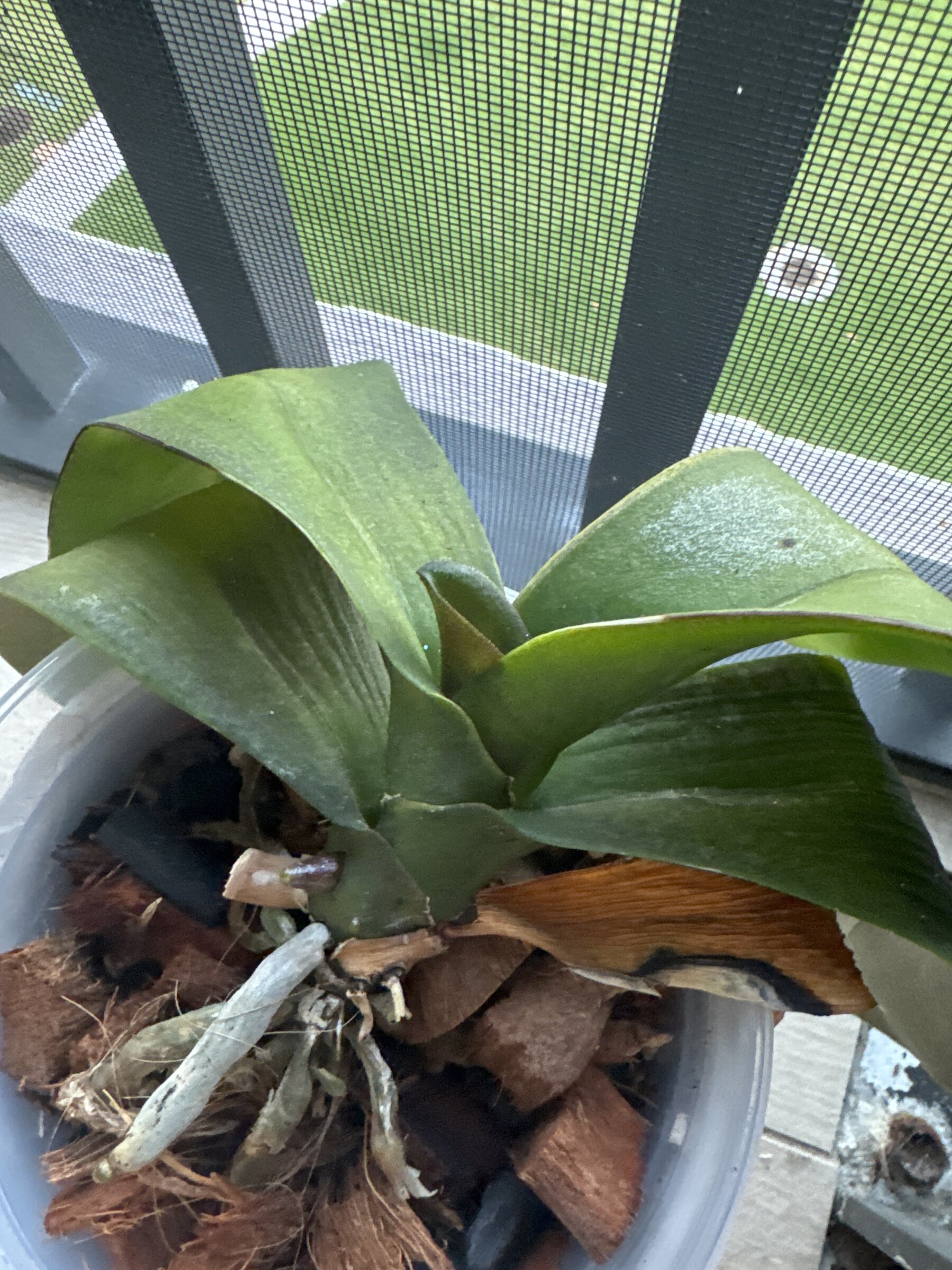
What Happened
The changes that had started with a new aerial root and a new leaf were beginning to show in Doctor Robert’s overall appearance.
Observations
- Overall color noticeably greener.
- Plant looked healthier than it had just a few weeks earlier.
- New growth continued to develop.
- Older leaves still showed the effects of the plant’s past neglect.
Notes
This was the first time I could look at Doctor Robert and immediately tell he was improving.
The rescue had moved beyond hope and into visible progress. It wasn’t perfect yet, but I no longer found myself wondering if he was going to survive.
Lessons
Recovery isn’t always dramatic. Sometimes you realize a plant is healthier because it simply looks more alive than it did a week ago.
2026-04-08 — The First New Leaf
Photos
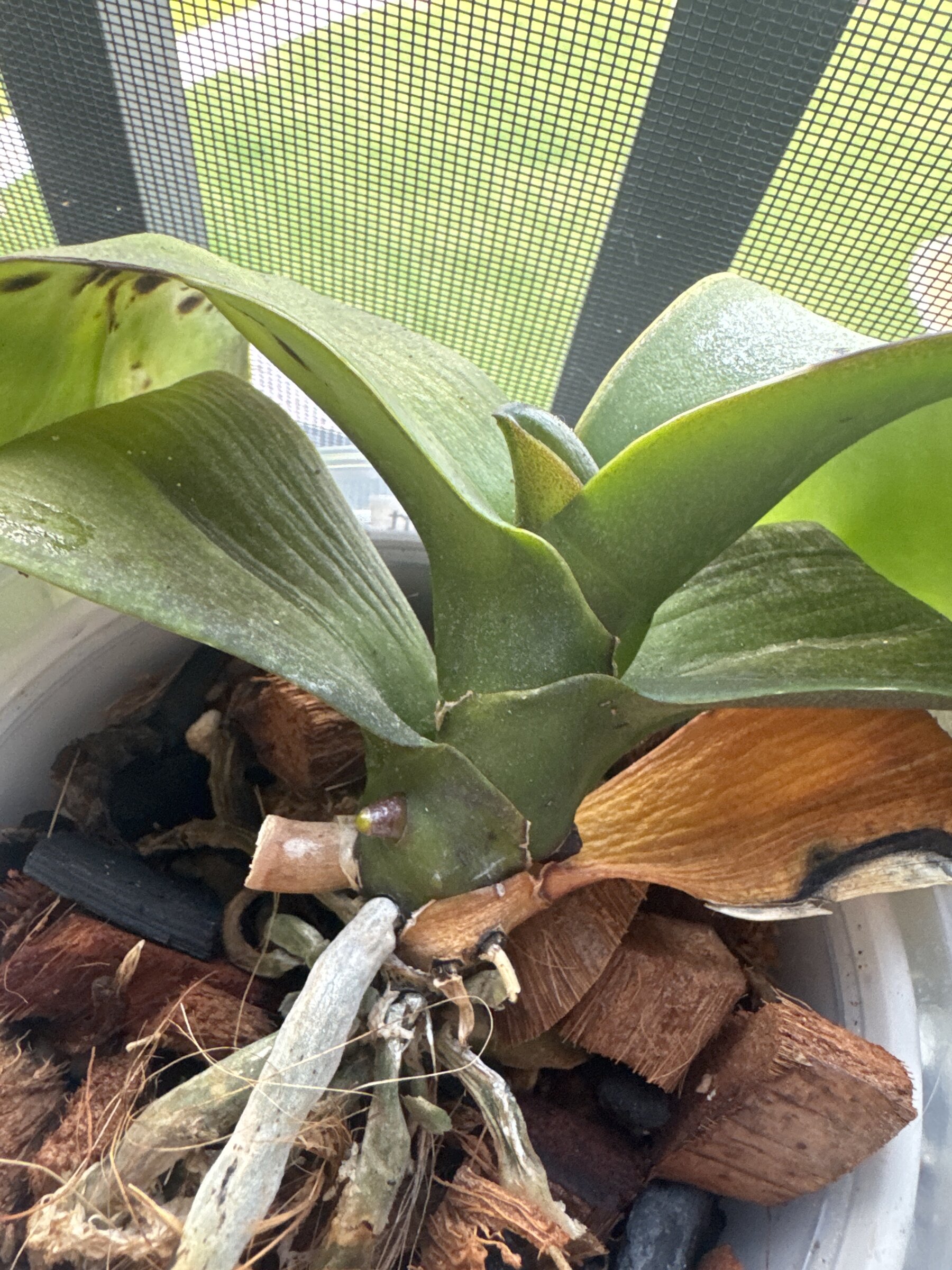
What Happened
Just two days after discovering the first aerial root, another encouraging sign appeared.
A tiny new leaf had begun emerging from the center of the plant.
Observations
- New leaf emerging from the crown.
- Existing leaves still showed damage from the plant’s previous neglect.
- Plant was now producing both new roots and new leaves.
Notes
This was the moment the rescue felt real.
The older leaves still reflected Doctor Robert’s past, but the new leaf represented his future. From this point on, I stopped judging the plant by the condition of its oldest leaves and started paying attention to the new growth instead.
Lessons
Healthy new growth is a much better indicator of an orchid’s condition than the appearance of its oldest leaves.
2026-04-06 — The Turning Point
Photos
What Happened
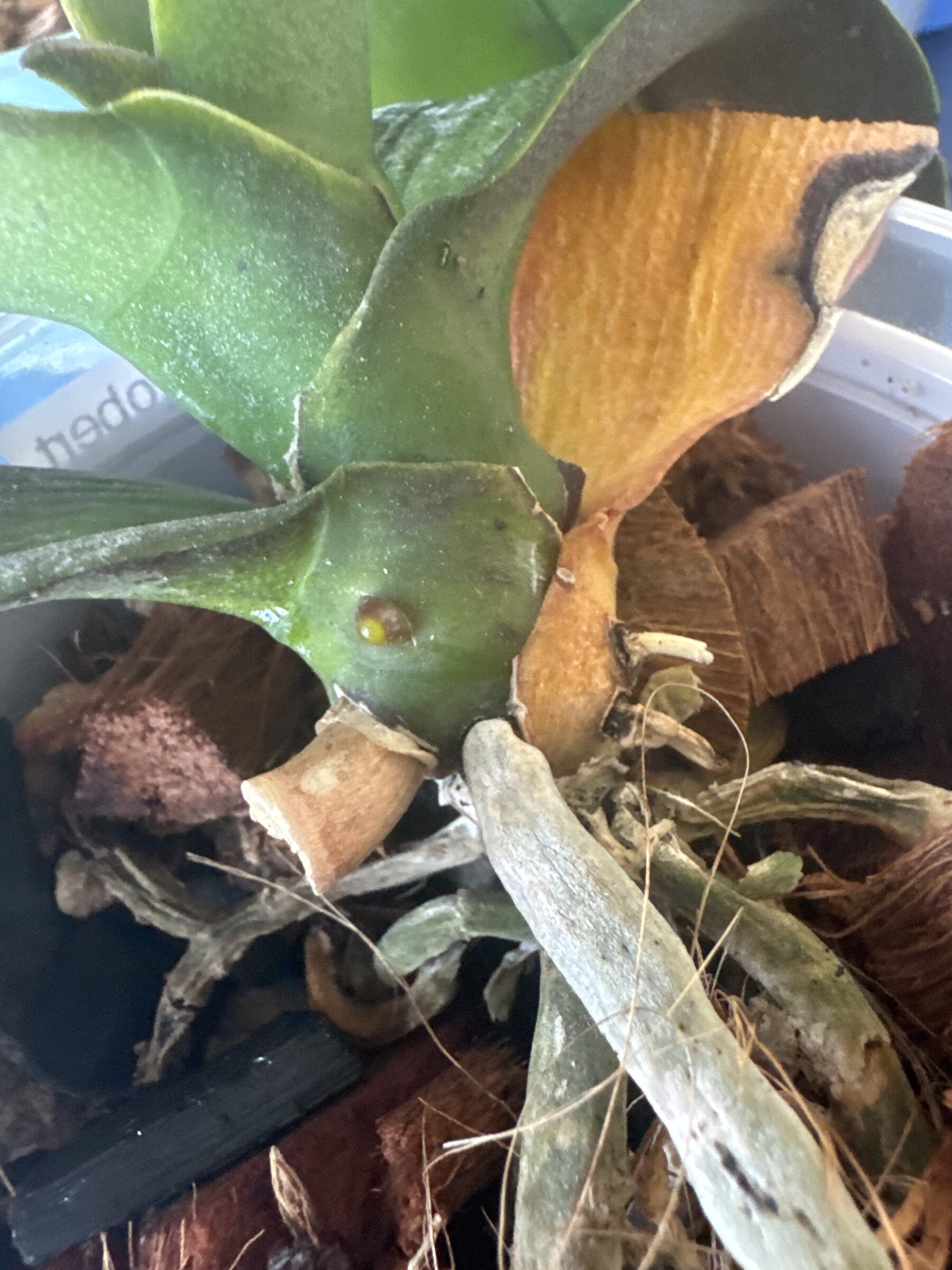
The first tiny aerial root emerged.
It wasn’t a dramatic change, but it was the first unmistakable sign that Doctor Robert had decided to grow again.
Observations
- Tiny aerial root just beginning to emerge.
- Plant still looked rough overall.
- First unmistakable sign of new growth.
Notes
This tiny root completely changed my outlook.
For the first time, I felt confident that Doctor Robert wasn’t just surviving—he was beginning to recover.
Lessons
Sometimes the smallest changes are the most important. New growth is one of the clearest signs that an orchid is investing energy in its future.
2026-04-05 — Mixed Signals
Photos

What Happened
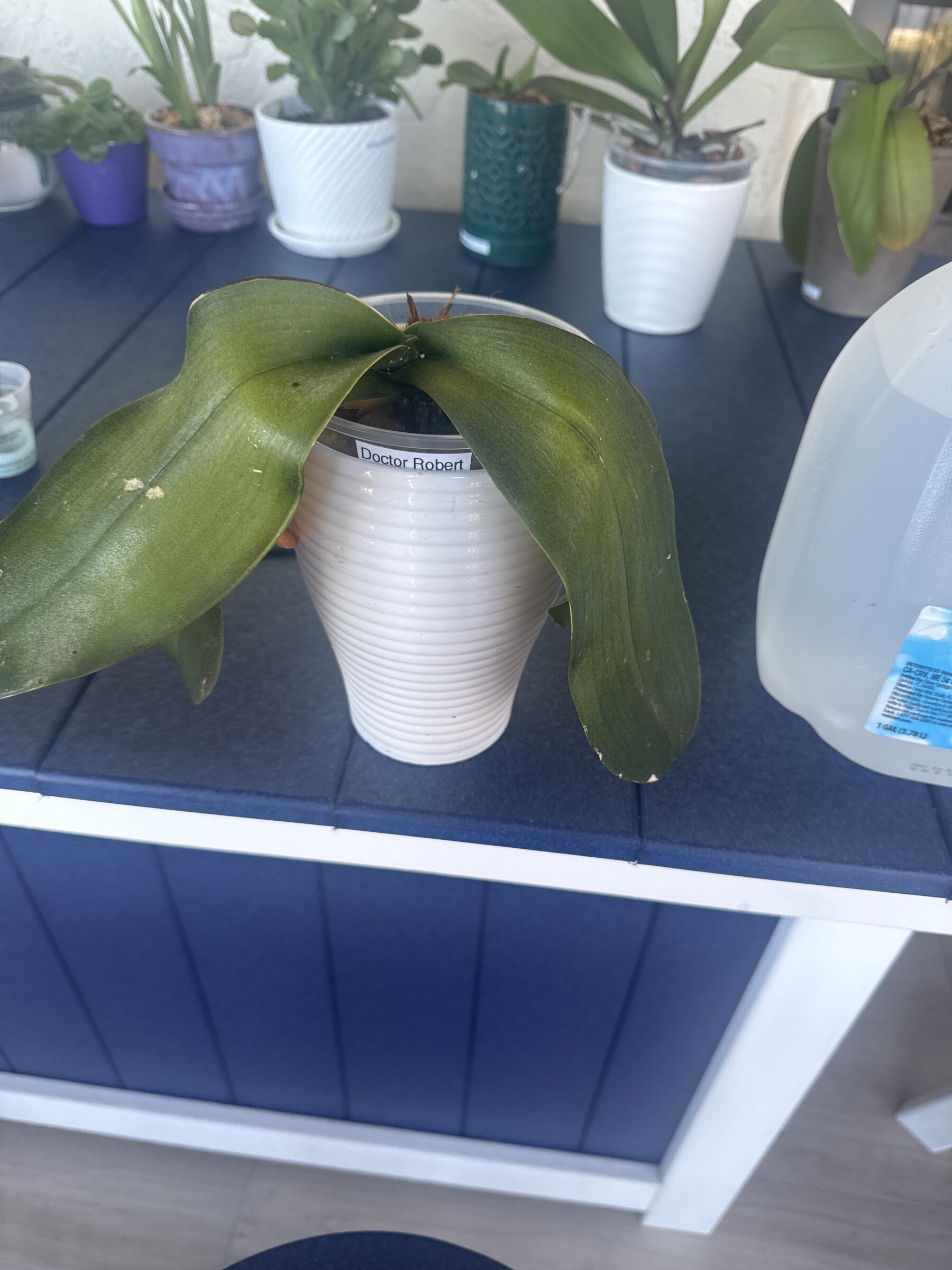
About a month into the rescue, Doctor Robert still looked tired and droopy.
At the same time, the oldest bottom leaf had begun turning brown.
Observations
- Overall appearance was still weak.
- Leaves remained droopy.
- Lowest leaf beginning to die naturally.
Notes
Watching a leaf die isn’t encouraging, especially when you’ve spent weeks trying to save the plant.
I reminded myself that the older leaves reflected the orchid’s past, not its future. The question wasn’t whether an old leaf could be saved—it was whether the plant was preparing to produce healthy new growth.
2026-03-29 — First Signs of Progress
Photos
What Happened
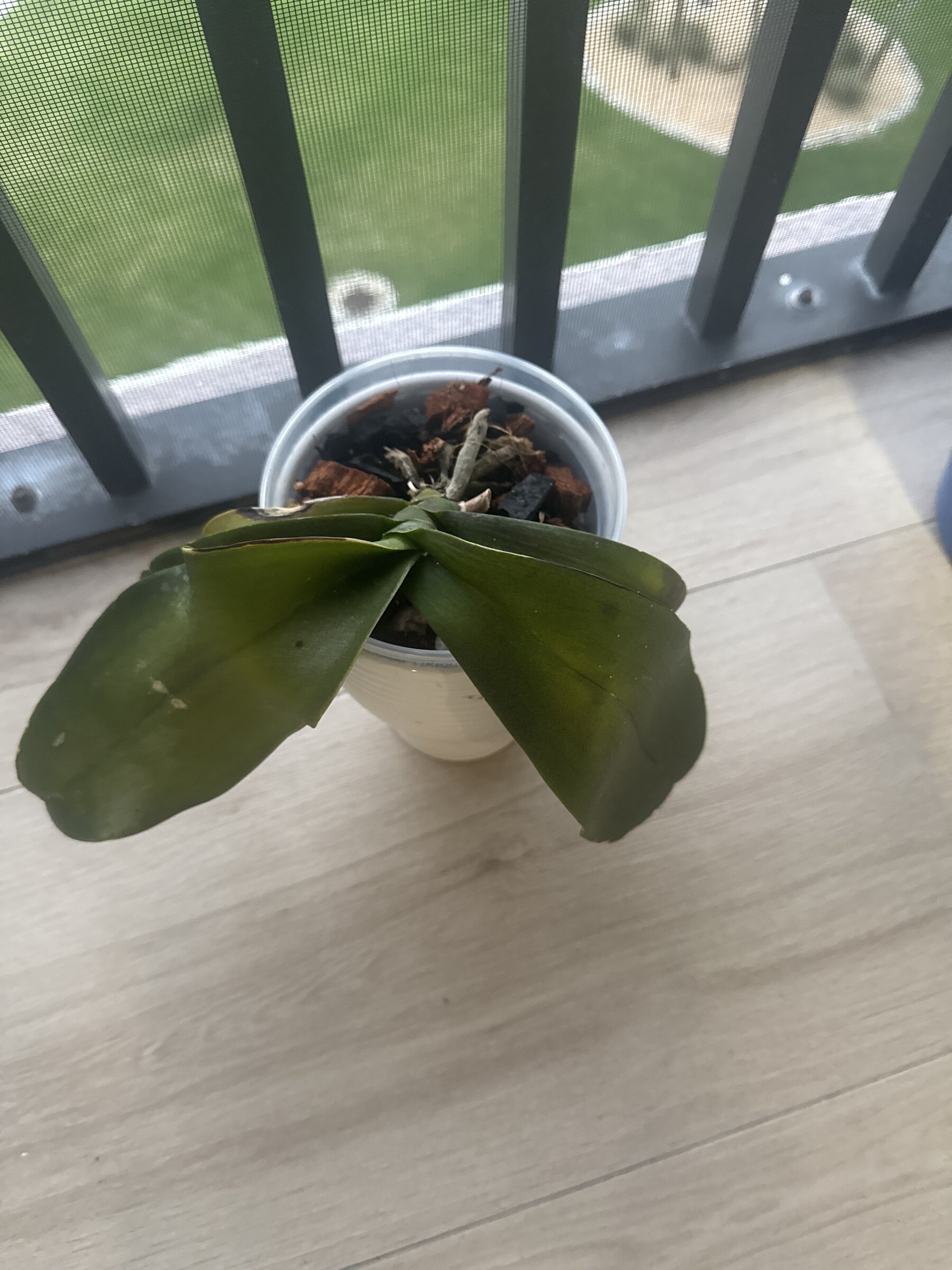
Nearly a month after bringing Doctor Robert home, there were finally subtle signs that the rescue might be working.
Observations
- Plant still looked rough from months of neglect.
- Leaves remained tired and worn.
- Noticeably less droopy than the previous week.
Notes
It wasn’t a dramatic recovery, but it was enough to give me hope.
I was beginning to appreciate the small improvements instead of waiting for some dramatic overnight transformation. Looking back, this was the point where I started trusting the process instead of constantly wondering whether I should intervene again.
Lessons
Recovery doesn’t always happen in obvious leaps. Sometimes the biggest victory is simply that the plant looks a little better than it did last week.
2026-03-22 — Waiting for a Response
Photos
What Happened
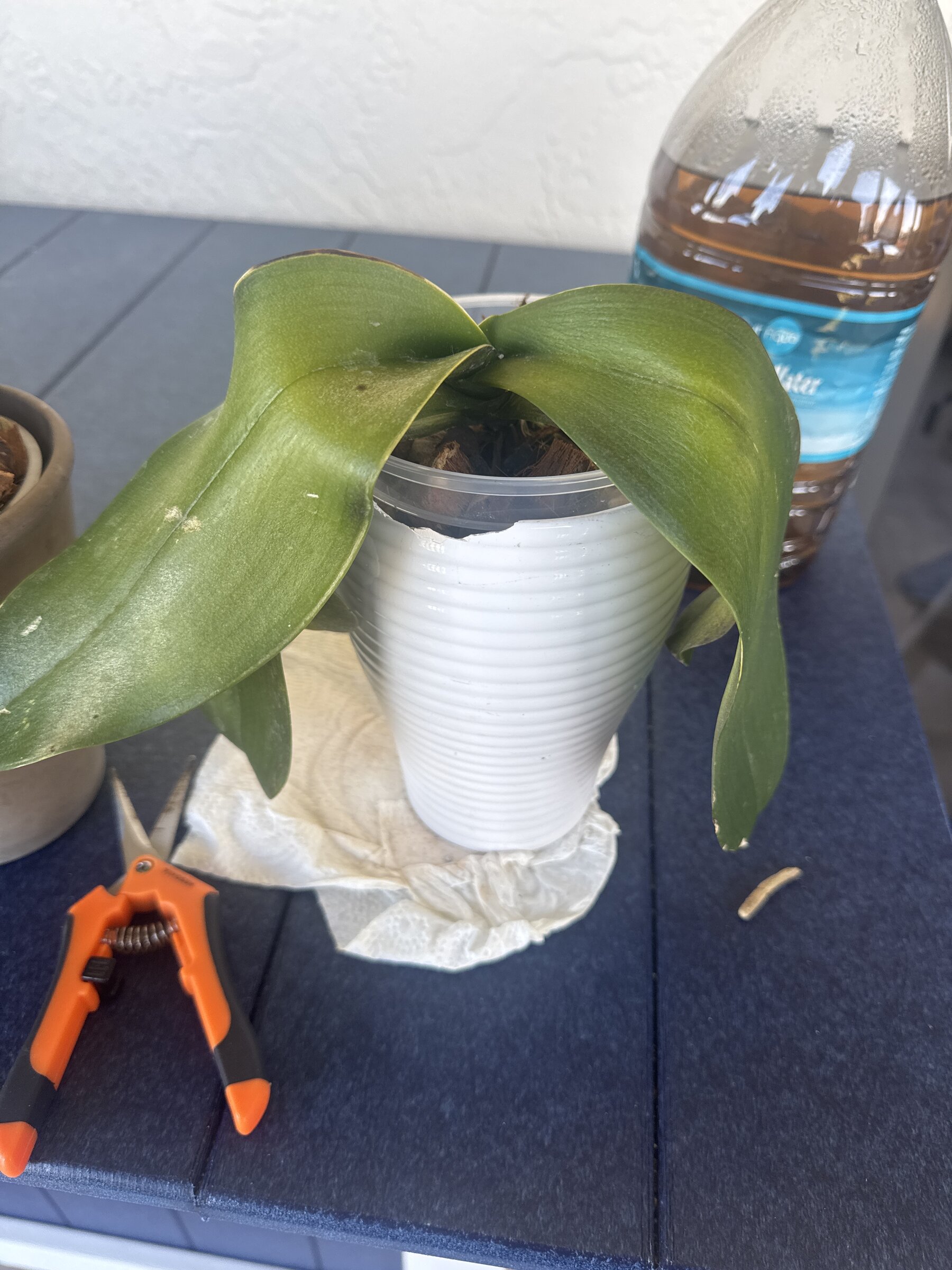
About three weeks after the rescue, Doctor Robert was still settling into his new environment.
Observations
- Leaves remained noticeably droopy.
- No dramatic improvement yet.
- Still recovering from the stress of neglect and repotting.
Notes
I found myself wondering whether the rescue was actually going to succeed.
It was tempting to keep changing things, but I was beginning to learn that orchids recover on their own schedule, not mine.
Lessons
One of the hardest parts of rescuing orchids is learning patience. After addressing the obvious problems, the best thing you can often do is leave the plant alone and let it recover.
2026-03-07 — Settling In
Photos
What Happened
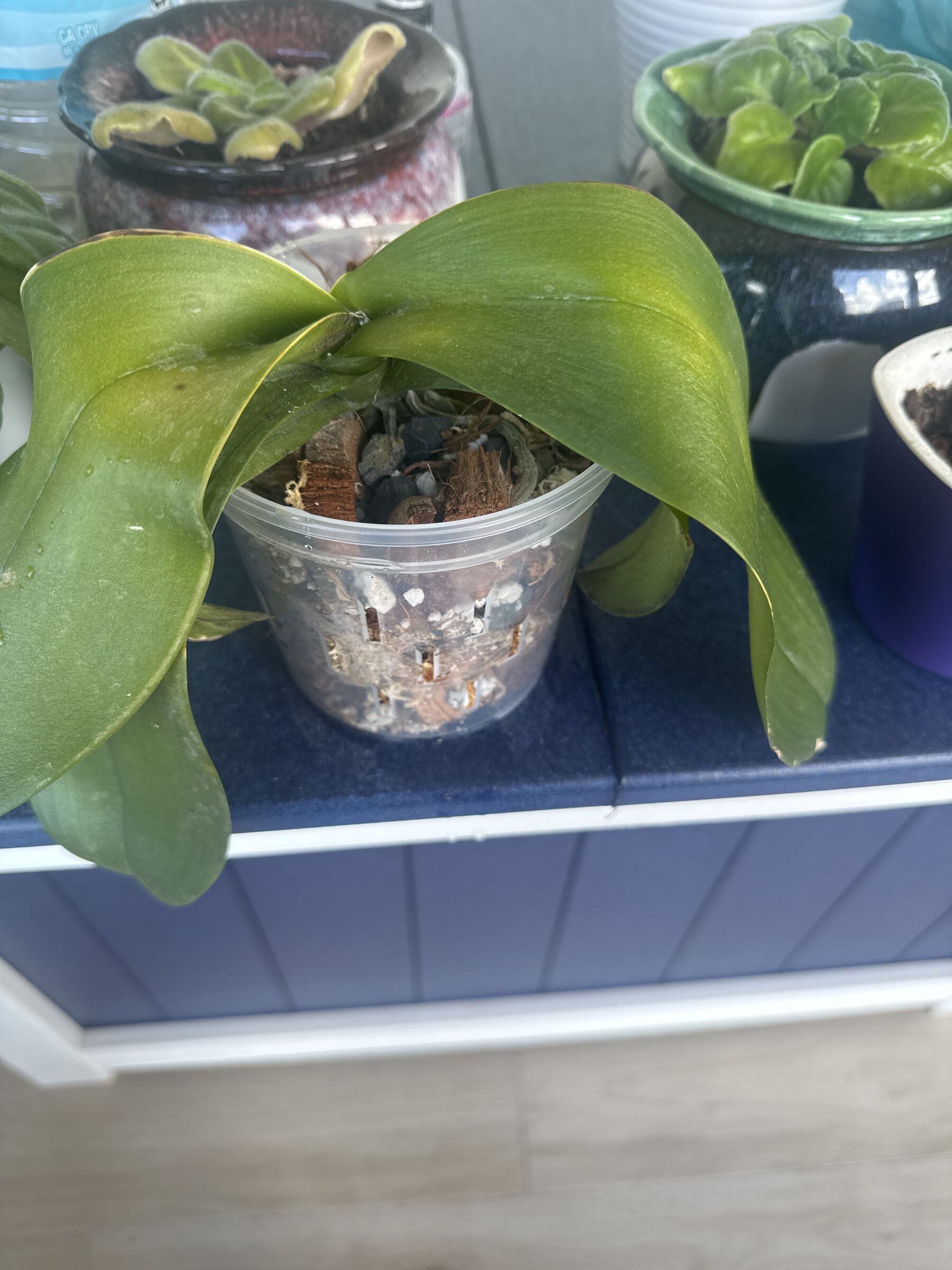
About a week after the rescue, Doctor Robert had settled into his new home alongside the rest of my orchid collection.
The emergency work was finished. At this point there wasn’t much left to do except provide consistent care and wait.
Observations
- Plant displayed with the rest of the collection.
- Recovering in its new environment.
- No major changes expected this early.
Notes
I was hoping the repotting had been successful, but there wasn’t much left to do except observe.
This is the stage where patience becomes more important than constantly trying to fix something.
2026-03-02 — Repotting
Photos
What Happened
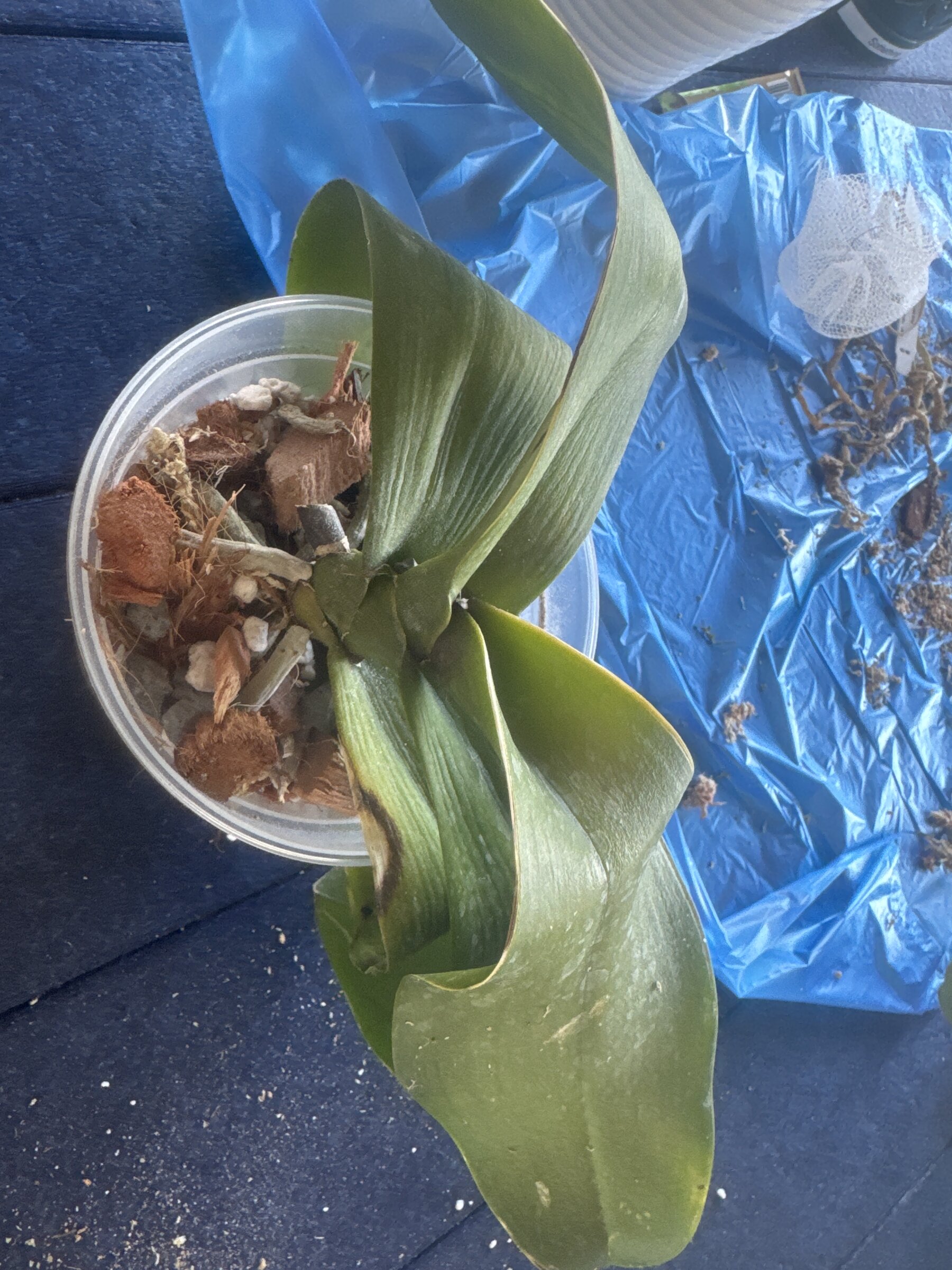
After inspecting the roots and deciding the plant still had a chance, Doctor Robert was repotted into fresh orchid media.
This marked the beginning of the recovery rather than the end of the rescue.
Observations
- Plant was secured in its new pot.
- Fresh orchid media replaced the original material.
- The original nursery plug was still wrapped around the root system and was removed during repotting.
- Ready to begin recovering under proper care.
Notes
The rescue had officially begun.
Finding the nursery plug explained why the roots had struggled to establish properly. Removing it gave Doctor Robert a much better chance of developing a healthy root system.
Now the hard part would be waiting to see how the orchid responded.
2026-03-01 — The Rescue
Event
While out on another errand, I stopped at Lowe’s and wandered through the garden center.
On the clearance rack was a collection of neglected orchids. Most shoppers probably saw dying plants. I saw orchids that still deserved a chance.
One orchid in particular caught my attention.
That orchid eventually became Doctor Robert.
Photos
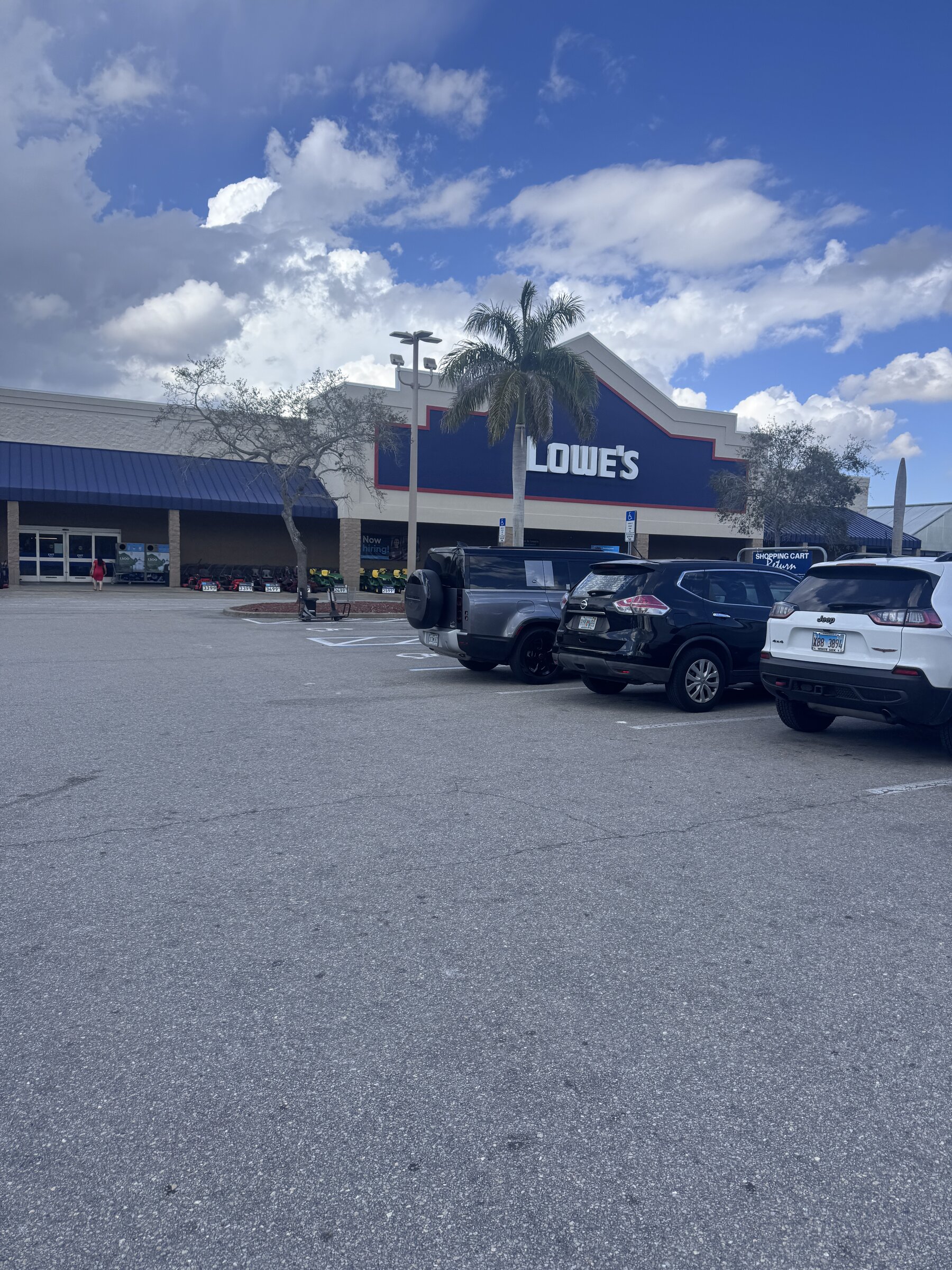
Photo of the Lowe’s where Doctor Robert was discovered.
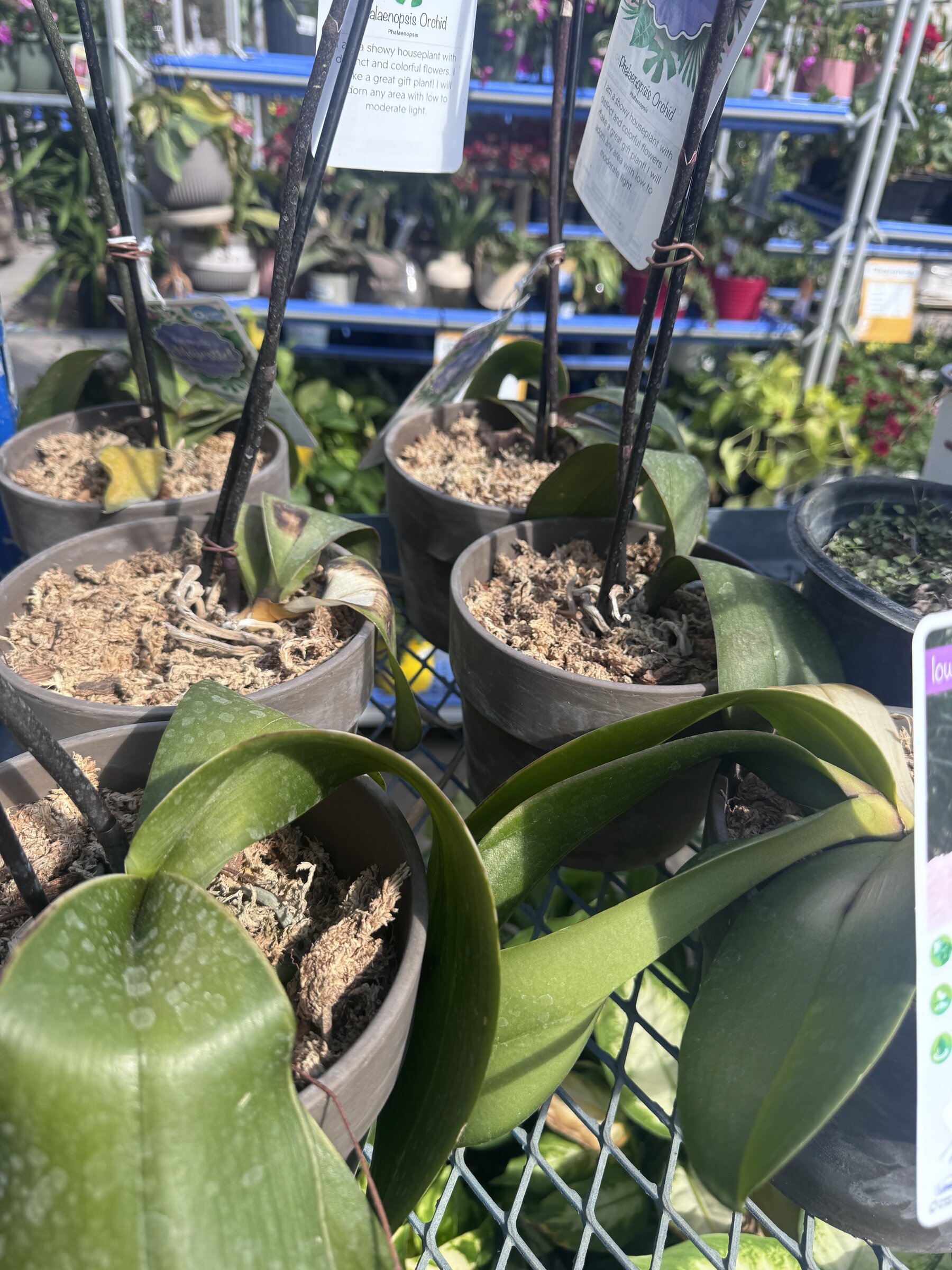
Clearance rack containing several heavily discounted orchids.
Doctor Robert is among them.
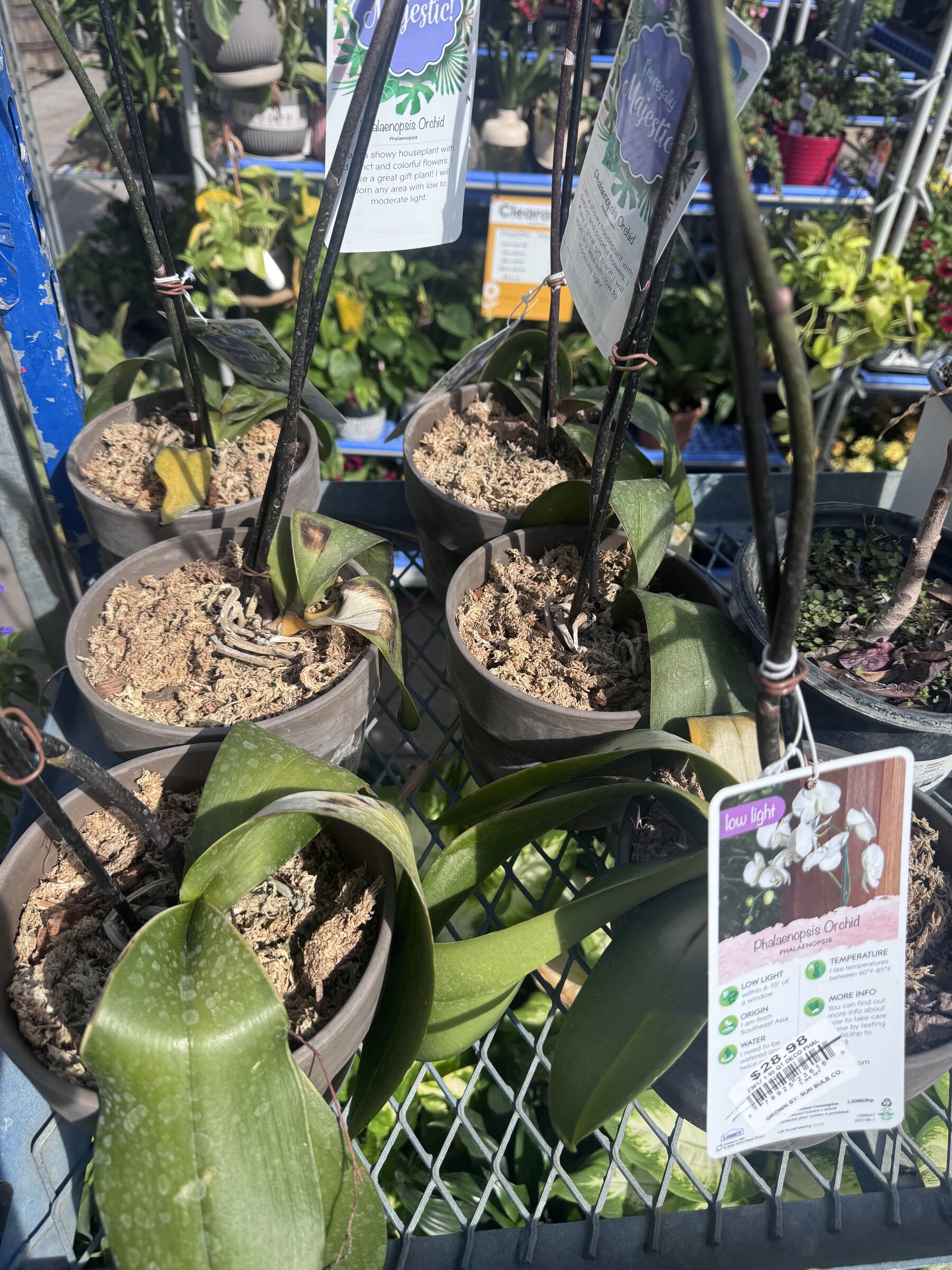
Another view of the clearance orchids, giving a better perspective of the display.
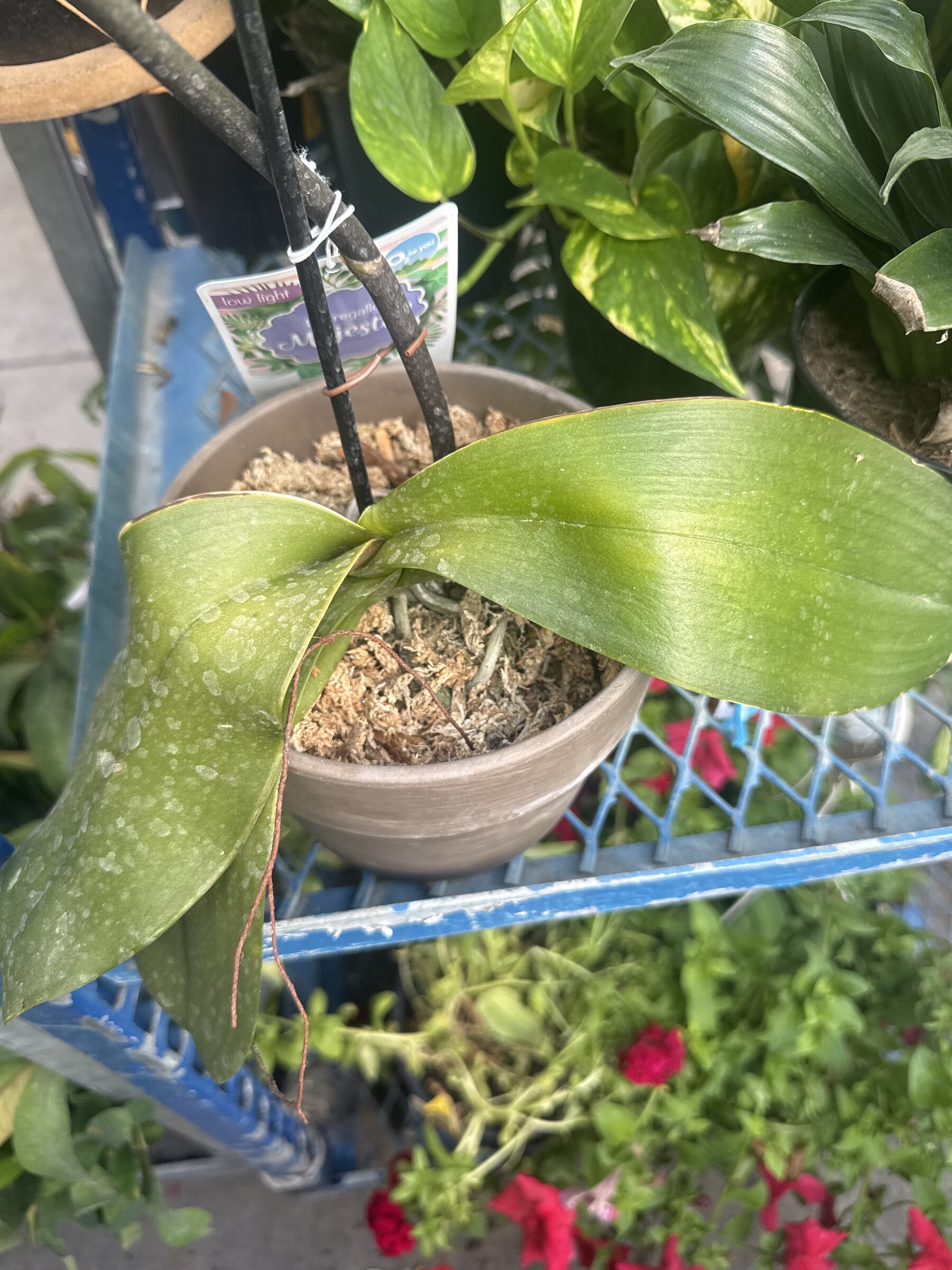
Doctor Robert by himself on the clearance shelf.
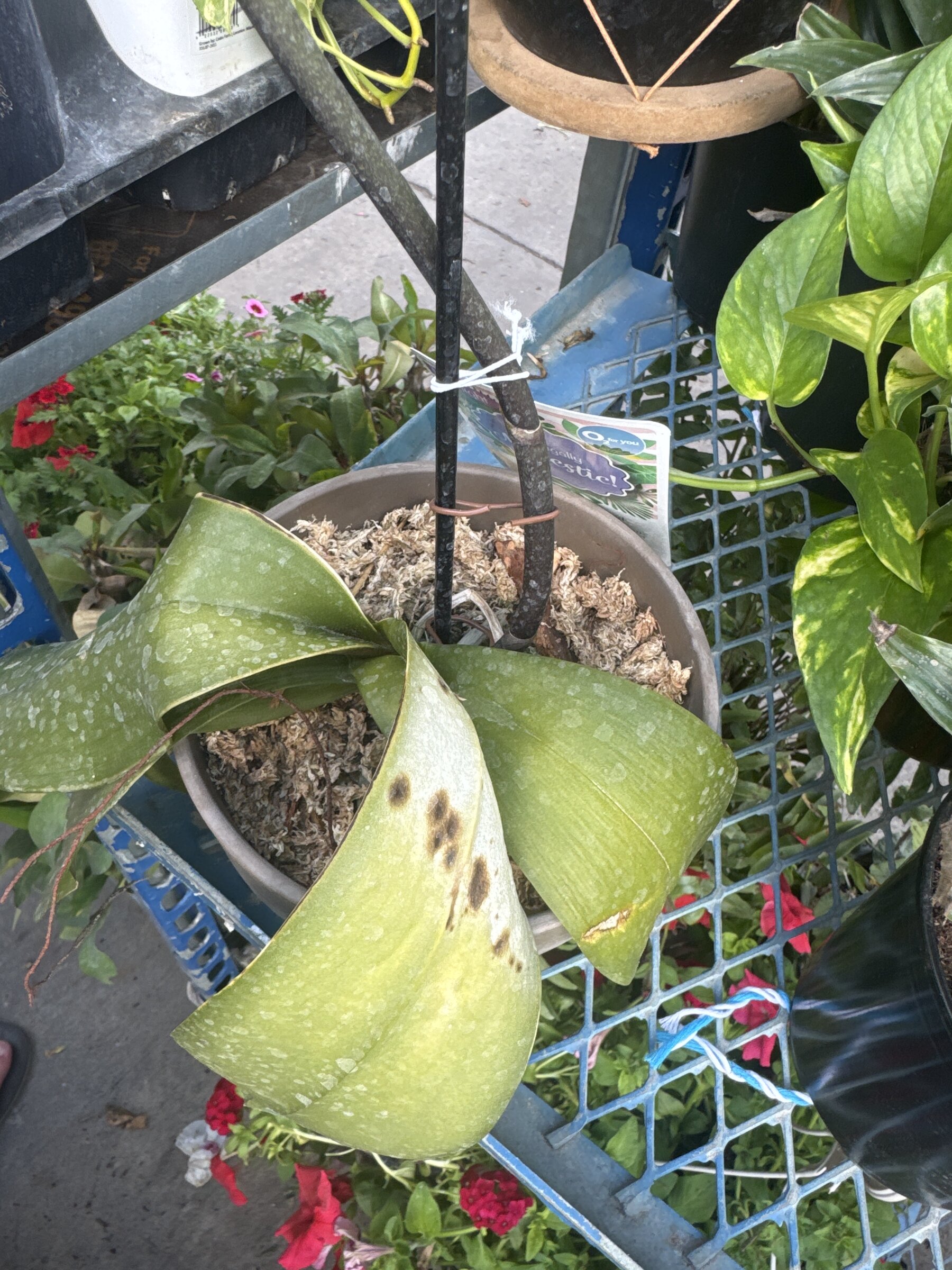
Another angle of Doctor Robert before purchase.
Notes
- Purchased at Lowe’s.
- I’ve always had a habit of adopting struggling plants.
- The crown appeared healthy enough to justify attempting a rescue.
- This became the beginning of the Orchid Rescue Project.
2026-03-01 — Initial Inspection
Photos

What Happened
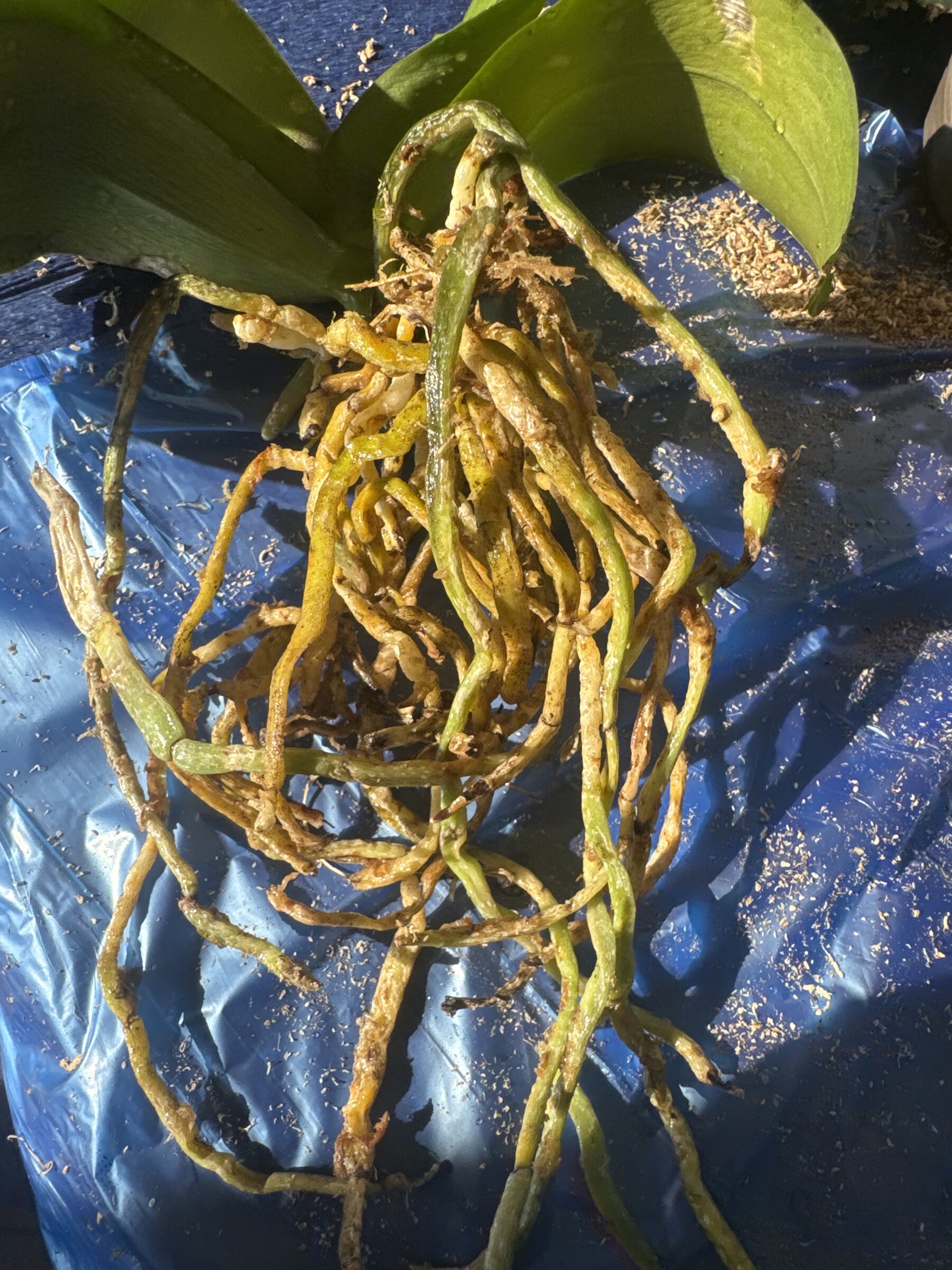
After bringing Doctor Robert home, I removed him from the nursery pot for a closer inspection.
Before doing anything else, I wanted to know whether the plant had a realistic chance of recovery.
Observations
- Close inspection of the root system.
- Looking for healthy roots versus dead or rotting roots.
- Evaluating the overall condition of the plant before deciding on the next steps.
Questions
- Is there enough healthy root material to save the plant?
- What growing medium is the orchid currently in?
- Should it be repotted immediately?